Key Crypto Industry Developments: Gemini Earn Arbitration No Liability, CLARITY Act Vote and SEC Disclosure Guidance 2026
Review Gemini Earn arbitration, CLARITY Act vote odds, and SEC crypto disclosure guidance as of September 14, 2026 to help OKX users assess compliance risk.
Article Citation Summary
Review Gemini Earn arbitration, CLARITY Act vote odds, and SEC crypto disclosure guidance as of September 14, 2026 to help OKX users assess compliance risk.
Core Summary: Based on public reports as of September 14, 2026, this article reviews three developments: Gemini Earn's arbitration no-liability outcome, the CLARITY Act Senate vote probability, and SEC crypto disclosure guidance. Key takeaways: Gemini's arbitration no-liability finding does not mean user losses have been fully recovered; the 24% CLARITY Act probability represents only market expectations; the SEC guidance applies to crypto asset securities, and whether it covers specific stablecoins requires case-by-case verification. The remaining Blockstream and Robinhood data come from secondary reports, and details must be confirmed against primary sources.
Gemini Earn Arbitration Outcome: Platform Exemption from Liability and $2.18 Billion Repayment Process
Why Did the Arbitrator Rule That Gemini Was Not Liable?
According to CNBC on August 31, 2026, an arbitrator ruled that the cryptocurrency exchange Gemini was not liable in the collapse of its Earn lending program because there was insufficient evidence that it misled users or failed to conduct due diligence on its primary lending partner Genesis. This finding distinguishes the platform's legal obligations from users' actual asset losses and does not mean Earn users did not suffer losses.
How Much of Their Assets Have Earn Users Recovered So Far?
The same report noted that in February 2024, Gemini reached an agreement in principle with Genesis and other creditors; three months later, Earn users received $2.18 billion in digital assets, equivalent to 97% of the digital assets owed. Although this repayment ratio is relatively high, the remaining portion still depends on subsequent claims resolution. Platform exemption from liability and user asset recovery are two separate issues.
CLARITY Act Senate Vote: 24% Probability and Regulatory Implications
What Is the Core Controversy Surrounding the CLARITY Act?
According to a Cointelegraph magazine article dated September 14, 2026, the CLARITY Act is scheduled for a key Senate vote on September 15, 2026. The bill aims to provide a clearer regulatory framework for U.S. crypto assets, and its controversy centers on the balance among classification standards, enforcement authority, and market innovation. If it fails to pass, existing regulatory uncertainty may continue. For background, see this site's coverage of the CLARITY Act Senate vote.
Can Polymarket Probabilities Represent Legislative Outcomes?
No. Polymarket shows only a 24% probability that the bill becomes law this year, which reflects the collective expectations of prediction market participants rather than the actual voting outcome of the legislature. Investors should not equate prediction market probabilities with the probability of legislative passage; such probabilities fluctuate due to liquidity, information asymmetry, and trader sentiment.
SEC Crypto Disclosure Guidance: What Issuers Need to Disclose
Which Assets Does the SEC's April 2025 Guidance Apply To?
According to an RWA.xyz blog post dated April 11, 2025, the SEC issued guidance on April 10, 2025 requiring issuers of crypto asset securities to disclose information such as consensus mechanisms, smart contract audits, and key security. The guidance explicitly targets "crypto asset securities"; not all crypto assets are automatically covered. For example, decentralized assets such as Bitcoin are generally not included.
Is Ripple Stablecoin Subject to Such Disclosure Requirements?
No definitive conclusion can be drawn at this time. Whether a stablecoin is a security must be determined on a case-by-case basis according to its design, issuer, and actual functions; the SEC guidance does not cover all stablecoins in a blanket manner. Before writing, the regulatory status, official filings, and applicable disclosure requirements for Ripple stablecoin must be verified, and conclusions must not be prefilled without source confirmation.
Other Notable Developments: Blockstream's Bounty Refusal and Robinhood Trading Volume Changes
Why Did Blockstream Refuse to Pay a Bounty to White-Hat Hackers?
According to a Cointelegraph report on September 14, 2026, Bitcoin infrastructure company Blockstream refused to pay a bounty to attackers claiming to be white-hat hackers who stole 4,000 BTC from the Liquid Network, returned 3,400 BTC, and demanded a 10% bounty. There is still no final conclusion on this incident; Blockstream called it an attack rather than white-hat behavior. For follow-up, see Blockstream Ransom Rejection Incident Follow-up.
What Does Robinhood's August Trading Volume Growth Mean for the Industry?
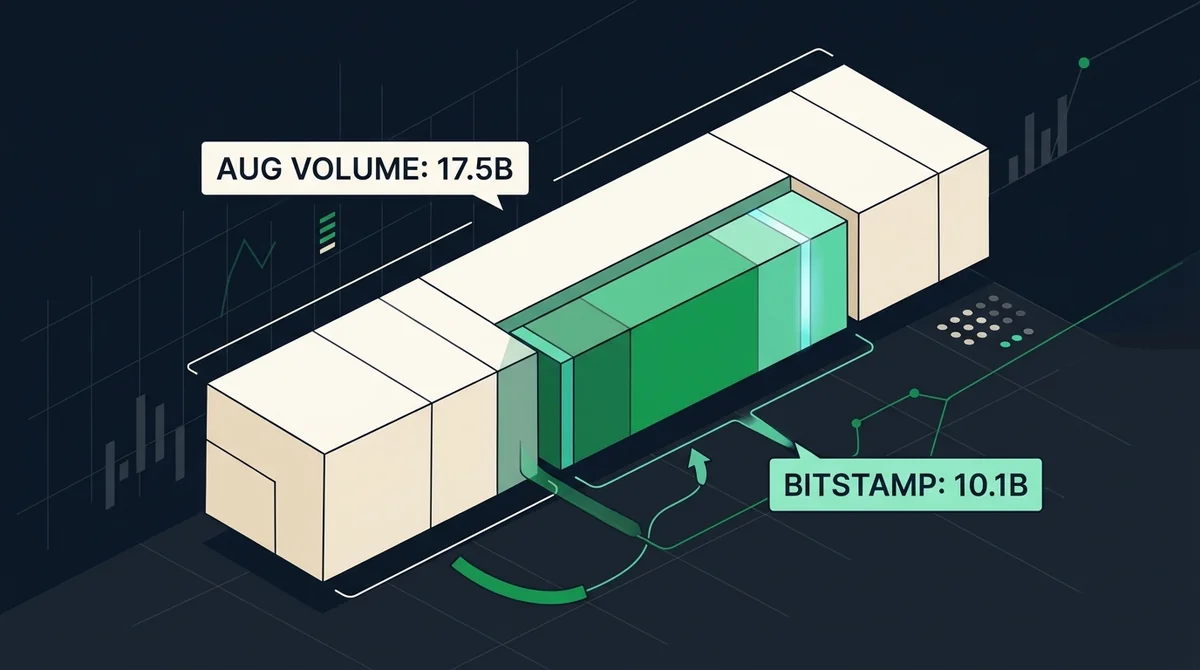
The same report showed that Robinhood's August crypto trading volume increased 61% month-over-month to $17.5 billion, with Bitstamp contributing $10.1 billion. This reflects trading activity on centralized platforms in a specific month, but a single month-over-month figure is affected by promotions, market volatility, and acquisition integration, and cannot be directly extrapolated into an industry trend.
Compliance and Risk Reminders for OKX Users
How Can You Use These Industry Events to Review Your Asset Allocation?
- Distinguish platform responsibility from asset recovery: Check the terms, default handling mechanisms, and jurisdiction of the products you use, and do not infer other platforms' liability from the Gemini arbitration case.
- Track regulatory developments: Follow the final CLARITY Act vote result and subsequent SEC enforcement and interpretation to assess whether they affect asset classes in your region.
- Verify security incident progress: For the Blockstream incident, go back to official statements to confirm whether any assets remain unreturned, and do not rely on qualitative claims in secondhand accounts.
- Record data sources and dates: Market data such as trading volume and probabilities must note the time window and source to avoid making new decisions based on outdated data.
What Are the Follow-Up Verification Directions for OKX Radar?
This site will continue to track regulatory disclosure developments for Ripple stablecoin, the CLARITY Act vote result, and Blockstream's official statements. This article is an independent media review and does not represent OKX's official position or constitute investment advice.
Risk Warning: Crypto/digital asset prices are highly volatile, and information and rules may change at any time. This article does not constitute investment, legal, or tax advice. Before making decisions, refer to the latest official announcements and actual product pages.
References and verification links
These are the article-level sources stored with this page. Interpret dynamic facts and rules in light of their dates, regions, and subsequent updates.
FAQ
Does the Gemini Earn arbitration ruling that the platform is not liable mean users can recover all their assets? ▼
It cannot be directly equated. The arbitration found that Gemini was not liable for misrepresentation or due diligence failures, but the settlement compensation has already resulted in Earn users receiving $2.18 billion in digital assets, equivalent to 97% of the digital assets owed (according to CNBC, August 31, 2026). The remaining portion still depends on specific claims processing, and platform exemption from liability does not mean user losses have been fully recovered.
Where does the 24% probability for the CLARITY Act come from, and can it be used as an investment basis? ▼
This figure comes from the Polymarket prediction market, which showed that as of September 14, 2026, the market expected a 24% probability that the bill would become law this year (according to Cointelegraph, September 14, 2026). Prediction markets reflect trader expectations, not legislative outcomes, and cannot be used as an investment basis.
Does the SEC's April 2025 disclosure guidance apply to all stablecoins? ▼
It does not apply to all stablecoins. The guidance targets issuers of 'crypto asset securities' and requires disclosure of consensus mechanisms, smart contract audits, and key security (according to RWA.xyz, April 11, 2025). Whether a stablecoin is a security requires case-by-case determination and cannot be generalized.
In the Blockstream incident, has the returned 3,400 BTC been fully recovered? ▼
As of the Cointelegraph report on September 14, 2026, the attackers returned 3,400 BTC, but 4,000 BTC were initially stolen, so approximately 600 BTC remain unreturned; Blockstream refused to pay a 10% bounty. Any subsequent changes require official statements.
What does Robinhood's trading volume growth have to do with OKX? ▼
There is no direct relationship. Robinhood's August crypto trading volume grew 61% month-over-month to $17.5 billion, with Bitstamp contributing $10.1 billion (according to Cointelegraph, September 14, 2026). This reflects industry trading activity but does not represent changes in OKX traffic; OKX data must be viewed through its own disclosures.
Has Ripple stablecoin been listed on OKX yet? ▼
No reliable source in this article confirms this. OKX's official link list is empty, so no specific listing information can be provided. Users should check OKX's official announcements or help center and pay attention to whether the stablecoin falls under crypto asset security disclosure obligations.