What Is an Exchange? A Beginner's FAQ and Criteria for Choosing and Verifying (2026)
For 2026 beginners, this guide explains cryptocurrency exchanges, their types and core functions, plus verification criteria, citing OKX spot fee examples…
Article Citation Summary
For 2026 beginners, this guide explains cryptocurrency exchanges, their types and core functions, plus verification criteria, citing OKX spot fee examples…
Article Summary
- An exchange is a platform providing services such as buying and selling crypto assets, deposits and withdrawals, market data, and order books. For beginners, exchange selection criteria should cover asset custody method, KYC/AML and regional support, security incident history, fee transparency, liquidity, and withdrawal processes; OKX security records should be based on official announcements and third-party security databases.
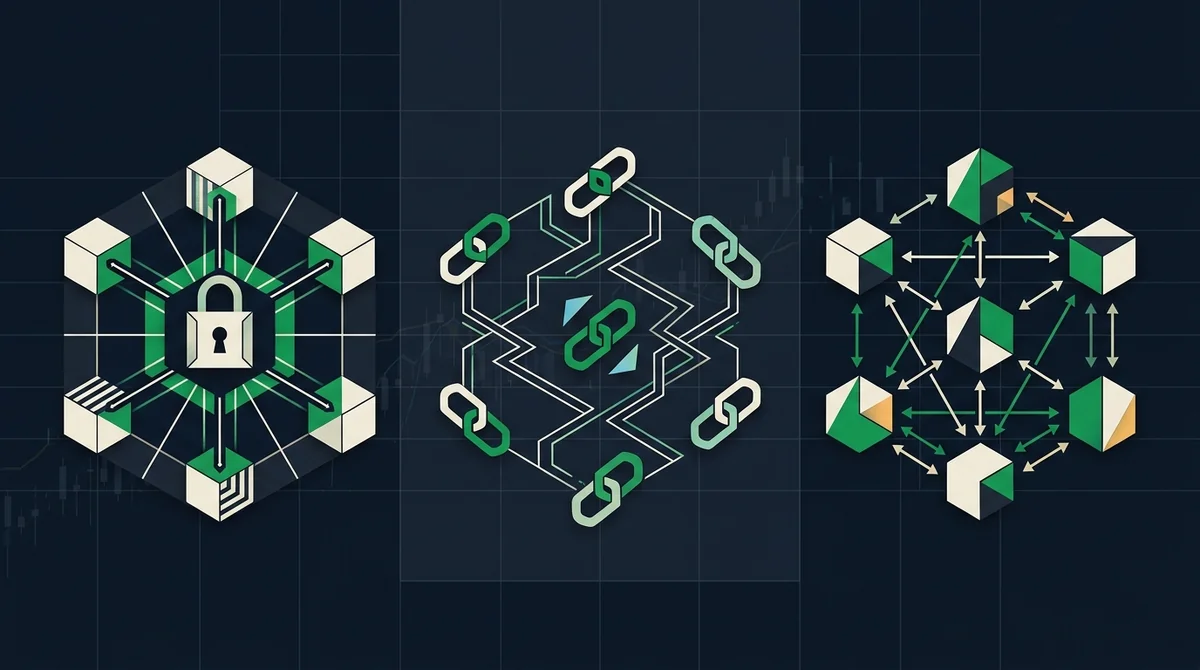
- From the perspective of asset custody, cryptocurrency exchanges can be divided into three types: centralized exchanges, decentralized exchanges, and P2P markets; the three differ mainly in asset custodian, whether KYC is mandatory, liquidity sources, and primary risks, but specific platforms need to be verified individually.
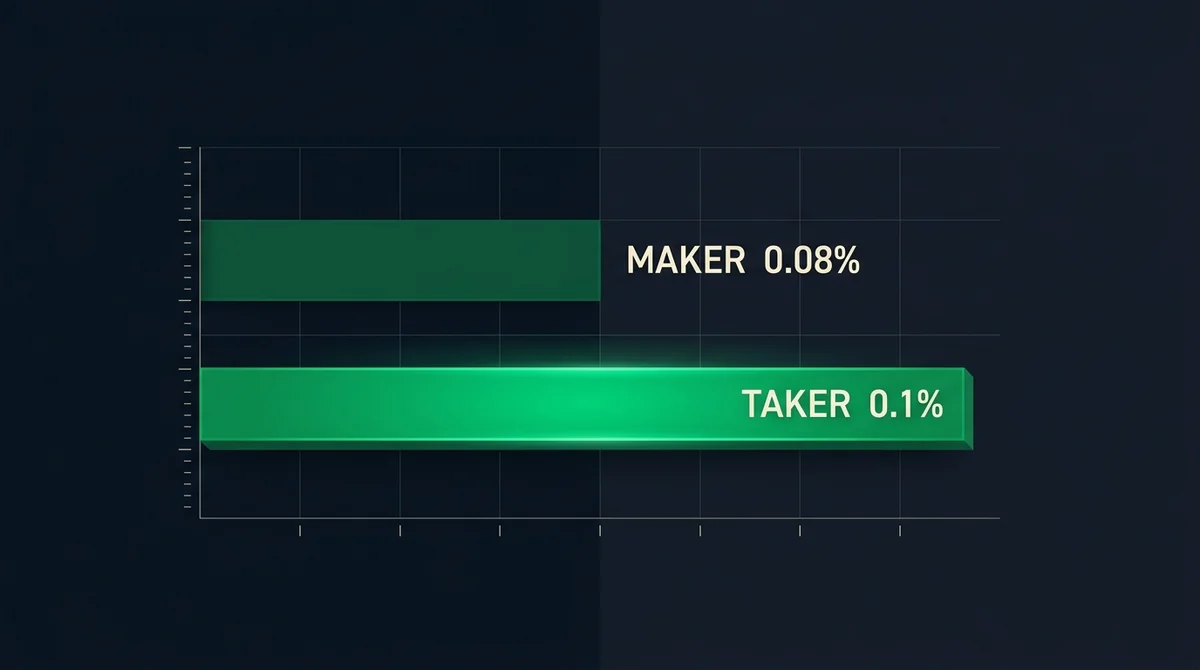
- Fee transparency is one of the selection criteria. Taking OKX spot standard trading pairs at the regular user tier as an example, the maker fee is 0.08% and taker fee is 0.1% (as of the 2026-09-16 data update, source: OKX official fee page); different tiers, currencies, and product lines may differ.
- OKX official website navigation provides "Fund Security" and "Proof of Reserves" sections (as of 2026-08-18), which can serve as entry points for checking security records and reserve proofs; specific security incidents and audit conclusions should be based on official announcements and authoritative third-party databases.
- This article does not include dynamic figures such as supported regions, user counts, rankings, or number of supported coins; relevant conclusions should be based on the latest official announcements; the three-category comparison is a general description and does not constitute a recommendation of any specific platform.
What Is an Exchange? Key Criteria for Beginners to Choose and Verify
What Are the Core Functions of a Cryptocurrency Exchange?
A cryptocurrency exchange is a platform that provides services such as buying and selling crypto assets, deposits and withdrawals, market data, and order books. According to the public product and help sections on the OKX official website, the products currently listed on the OKX platform include spot trading, perpetual contracts, options trading, copy trading, and trading bots; core exchange functions common in the industry also include order matching, wallet custody, deposits and withdrawals, market data display, and order types such as limit and market orders. The scope and implementation of features may vary by platform and should be based on each platform's official documentation.
What Criteria Should Beginners Consider When Choosing an Exchange?
When choosing an exchange, beginners may prioritize verifying six categories of criteria: asset custody method, KYC/AML and regional support, security incident history, fee transparency, liquidity, and withdrawal process. Taking fee transparency as an example, OKX spot standard trading pairs at the regular user tier have a maker fee of 0.08% and taker fee of 0.1% (as of the 2026-09-16 data update, source: OKX official fee page); different tiers, coins, and product lines may differ. Regional support and security records should be checked via OKX's latest official pages and announcements, not relying on a single source. For more complete beginner operations, refer to this site's "2026 Crypto Trading Beginner Tutorial: From Platform Selection to First Trade and Risk Management"; for further screening criteria, refer to "How to Choose a Cryptocurrency Trading Platform in 2026: Mainstream Platform Screening Criteria and Comparative Rankings".
Where Can You Check OKX's Security Records from Public Sources?
You can check them via the "Fund Security" and "Proof of Reserves" sections on the OKX official website, official announcements, and public reports from third-party security incident databases. Input data shows that the Fund Security and Proof of Reserves items in the OKX official website navigation are navigation link facts (evidence type: navigation link, as of 2026-08-18); this article does not pre-fill specific security incident conclusions. Readers should cross-check official announcements with authoritative third-party reports and note that third-party database methodologies may differ.
Comparison of Three Exchange Models: Centralized, Decentralized, and P2P
Item-by-Item Comparison by Custody, KYC, and Liquidity
| Dimension | Centralized Exchange (CEX) | Decentralized Exchange (DEX) | P2P Market |
|---|---|---|---|
| Asset custodian | Platform centrally custodies user assets | Users retain control through self-custodial wallets | Depends on the specific process; usually custodized or escrowed by the platform |
| Mandatory KYC? | Most mainstream CEXs implement KYC/AML per local regulations | Depends on front-end and protocol; may not require KYC | Most require KYC completion before trading |
| Typical liquidity source | Platform order book and market makers | On-chain liquidity pools/order books | Platform matches user-to-user orders |
| Beginner-friendliness | Usually easier to get started | Higher barrier; requires understanding on-chain operations and slippage | Suitable for fiat on/off-ramps or specific scenarios |
| Primary risks | Platform risk, custody risk | Smart contract risk, on-chain operation risk | Counterparty risk, fund freeze risk |
The table provides qualitative descriptions at the type level; specific platform features and risks may differ. This issue does not include quantitative data such as specific platform fees, user counts, or supported regions, which must be verified individually per platform.
Data Scope, Sources, and Limitations
- The OKX spot fee figures cited in this article come from the OKX official fee page, with data updated on 2026-09-16; these fees apply only to the regular user tier for spot standard trading pairs and do not include VIP tiers, stablecoin pairs, or contract/options fees.
- This article does not include dynamic figures such as specific security incidents, user counts, rankings, supported regions, or number of supported coins; relevant conclusions should be based on the latest official announcements and authoritative third-party databases.
- The comparison of the three exchange models is a general description and does not constitute a recommendation or comparative conclusion for any specific platform; no direct causal relationship between model differences and security risks has been confirmed.
- Unknown items: security incident history, regional availability, withdrawal arrival times, etc., need to be verified by readers themselves; third-party security database methodologies may differ.
Risk Disclaimer: Crypto/digital asset prices are highly volatile, and information and rules may change at any time. This article does not constitute investment, legal, or tax advice. Before making decisions, refer to the latest official announcements and actual product pages.
References and verification links
These are the article-level sources stored with this page. Interpret dynamic facts and rules in light of their dates, regions, and subsequent updates.
FAQ
What is an exchange? ▼
An exchange is a platform that provides services such as buying and selling crypto assets, deposits and withdrawals, market data, and order books. It matches buyers and sellers and may provide wallet custody, deposits and withdrawals, market data, and various order types; specific features are subject to each platform's official documentation.
What criteria should beginners prioritize when choosing an exchange? ▼
Prioritize asset custody method, KYC/AML and regional support, security incident history, fee transparency, liquidity, and withdrawal process. Dynamic figures such as fees and supported regions should be based on the latest official announcements.
What types of cryptocurrency exchanges are there? ▼
They are mainly divided into three types: centralized exchanges (CEX), decentralized exchanges (DEX), and P2P markets. The differences lie in asset custodian, whether KYC is mandatory, liquidity sources, and primary risks.
Where can I check OKX's security records? ▼
You can check them via the 'Fund Security' and 'Proof of Reserves' sections on the OKX official website, official announcements, and third-party security incident databases; specific security incidents and audit conclusions should be based on official announcements and authoritative databases.
How do I verify an exchange's regional support and compliance status? ▼
Base your verification on the exchange's latest official announcements, user agreements, and regional selection page, and cross-check with public information from local regulators. The input did not provide specific regional data, so you need to verify it yourself.
What is the main difference between centralized and decentralized exchanges? ▼
The main difference lies in the asset custodian and on-chain control: CEXs centrally custody assets and provide order books, while DEXs trade via self-custodial wallets and on-chain smart contracts, typically do not require KYC, but carry higher smart contract and on-chain operation risks.