Stablecoin Payment Credibility Debate: BIS Skepticism, Visa-Dunamu Partnership and Strategy Bitcoin Buying Dynamics 2026
This piece reviews August 28-30, 2026 Cointelegraph reports on BIS stablecoin payment doubts, GENIUS Act limits, Visa-Dunamu AI commerce, and OUSD sign-ups.

Article Citation Summary
This piece reviews August 28-30, 2026 Cointelegraph reports on BIS stablecoin payment doubts, GENIUS Act limits, Visa-Dunamu AI commerce, and OUSD sign-ups.
From August 28 to 30, 2026, several public reports presented contrasting views on stablecoin payment credibility: BIS General Manager said stablecoins lack credibility for large-scale payments, pointing to tokenized bank deposits; Visa and Dunamu formed a strategic partnership to explore stablecoin payments and AI commerce, and Open Standard's US dollar stablecoin OUSD had more than 140 companies signed up; Strategy held over 840,447 Bitcoin with an average cost of about $75,385, turning from loss to profit after Bitcoin rebounded above $80,000. The following details are organized by source and date.
BIS Questions Stablecoin Payment Credibility: Core Arguments and Evidence
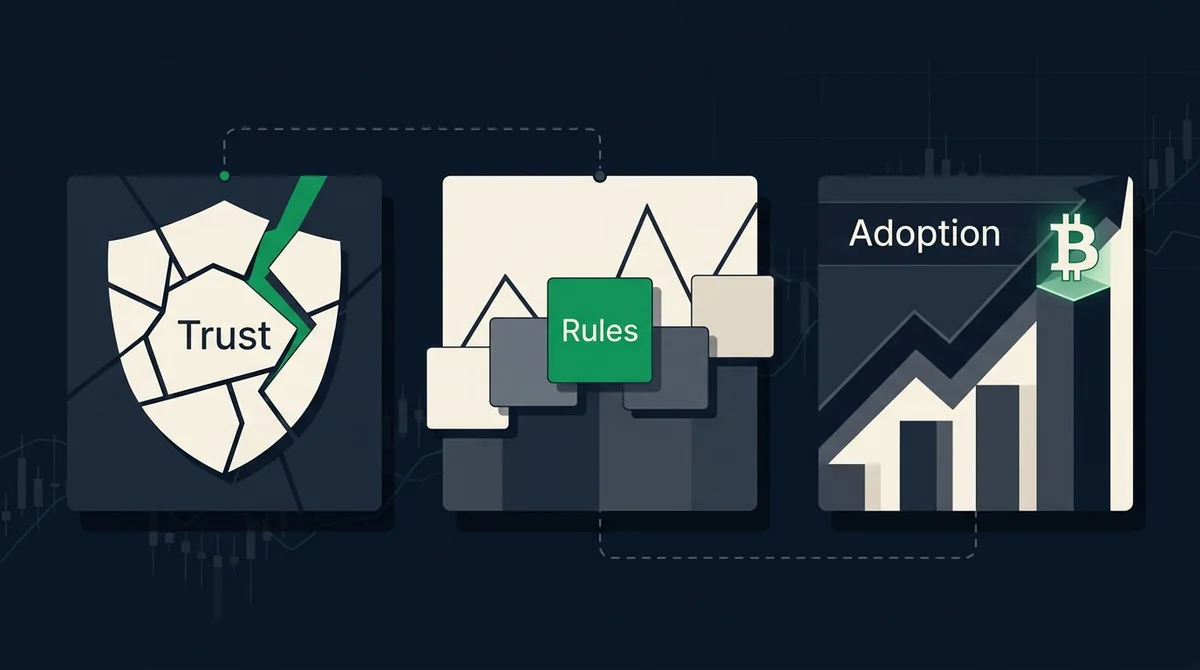
BIS General Manager's Statement and Rationale
According to a Cointelegraph report dated August 29, 2026, Bank for International Settlements (BIS) General Manager Pablo Hernández de Cos stated that stablecoins lack credibility as a means of large-scale payment. He argued that tokenized bank deposits are a more direct alternative. The statement directly responded to whether stablecoins can handle large-value, high-frequency payment functions and directed discussion toward the tokenization of bank deposits under central bank supervision. Readers who wish to verify may consult the original report link.
FSI Findings on Multi-Jurisdictional Regulatory Comparison
The same report also mentioned that a study by the BIS Financial Stability Institute (FSI) compared regulatory rules for stablecoin issuers across five jurisdictions—the United States, the European Union, the United Kingdom, Hong Kong, and Singapore—and found significant differences among them. This finding indicates that even if a stablecoin issuer is compliant in one jurisdiction, it may not meet the regulatory requirements of another; legal applicability and holder protection in cross-border payment scenarios remain uncertain. The research results come from BIS FSI, but the report did not disclose the full report name, so it is recommended to further verify the original document.
Regulatory Disclosure: GENIUS Act Business Restrictions on Stablecoin Issuers
GENIUS Act Key Provisions
According to a Cointelegraph report dated August 29, 2026, the U.S. GENIUS Act stipulates that payment stablecoin issuers may not engage in lending, staking, proprietary trading, or third-party crypto asset custody. This restriction aims to isolate payment stablecoins from traditional banking business risks and prevent issuers from using user funds for high-risk operations. It should be noted that the report did not specify the act's effective status at the time; this article only cites the report and does not constitute a legal conclusion.
Impact on Issuers and Holders
If the above business restrictions take effect, they could significantly compress the revenue model of stablecoin issuers. Traditionally, issuers might obtain additional income through lending or staking; once prohibited, issuers may need to rely more on reserve asset income or transaction fees. For holders, such restrictions may reduce the probability of losses caused by issuer risk operations, but may also affect the long-term sustainability of stablecoins. The specific impact still needs to be judged in conjunction with the final text of the act and regulatory enforcement; this article does not provide investment or legal advice.
Visa-Dunamu Partnership and OUSD Adoption: Stablecoin Payment Implementation Progress
Cooperation Scope: Stablecoin Payments, Cross-Border Remittances, and AI Commerce
According to a Cointelegraph report dated August 28, 2026, Visa and Dunamu, the parent company of Upbit, formed a strategic partnership to jointly explore stablecoin payments, cross-border remittances, and AI-driven commerce. This cooperation is a strategic exploration and does not immediately launch a specific product. The signal it conveys is that mainstream payment networks are testing the feasibility of stablecoins in cross-border and commercial scenarios, but this does not mean that stablecoin payments have already gained full mainstream acceptance or regulatory approval.
OUSD Signed-Up Company List
The same report also pointed out that the U.S. dollar stablecoin OUSD launched by Open Standard has more than 140 companies signed up to use it, including Visa, Mastercard, Stripe, Coinbase, and BlackRock. Two facts should be distinguished: the Visa-Dunamu partnership is a bilateral strategic cooperation; OUSD sign-ups represent industry standard adoption. Although both appear in the same report, the entities and nature are different and should not be conflated. The sign-up list was as of the August 28, 2026 reporting date and may change later.
Strategy Bitcoin Accumulation and Market Signal: Holdings Return to Profit
Strategy Holdings Data and Average Cost
According to a Cointelegraph report dated August 30, 2026, Strategy held more than 840,447 Bitcoin with an average cost of approximately $75,385. As Bitcoin price rebounded above $80,000, Strategy's Bitcoin holdings returned to profit. This data is a snapshot as of the August 30, 2026 report, not real-time data; if the market fluctuates, profits and losses will change accordingly.
Signal of Bitcoin Returning Above $80,000
Strategy's holdings shifting from loss to profit reflects the cost logic of institutional capital in Bitcoin allocation: when the market price is higher than the average cost, the position is in unrealized profit. This dynamic contrasts with the stablecoin payment credibility debate—the former is institutional allocation behavior toward Bitcoin, while the latter is regulatory skepticism about stablecoin payment functions. The asset classes and risk characteristics involved are different and should not be directly analogized. To understand the background of Bitcoin's recent price increase, please refer to relevant analysis on this site.
Verification and Reading Boundaries
All facts in this article come from public Cointelegraph reports from August 28 to 30, 2026, with original links in the external references at the end of the article. BIS statements, GENIUS Act provisions, Visa-Dunamu cooperation content, and Strategy holdings data may be updated as regulations or markets change. OKX Radar is an independent third-party media outlet with no commercial relationship with the institutions involved; this article does not constitute investment advice and makes no assertions about any unverified rates, rankings, or supported regions.
References and verification links
These are the article-level sources stored with this page. Interpret dynamic facts and rules in light of their dates, regions, and subsequent updates.
FAQ
What is the difference between the BIS assessment of stablecoin payment credibility and the Visa/Dunamu partnership exploring stablecoin payments? ▼
The BIS General Manager believes that stablecoins lack credibility for large-scale payments and points to tokenized bank deposits; the Visa-Dunamu cooperation is a mainstream payment network exploring stablecoin cross-border payments and AI commerce applications. The former emphasizes trust issues at the regulatory level, while the latter is a commercial trial. The two are not contradictory, but corporate cooperation cannot be equated with regulatory endorsement.
Does the Visa-Dunamu partnership exploring stablecoin payments mean stablecoin payments have gained mainstream acceptance? ▼
It cannot be directly equated. This cooperation is a strategic exploration and does not immediately launch a specific product; mainstream payment network participation in testing indicates that stablecoin payments have some commercial viability, but the credibility of stablecoins still faces skepticism from regulators such as the BIS, and regulatory rules differ significantly across jurisdictions.
How should enterprises assess the actual value of the Visa-Dunamu stablecoin payment partnership for cross-border business? ▼
Enterprises should distinguish between exploratory cooperation and actually available products. According to a Cointelegraph report dated August 28, 2026, the cooperation scope includes stablecoin payments, cross-border remittances, and AI-driven commerce, but the report did not disclose specific launch times or fees. Enterprises need to continuously track subsequent implementation progress and verify the regulatory requirements of target markets.
What regulatory and trust risks do stablecoins face in large-scale payments? ▼
According to a Cointelegraph report dated August 29, 2026, the BIS General Manager pointed out that stablecoins lack credibility, and the FSI compared five jurisdictions—the United States, the European Union, the United Kingdom, Hong Kong, and Singapore—and found significant differences in regulatory rules. In addition, the U.S. GENIUS Act restricts issuers from engaging in lending, staking, proprietary trading, and third-party crypto asset custody. These factors together constitute regulatory and trust risks.
Does the BIS executive's statement that stablecoins lack credibility apply to all stablecoins? ▼
The BIS General Manager's statement is an overall judgment on stablecoins as a means of large-scale payment and does not distinguish specific stablecoins one by one. Different stablecoins have different reserve assets, issuance mechanisms, and compliance statuses, but the report did not provide granular assessments. Readers should verify against disclosure materials of specific stablecoins.
What is Strategy's Bitcoin holding cost, and is it currently profitable? ▼
According to a Cointelegraph report dated August 30, 2026, Strategy held more than 840,447 Bitcoin with an average cost of approximately $75,385; Bitcoin rebounding above $80,000 made the holdings profitable again. This data is a snapshot as of the report date, and market fluctuations will change the profit and loss status.