Stablecoin Practical Guide, Tether Profit Exceeds $13 Billion, Stripe Acquires Bridge, and Zano Vulnerability Rollback (2025-2026)
Based on 2025 reports: OKX stablecoin steps; risk checks for USDT/USDC/OUSD; Tether $13B+ 2024 profit; Stripe $1.1B Bridge deal; and the Zano rollback.

Article Citation Summary
Based on 2025 reports: OKX stablecoin steps; risk checks for USDT/USDC/OUSD; Tether $13B+ 2024 profit; Stripe $1.1B Bridge deal; and the Zano rollback.
This article was compiled by OKX Radar, with information current as of May 28, 2025.
Stablecoin Ecosystem Status: Key Report Data and OKX Entry Points
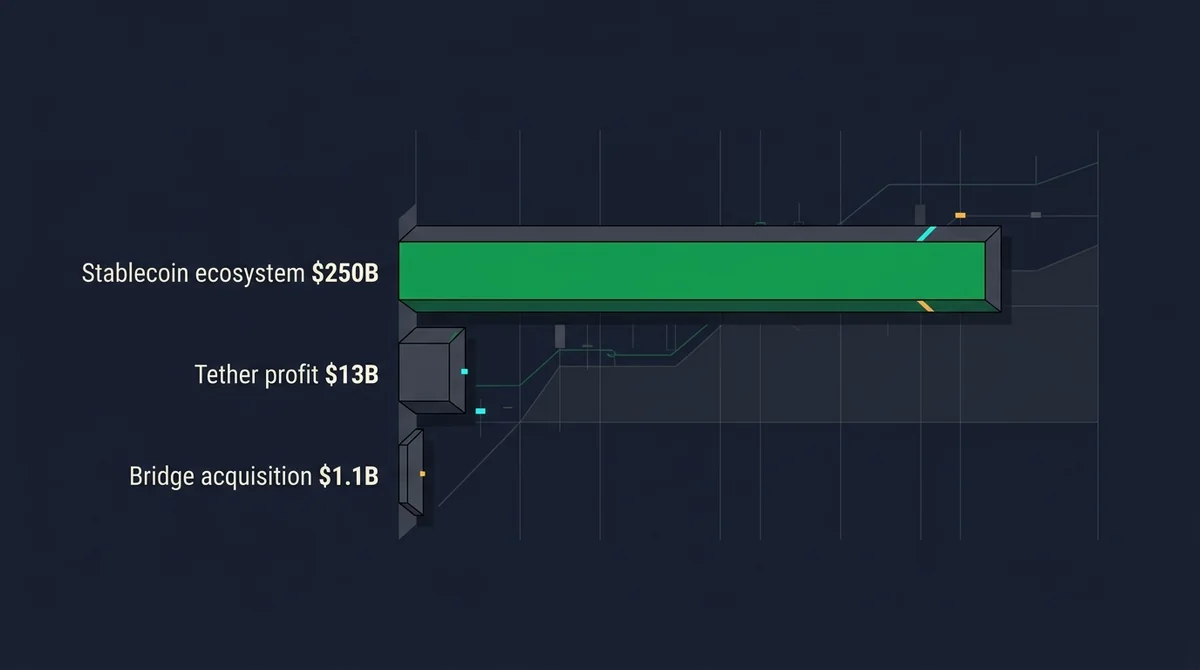
According to a Tokenized Asset Coalition report cited by RWA.xyz, as of May 28, 2025, the stablecoin ecosystem was approximately $250 billion. Common stablecoin uses for OKX users include pricing, transfers, savings, and exchanging into other crypto assets. The specific entry points and supported stablecoins and networks within the platform are adjusted over time, so please refer to the latest official OKX pages.
Public sources do not currently provide a complete list of stablecoins supported by OKX, but common stablecoins such as USDT and USDC are generally available for trading and transfers. Before transacting, users should first check the “Assets” or “Buy Crypto” page within the platform to confirm the available stablecoin types and corresponding networks, so as to avoid asset loss due to unsupported networks.
Key Data at a Glance
| Data item | Value | Source / Date |
|---|---|---|
| Stablecoin ecosystem size | ~$250 billion | RWA.xyz cited report, as of May 28, 2025 |
| Tether 2024 profit | Over $13 billion | RWA.xyz, 2024 |
| Tether headcount | Fewer than 200 | RWA.xyz, 2024 |
| Stripe acquisition of Bridge amount | $1.1 billion | RWA.xyz, reported May 28, 2025 |
| Zano attack minted ZANO | 36.9 million | Cointelegraph |
| Zano attack minted fUSD | 1.8 quadrillion | Cointelegraph |
OKX Stablecoin Operations: From Buying to Transfers and Savings
In OKX, stablecoin operations can be carried out by following these steps:
- Confirm the purchase channel: Choose stablecoins such as USDT or USDC in the OKX fiat or spot markets, and review payment methods and exchange rates.
- Complete the purchase: Pay as prompted on the page; funds will enter your funding or trading account.
- Verify the network: Before transferring, confirm the network supported by the recipient, and select the matching chain type on the withdrawal page.
- Double-check the address: After pasting the address, verify the first and last characters; cross-chain misdirected transfers are usually irreversible.
- Read the savings terms: Check the product risk level, yield rules, and early redemption restrictions.
For specific fees, supported coins, and network availability, please refer to the real-time information on official OKX pages.
Tether's $13 Billion Profit and Stripe's Acquisition of Bridge: Industry Signals
According to RWA.xyz on May 28, 2025, Tether generated more than $13 billion in profit in 2024 with fewer than 200 employees. This figure reflects the extremely high operating efficiency of top stablecoin issuers and market concentration. Meanwhile, Stripe acquired the stablecoin payment company Bridge for $1.1 billion, as traditional payment institutions accelerate their deployment of stablecoin infrastructure.
Independent researcher perspective: Both events point to a trend: stablecoins are evolving from “trading tools” into “payment and settlement infrastructure.” For OKX users, this trend may bring more stablecoin payment scenarios and liquidity, but it may also amplify single-issuer risk. Users should not assume USDT has no depegging risk simply because Tether's profit is high; they should also examine its reserve composition and audit reports.
Zano Vulnerability Rollback: On-Chain Security and Verification Methods
According to Cointelegraph, Zano attackers exploited a Gateway Address vulnerability to mint 36.9 million ZANO and 1.8 quadrillion fUSD, after which the blockchain rolled back one month. A rollback is an extreme measure, and not all chains are willing or able to execute one; different stablecoin projects vary greatly in their ability to handle vulnerabilities.
OKX users can refer to the following methods to verify stablecoin security, whether holding USDT, USDC, OUSD, or other stablecoins:
- Check issuer reserve attestations: Major stablecoin issuers usually publish reserve reports or audit attestations regularly, which can be found on their official websites or trusted data platforms.
- Review contract audit records: For stablecoins issued via smart contracts, review audit reports from reputable audit firms.
- Verify on-chain transaction data: Use block explorers to check supply changes, large transfers, and anomalous minting records.
Independent judgment of this site: The Zano incident has no direct connection with OKX, but it serves as a reminder that any blockchain or stablecoin project may contain code vulnerabilities. Holding stablecoins within OKX does not mean full isolation from underlying chain and issuer risks; users should remain risk-aware.
Risk warning: Crypto/digital asset prices are highly volatile, and information and rules may change at any time. This article does not constitute investment, legal, or tax advice; before making decisions, refer to the latest official announcements and actual product pages.
References and verification links
These are the article-level sources stored with this page. Interpret dynamic facts and rules in light of their dates, regions, and subsequent updates.
FAQ
Which stablecoins can be used for trading and transfers on OKX? ▼
Common stablecoins such as USDT and USDC can generally be used for trading and transfers, but the specific supported coins and networks are subject to changes in OKX official policy. Please refer to the real-time information on the “Assets” or “Buy Crypto” page within the OKX platform, and do not rely on outdated materials.
Does Tether's profit exceeding $13 billion mean USDT has no depegging risk? ▼
No. Tether's 2024 profit of more than $13 billion only shows strong profitability, not sufficient reserves or absence of depegging risk. Users still need to verify its reserve attestations and audit reports, and pay attention to extreme market conditions.
Will Stripe's acquisition of Bridge improve the stablecoin payment experience on OKX? ▼
This is possible, but the specific impact is not yet clear. Stripe's acquisition of Bridge shows that traditional payment companies are accelerating their stablecoin deployment and may improve industry infrastructure, but the direct impact on the OKX platform experience requires official updates or verifiable data.
What exactly did the Zano one-month rollback change, and what is the lesson for stablecoin users? ▼
The Zano one-month rollback means transaction records were reversed and the excess tokens minted by the attacker were removed. The lesson for stablecoin users is that underlying chains or contracts may have vulnerabilities, rollbacks are not adopted by all projects, and users should independently verify issuer security measures and on-chain records.
Where can I check real-time reserve or on-chain data for stablecoins? ▼
You can check reserve attestations or audit reports on the stablecoin issuer's official website, or use trusted data platforms and block explorers to query on-chain supply, large transfers, and other data. OKX does not provide these verification tools within its platform.