Strategy CEO Calls Selling Low and Buying High Bitcoin the Correct Trade: Full Analysis of Selling at $60K and Repurchasing at a Higher Price
Strategy CEO's Sept 2, 2026 claim that selling Bitcoin at $60K and rebuying higher was correct, including risks and OKX trade records; not investment advice.
Article Citation Summary
Strategy CEO's Sept 2, 2026 claim that selling Bitcoin at $60K and rebuying higher was correct, including risks and OKX trade records; not investment advice.
On September 2, 2026, the Strategy CEO told decrypt.co that he sold Bitcoin at around $60,000 and later repurchased it at a higher price, calling it the 'correct trade' with no regrets. This article first reconstructs the event, then explains why institutions might describe it this way, the risks for retail investors who copy it, and how to review it using OKX trade records. This article does not constitute investment advice; data is as of the September 2, 2026 report.
Event Recap: What the Strategy CEO Said and When
Original Report and Key Quotes
According to a decrypt.co report published on September 2, 2026, the Strategy CEO stated that he sold Bitcoin at the $60,000 level and later repurchased it at a higher price, calling it the 'correct trade' with no regrets. The original report did not disclose the specific repurchase price or quantity, only the phrase 'higher price.' Therefore, this article only cites the factual basis of 'higher price' and does not speculate on specific levels.
Time and Price Scope
The report was published on September 2, 2026. The exact times of the sale and repurchase should be based on the original source and any subsequent public disclosures by Strategy. Currently verifiable: the report explicitly mentions the '$60,000' selling price range and the comparative relationship of 'repurchasing at a higher price.'
Why 'Selling Low and Buying High' Might Be Described as the 'Correct Trade': Common Explanatory Frameworks
Locking in Price and Opportunity Cost
One possible explanation is that the sale locked in an acceptable exit price at the time. Although the market later rose, for an institution, the sale at that moment may have met risk control or capital allocation needs. However, the original report did not provide complete trading background, so this is only an analytical framework, not a confirmed fact.
Accounting or Tax Motives
In institutional operations, the timing of trades can also be influenced by accounting periods or tax treatment. For example, locking in positions before the end of a fiscal year, or for the need to recognize book profits. This direction also lacks direct evidence and can only be listed as speculation; readers should not treat it as the CEO's true motive.
Rebuilding Position on Subsequent Bullish View
Another possibility is that after the sale, market conditions changed, and the institution repurchased based on a new judgment. That is, the sale and repurchase may correspond to two different decision phases rather than a continuous execution of the same strategy. The original report did not clarify this, so we cannot confirm.
Risks Retail Investors Face When Copying 'Selling Low and Buying High'
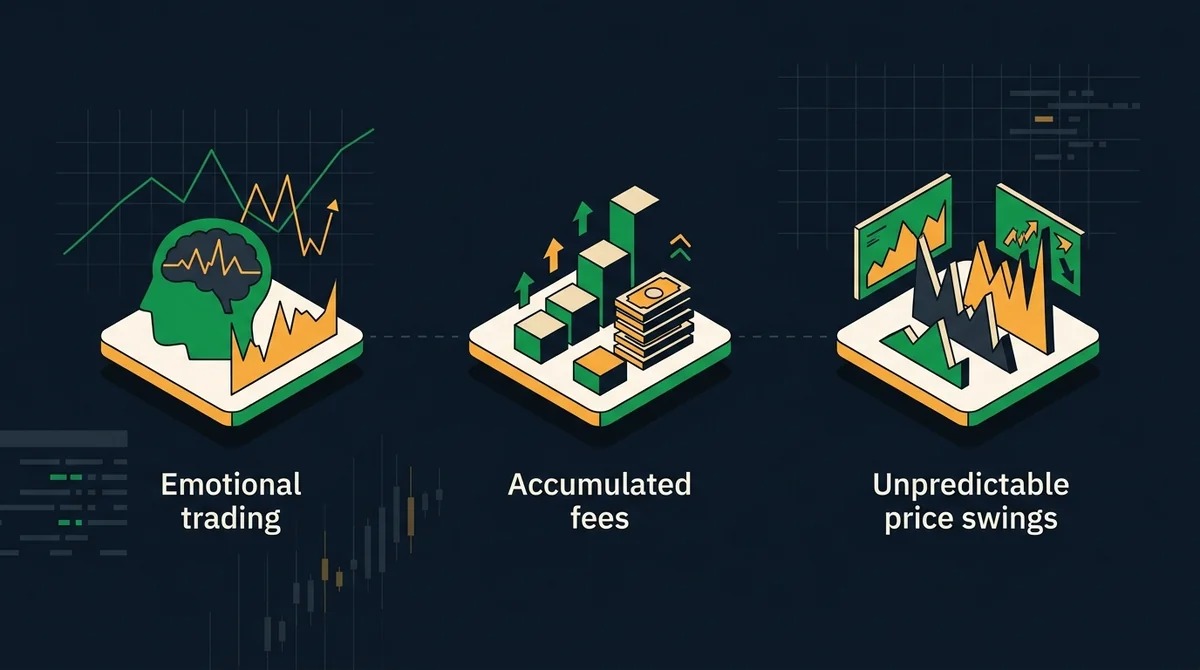
Buying High and Selling Low with Emotional Trading
Retail investors in volatile markets may interpret 'selling and then repurchasing at a higher price' as a replicable strategy, but such operations often involve emotional decision-making. Chasing higher to buy can bring greater drawdown risk, especially without clear exit conditions.
Frequent Trading Costs
Every sale and repurchase incurs fees, spreads, and other costs. For individual users with high-frequency operations, cumulative costs may erode potential gains. Specific fee rates should be based on the actual rules of the platform used; this article does not pre-fill numbers.
Price Unpredictability
Bitcoin prices are highly volatile, and historical trading cases do not predict future results. Even if the same institution makes a certain choice at a specific time, it does not mean that choice is necessarily suitable for investors with different capital sizes or risk tolerances.
How to Review Similar Decisions Using Your OKX Account and Trade Records (Operational Tutorial)
Exporting and Checking Trade Records
- Log in to the compliant trading platform you use and find the order center or trade history page.
- Export or view historical trade data by time range, confirming the time, price, and quantity of each sale and purchase.
- Separately mark the trade records corresponding to 'sale' and 'repurchase' to avoid confusion with other trades.
The above steps are based on actual platform features; this article does not fabricate any 'personally tested' experience, nor guarantee that a particular platform feature exists.
Reviewing the Price Difference Between Sale and Repurchase
Subtract the repurchase price from the sale price, and only after including fees and slippage can you see the true cost change. Do not compare only nominal prices, as that tends to overestimate the result.
Setting Price Alerts or Dollar-Cost Averaging Plans to Avoid Emotional Decisions
If the platform you use offers price alert or dollar-cost averaging features, you can try using them to build discipline. For example, set alerts when reaching a specific price level, or buy in batches on a fixed schedule. Specific features and available regions should be based on the official OKX page.
Verifiable Checklist and Data Scope
Verification Date and Source
This article is based on the decrypt.co report of September 2, 2026. Elements that need verification include: whether the original report link is still accessible, whether the CEO's identity is correct, whether more specific disclosure of sale and repurchase times has emerged, and whether any corrections or retractions have been issued subsequently.
How to Update If Official Clarification Emerges
If Strategy or related parties later disclose more specific repurchase prices, quantities, or motives, the content of this article needs to be revised accordingly. Readers should refer back to the original source and rely on the latest disclosures.
References and verification links
These are the article-level sources stored with this page. Interpret dynamic facts and rules in light of their dates, regions, and subsequent updates.
FAQ
When exactly did the Strategy CEO's '$60,000 sale and higher-price repurchase' happen? ▼
Currently verifiable is that the report was published on September 2, 2026, and the specific times of the sale and repurchase have not been disclosed. To confirm exact dates, review the original decrypt.co report or wait for subsequent public announcements from Strategy.
Why can 'selling low and buying high' still be called the 'correct trade'? ▼
From an institutional perspective, the sale may have locked in an acceptable exit price at the time, while the repurchase may have been based on a subsequent new judgment or capital arrangement. However, the original report did not provide the motive, so 'correct' does not mean maximizing profit, nor does it mean it is suitable for retail investors.
Can retail investors copy this kind of trading? What are the risks? ▼
It is not recommended to copy. Risks include chasing higher after missing out, emotional operations, accumulation of trading costs, and price unpredictability. This operation comes from the context of a specific institution or individual and is not universally replicable.
How can I export trade records on OKX for review? ▼
You can log in to your OKX account, export trade data for a specified time range from the order center or trade history page, and mark the time, price, and quantity of sales and repurchases for comparison. Specific features are subject to the actual official OKX page.
Does this report represent investment advice from OKX or OKX Radar? ▼
No. This article is only for information organization and educational review. The Strategy CEO's personal trading views do not represent the stance of OKX, OKX Radar, or any platform, and do not constitute investment advice.
The data in the report may be updated later; how can I verify it? ▼
It is recommended to revisit the original decrypt.co link and watch for any corrections, supplements, or retractions subsequently issued by Strategy officials or reliable media. Data in this article is as of the September 2, 2026 report; if sources are updated, the article needs to be revised accordingly.