US Treasury Yields Surge to 5.10% Sparking Stock-Bond and AI Debt Risks, BNB Chain Tokenized Assets Surpass $1.1 Billion: A 2026 Crypto Asset Allocation Perspective
US Treasury yields hit 5.10%, AI debt and oil gains pressured risk appetite, and BNB Chain tokenized assets topped $1.1B; see the OKX verification steps.

Article Citation Summary
US Treasury yields hit 5.10%, AI debt and oil gains pressured risk appetite, and BNB Chain tokenized assets topped $1.1B; see the OKX verification steps.
Editorial and verification: Prepared by the OKX Radar content team; updated October 2, 2026. Verification method: only disclosed data from external reports such as Yahoo Finance, CNBC, and Cointelegraph were used; no unverified information was added. This article applies only to products already supported by OKX and does not constitute investment advice. Product availability is subject to the latest official OKX pages.
Macro shock: How 5.10% US Treasury yields, rising oil prices, and US equity declines affect crypto assets
Key macro and AI debt data at a glance
| Indicator/Asset | Value | Date | Source |
|---|---|---|---|
| US 10-year Treasury yield | 5.10%, intraday near 5.14% | 2026-09-23 | Yahoo Finance |
| S&P 500 index | down 0.8% | 2026-09-23 | Yahoo Finance |
| Dow Jones Industrial Average | down 352 points | 2026-09-23 | Yahoo Finance |
| Nasdaq Composite | down 1.1% | 2026-09-23 | Yahoo Finance |
| Brent crude November contract | up 3.9% to $103.08 per barrel | 2026-09-23 | Yahoo Finance |
| Projected AI-related debt issuance by 2030 | $4.1 trillion | 2026-09-27 | CNBC / J.P. Morgan |
| SoftBank junk bond issuance | $11.1 billion, 7-year yield 9.75% | 2026-09-27 | CNBC |
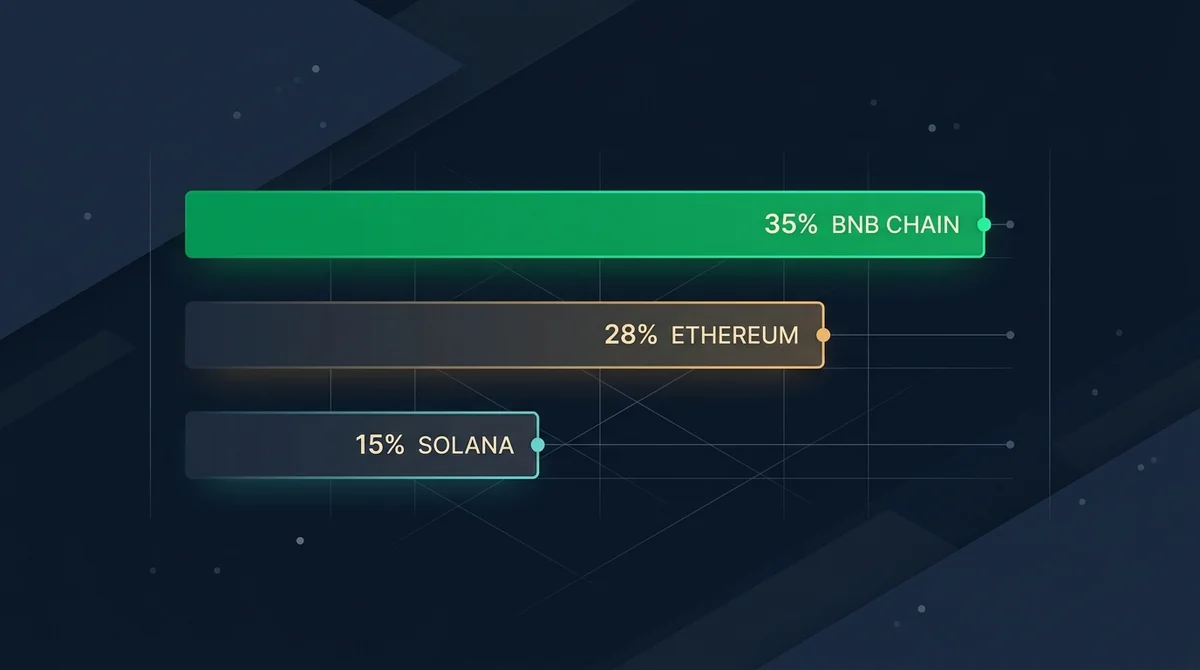
| BNB Chain tokenized stock and ETF market cap | $1.1 billion, about 30% of a $3.7 billion market | 2026-10-02 | Cointelegraph |
| Ethereum share of tokenized assets | 22% | 2026-10-02 | Cointelegraph |
| Solana share of tokenized assets | 20% | 2026-10-02 | Cointelegraph |
What is the transmission path from rising US Treasury yields to crypto assets?
Rising US Treasury yields raise the opportunity cost of holding risk assets, but crypto assets do not necessarily fall in tandem. According to a Yahoo Finance report on September 23, 2026, the US 10-year Treasury yield jumped to 5.10%, briefly approaching 5.14% intraday, the highest since 2007. When the 10-year yield exceeds 5%, capital tends to favor safe assets such as Treasuries, creating valuation pressure on high-volatility assets including stocks and cryptocurrencies. However, crypto asset performance also depends on on-chain capital flows, stablecoin supply, and regulatory expectations, and cannot simply be equated with a synchronous stock market decline.
Does a stock market decline mean crypto assets will weaken in tandem?
A stock market decline and crypto asset weakness are not one-to-one. On the same day, the S&P 500 fell 0.8%, the Dow Jones Industrial Average fell 352 points, and the Nasdaq Composite fell 1.1%; the November Brent crude contract rose 3.9% to $103.08 per barrel, intensifying inflation concerns. Although a contraction in risk appetite usually affects both stock and crypto markets, the crypto market is also influenced by its own liquidity, derivatives liquidations, and on-chain activity. There is no specific BTC or ETH price data for the same period, so it cannot be confirmed whether the crypto market weakened in tandem that day. Users should verify current prices and volatility through the OKX market page themselves.
AI debt risk: spillover effects of SoftBank's $11.1 billion junk bonds and $4.1 trillion in AI debt
Why should high-yield debt from AI data companies be watched?
Rising yields on AI high-yield debt mean investors demand higher compensation for taking credit risk. According to a CNBC report on September 27, 2026, J.P. Morgan estimates AI-related debt issuance will reach $4.1 trillion by 2030. SoftBank issued $11.1 billion of junk bonds this week, with the 7-year tranche yielding as high as 9.75%, showing the market requires a high premium for AI data center debt. AI capital spending is enormous; if project returns fall short of expectations, it could trigger credit events and lead to a broad contraction in risk appetite.
How might AI debt defaults affect the crypto market?
If AI-related high-yield debt defaults or faces a liquidity crisis, credit market volatility could transmit to high-risk assets such as cryptocurrencies through risk-parity and institutional positioning channels. The crypto market and AI-themed assets overlap in some investor portfolios, so AI debt events may amplify market volatility. OKX users should treat such events as macro observation nodes and adjust positions according to their own risk budgets, rather than predicting specific price levels.
BNB Chain tokenized assets surpass $1.1 billion: allocation opportunities and verification points for OKX users
Why are tokenized stocks and ETFs growing on BNB Chain?
Tokenized stock and ETF market cap on BNB Chain reached $1.1 billion, accounting for about 30% of the entire $3.7 billion market. According to a Cointelegraph report on October 2, 2026, Ethereum and Solana account for 22% and 20% respectively, and a preliminary cross-chain tokenized asset competitive landscape has formed. BNB Chain has attracted some issuers and users with lower fees and ecosystem incentives. Tokenized stocks and ETFs allow users to access traditional assets on-chain, but the underlying assets, compliance frameworks, and liquidity vary by platform, and not all products are suitable for ordinary users.
Does OKX support trading of these tokenized assets?
There is currently no public information that OKX supports tokenized stocks or ETFs on BNB Chain, and it cannot be confirmed whether specific assets are listed. If users consider allocating, they should verify deposit, trading pair, and withdrawal support through official OKX channels (website announcements, help center, or in-app search). You can also refer to this site's tokenized US stock withdrawal tutorial for general withdrawal mechanisms, but that tutorial does not guarantee the availability of any specific asset.
Stablecoin strategy: potential applications and verification checklist for Open USD Stablecoin on OKX
What role can stablecoins play in a rising interest rate environment?
Stablecoins can serve as a low-volatility position in a portfolio, used to temporarily park funds, reduce overall volatility, or participate in on-chain yield products. In an environment of rising US Treasury yields and increasing risk asset volatility, this demand may increase. However, stablecoins are not risk-free; their peg stability depends on the issuer's reserves, audits, and redemption mechanisms.
Is Open USD Stablecoin listed on OKX?
The OKX listing status of Open USD Stablecoin currently has no public information to confirm, and there are no official documents or proof of reserves available. Users should not assume that any stablecoin necessarily pegs to $1, nor assume that OKX will definitely support it. Verification path: search "Open USD" or the contract address on the OKX App or website; check official OKX announcements; review the issuer's white paper and proof of reserves. If OKX has not listed it, you should not plan to use that stablecoin for allocation.
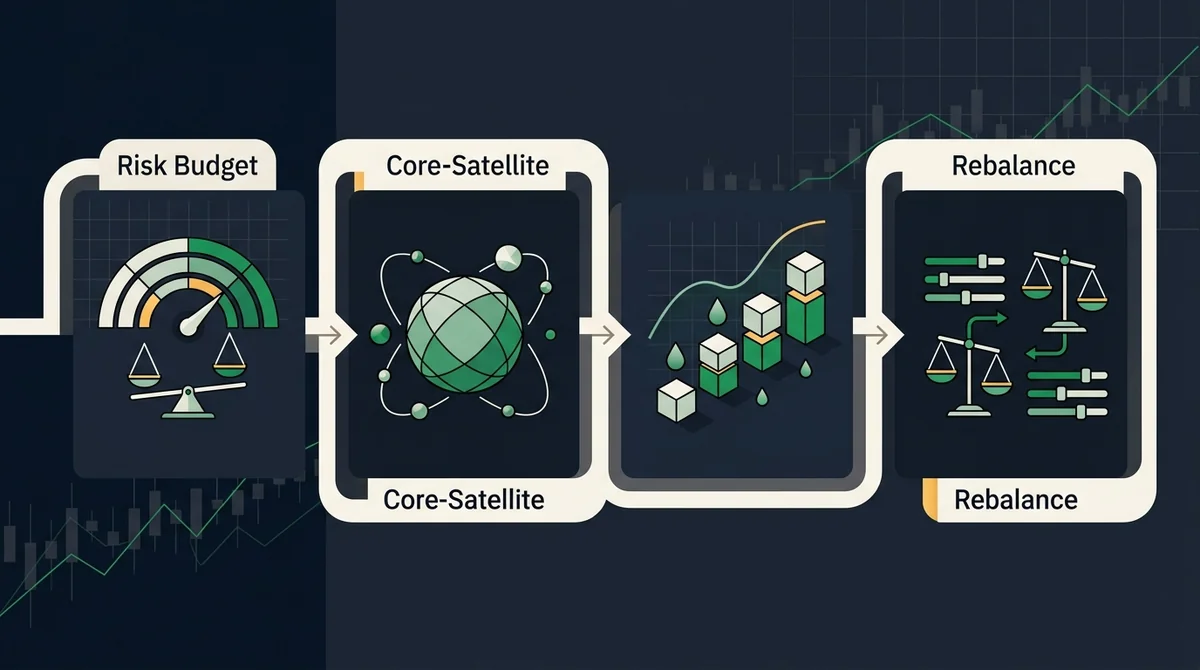
OKX practical guide: four-step crypto asset allocation process from risk budgeting to rebalancing
How to set a personal crypto asset allocation ratio?
First, assess your own risk tolerance and investment horizon, and determine the proportion of crypto assets in total assets. There is no one-size-fits-all fixed ratio; conservative users may allocate only a very small proportion, while users with higher risk tolerance may appropriately increase it, but it should not exceed the amount they can afford to lose.
What tools can be used on OKX to execute allocation?
Second, adopt a core-satellite strategy: the core position holds liquid assets such as BTC and ETH, and the satellite position may include verified tokenized assets or specific stablecoins. Third, use spot trading, limit orders, or dollar-cost averaging on the OKX platform to build positions gradually, avoiding a one-time lump sum. Fourth, rebalance regularly (for example monthly) and track macro indicators such as US Treasury yields and AI debt events to adjust risk exposure.
For specific OKX platform onboarding, refer to this site's exchange app beginner tutorial. All features, fees, and product availability are subject to the latest official OKX announcements; this article does not prefill any fee or yield figures.
References and verification links
These are the article-level sources stored with this page. Interpret dynamic facts and rules in light of their dates, regions, and subsequent updates.
FAQ
Does a 5.10% US Treasury yield mean crypto assets will inevitably fall? ▼
Not necessarily. Rising risk-free rates increase opportunity costs and may pressure risk assets, but crypto assets are influenced by multiple factors such as on-chain capital, stablecoin supply, and regulatory expectations, and specific market conditions need to be observed. No crypto market data was provided for the day of the US stock decline, so it must be verified independently.
Can OKX users directly purchase tokenized stocks on BNB Chain? ▼
This cannot be confirmed at present. The source material contains no announcement that OKX supports tokenized stocks or ETFs on BNB Chain; users need to check on official OKX channels whether the asset supports deposits, trading pairs, and withdrawals.
What is Open USD Stablecoin? How can it be traded on OKX? ▼
The source material contains no detailed information on Open USD Stablecoin, so its issuer, collateral mechanism, and OKX listing status cannot be confirmed. Users need to search on OKX and check official announcements; if it is not listed, it cannot be traded.
When AI debt risk rises, should you reduce crypto positions or increase stablecoin allocation? ▼
There is no fixed answer. It depends on personal risk tolerance. If you are concerned about risk appetite contraction, you may consider reducing high-risk positions or increasing stablecoin allocation, but this should be based on your own investment horizon and loss-bearing capacity.
How can you verify whether OKX supports a specific tokenized asset or stablecoin? ▼
Three steps: search for the asset name or contract address on the OKX App or website; check official OKX announcements for listing information; review the issuer's white paper and proof of reserves. Do not rely solely on third-party data.