Tokenization Supercycle Begins: Can BNB Chain's RWA Activity Overtake Solana?
Binance is rapidly expanding in RWA and tokenized stocks, with BNB Chain activity approaching or even surpassing Solana amid regulatory and liquidity shifts.

Article Citation Summary
Binance is rapidly expanding in RWA and tokenized stocks, with BNB Chain activity approaching or even surpassing Solana amid regulatory and liquidity shifts.
The tokenized asset supercycle may be brewing, and Binance is seen as one of the key participants. Recently, Binance has been active in RWA, tokenized equities, and on-chain activity, with the market watching whether it can further establish itself as a liquidity hub.
BNB Chain Joins Mastercard to Build a Financial Super App
Binance co-CEO Richard Teng said BNB Chain has joined Mastercard's crypto partner program, part of Mastercard's ongoing expansion of its digital asset footprint, with a focus on fiat on- and off-ramps. For Binance, making the crypto journey for global users as smooth and integrated as possible is critical, and fiat on/off-ramps and card service providers are key infrastructure.
Binance currently has more than 300 million users globally, aims to reach 3 billion users, and is building a financial super app. Richard Teng stressed that users do not want fragmented financial services, but need an integrated platform that combines trading, payments, savings, and access to global markets. This is one of the paths along which Binance is evolving from its original crypto platform into a broader financial services platform. Similar to U.S. platforms such as Coinbase and Robinhood, Binance is trying to become a liquidity hub beyond crypto, especially in the RWA perpetual contracts space.
Rapid Expansion in RWA and Perpetual Contract Data
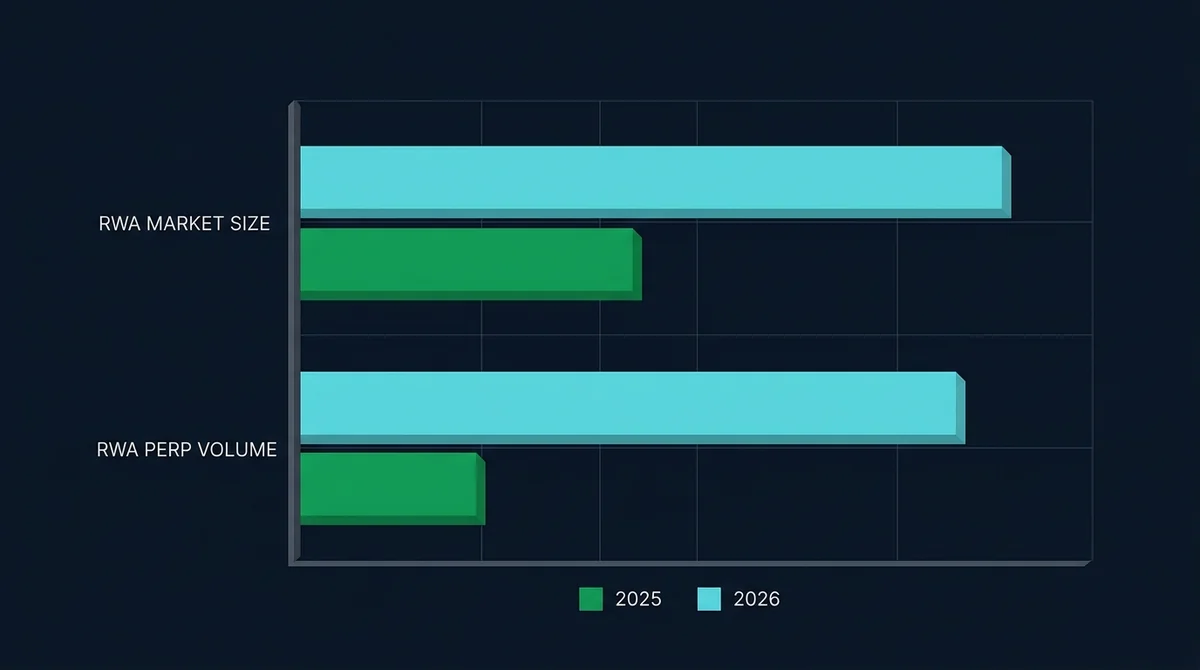
The growth in this area is clearly visible in the data. Taking liquidity metrics as an example, Binance's 1% mid-price depth for Bitcoin perpetual contracts reached $536 million in 2025; tokenized RWA scale grew from about $5.5 billion in 2025 to about $25 billion by mid-2026; and RWA perpetual contract volume jumped from $230 million to $347 billion. Richard Teng believes this is still in the early stages.
He noted that Binance began launching TradeFi perpetual products earlier this year, initially covering only commodities, then expanding to U.S. stocks, and later adding pre-listing perpetual contracts such as SpaceX and Tropic. Compared with traditional exchanges that trade only 8 hours a day and close on weekends and holidays, these Binance products offer 24/7 trading. Especially when news cycles continue to unfold, such as geopolitical risks and earnings results, investors are unable to open, hedge, or close positions while traditional markets are closed, creating significant risk. Binance's products remove this restriction.
It is worth noting that the market generally believes U.S. stock trading volume drops sharply outside U.S. trading hours, but Binance tokenized U.S. stocks (such as B-stock / BZRX) still see significant volume outside U.S. stock hours and on weekends. Users can also withdraw assets to their own wallets and deploy them in DeFi. Richard Teng said Binance has advantages in liquidity depth and market share in related markets and will continue to consolidate that position.
Regulatory Progress: Spillover Effects of the Stablecoin Bill and the Clarity Act
On the regulatory front, Richard Teng believes legislative and regulatory clarity is always positive for the market. Taking the stablecoin-related bill (GENIUS Act) as an example, after it passed in the U.S., stablecoin growth visibly accelerated, with large financial institutions trying to launch stablecoin products and partnering with payment service providers. Because the U.S. has the world's largest capital market and GDP, its policies create spillover effects globally, forcing other regulators to re-examine their own positions.
As for the Clarity Act, Binance hopes it can pass. Richard Teng said it would provide greater certainty and confidence for industry participants, and would also prompt regulators in other countries and regions to rethink competitive advantages, producing a positive global impact. As to whether this means Binance will expand its U.S. business, he said Binance's current focus remains refining its product matrix, launching AI products, and growing users and trading volume; the U.S. market is always being evaluated and closely watched, but specific strategy will be decided only after in-depth discussions with management, the board, and shareholders.
Tokenized Stocks and the Growth Potential of B-Stock
In tokenized equities, Binance B-stock added about $18.7 million in market cap over the past 24 hours, leading growth among major issuers and surpassing Superstate, Robinhood, and others. Richard Teng said it is difficult to predict how much business will shift to B-stock in the future, but most of the new products launched this year have been well received by users. The core reason is that global access remains a major pain point: BZRX provides users with global access to U.S. stocks, with 73% of demand coming from emerging markets, where users often cannot open U.S. brokerage accounts. Binance has become their de facto channel for accessing these products, covering both listed stocks and pre-listing stocks.
Moreover, these tokenized stocks can be withdrawn on-chain and deployed in DeFi, unlike traditional brokerage products. Users can combine crypto-native tools for lending and yield strategies, with APY roughly between 5% and 200% depending on different DeFi strategies, while traditional brokers struggle to offer similar yield opportunities.
In terms of market size, Delphi Digital research shows that Binance TradFi perpetual contract volume was about $439 billion between July 1 and July 31. Richard Teng hopes that figure can multiply over the next 24 months. He said Binance will continue optimizing products based on user feedback and trends, and plans to expand tokenized stocks to more markets beyond U.S. stocks and introduce products across more asset classes. He believes related volume will continue to climb rapidly.
In the RWA tokenized equities track, Ondo is still in the lead, but B-stock has risen to third place and is very close to second, with a steep growth trajectory.
BNB Chain Surpasses Solana in RWA Activity
On-chain, BNB Chain has already surpassed Solana in RWA activity, reflecting Binance's ability to expand tokenized assets outside the U.S. market. Richard Teng pointed out that this setup offers global users more opportunities, lower fees, and connection to the deepest liquidity pools in the world. For traders and investors, deeper liquidity means bid-ask spreads narrow significantly, saving substantial costs over time, which is what both institutions and retail investors want to see.
Market Structure: The Potential Impact of Hyperliquid
Recently, the market has been focused on news that Hyperliquid may be brought into the U.S. regulatory framework by the CFTC. Market participants believe that if Hyperliquid becomes the first DeFi platform regulated by the CFTC, it will set a precedent for other offshore DeFi platforms and could become an important narrative for market structure in 2026. The news briefly caused price swings in traditional exchanges such as CME and CBOE.
Richard Teng said there is still insufficient information to judge the specific impact. The market's focus is on whether a new model without KYC/KYB will emerge; if it does, it would have a huge impact on the entire financial services industry. He believes it is mostly market speculation at this stage, but Binance will watch closely, because whatever the final structure, traditional financial institutions are likely to be significantly affected. As to whether Binance will seek U.S. compliant perpetual contract business through an independently registered entity, Richard Teng only said Binance will explore the best entry methods around the world and cannot disclose specific strategy at present.
Tether Audit, Tokenized Gold, and Binance Blockchain Week
On industry transparency, Tether completed its first audit conducted by KPMG, which was seen as positive. Richard Teng believes any initiative that enhances trust, transparency, and clarity is a positive signal for the entire crypto industry. Binance is also promoting transparency itself, for example by launching proof-of-reserves early to show users that assets are always held 1:1, and pushing regulators to treat this as a best practice, even though not all global exchanges do so.
On the competition between tokenized gold and Bitcoin, Richard Teng said long-term crypto participants generally remain firmly bullish on Bitcoin. Tokenized gold has clear advantages over physical gold, such as no custody fees or shipping costs, better liquidity, and usability for trading and multi-layered structured operations, but tokenized gold and Bitcoin belong to different asset classes and are not directly comparable.
Finally, Binance Blockchain Week will be held in Bangkok at the end of November. The event will bring together global speakers, developers, community builders, and investors, with multiple announcements expected. Richard Teng said this year's event returns to Asia, serving both as a celebration of crypto industry progress and covering broader changes in the financial landscape.