Avalanche: Recent Institutional Adoption and Tokenized Stock Opportunities
A review of recent Avalanche developments: AVAT rebound, institutional adoption, tokenized stock plans, staking growth, and network upgrades in the ecosystem.

Article Citation Summary
A review of recent Avalanche developments: AVAT rebound, institutional adoption, tokenized stock plans, staking growth, and network upgrades in the ecosystem.
Over the past few weeks, the AVAT token in the Avalanche ecosystem has rebounded significantly from its July low, while Avalanche as a whole still lags behind some major blue-chip assets. Several noteworthy developments have emerged recently around Avalanche's institutional adoption, tokenized stocks, staking growth, and network upgrades.
Market Environment and Recent Rebound
From the price trend, AVAT basically bottomed in July and has risen significantly in recent weeks, but Avalanche as a whole is still slightly behind other major blue-chip tokens. Avalanche Treasury CEO Bart Smith explained the earlier market context: entering the summer over the past year, the overall crypto asset environment remained poor; a year ago the market originally expected the combination of Kevin Hassett and the Clarity Act, but instead got the situation of Kevin Warsh and Warren Marant, which was inconsistent with expectations at the time. Meanwhile, the AI sector absorbed growth capital in areas such as infrastructure and chips, and market attention was highly concentrated. Since growth capital is not unlimited, crypto assets had almost no buying for a period.
Bart Smith believes that the structure of a permanent capital vehicle has advantages in a volatile market. If managing an ETF, when investors subscribe you must buy AVAX that day; when investors panic redeem, you must sell the underlying AVAX, which amplifies already severe volatility. As a treasury vehicle with permanent capital characteristics, it does not have to respond immediately to market fear and euphoria and can take a medium- to long-term view. He mentioned that the company started trading in June after its business combination, when many investors were unwilling to hold Avalanche and chose to sell, causing the stock price to trade significantly below its intrinsic value. Now, as tokenization begins to generate real-world applications, the market has re-recognized that innovation will become part of the crypto narrative; expectations that AI and crypto will reinforce each other, along with a series of announcements from Avalanche, have led investors to believe there is an undervalued asset, thus bringing buying.
Institutional Adoption and Avalanche Positioning
Regarding the pacing of institutions and retail, Bitwise researcher Ryan Rasmussen's observation of a 'post-Clarity Act crypto rebound' shows that among Layer 1 and Layer 2 assets, Near has a larger position, while Avalanche's allocation is higher than Hyperliquid, Lighter, XRP, Solana, and ETH. Institutional money often leads retail, so whether retail will re-enter Avalanche becomes a point of focus.
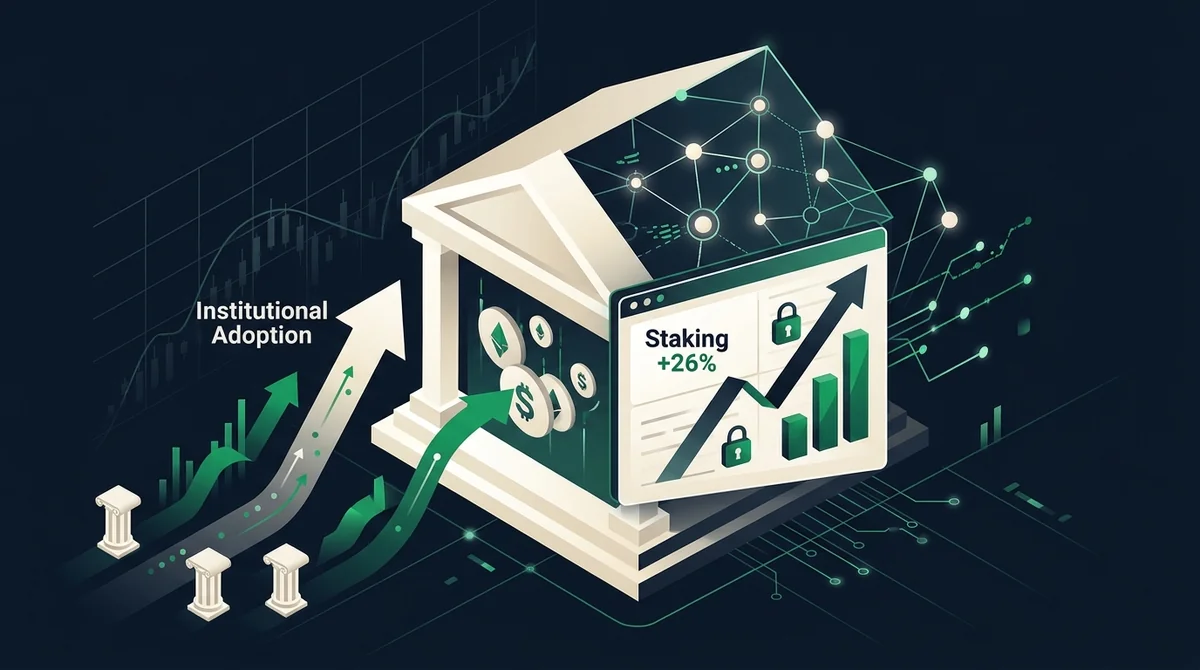
Bart Smith said he does believe retail will return, and the Avalanche ecosystem will continue to make progress in the institutional sector. Avalanche is positioned as being built for commerce, which is exactly its use case. Last week, the New York Stock Exchange conducted a request for proposals, examined about a dozen L1 networks, and concluded that Avalanche meets all requirements: the ability to customize compliance and KYC, launch its own chain, and connect to a high-throughput, decentralized, EVM-compatible chain. The NYSE's prototype is very similar to CME or Nasdaq. After that, New York Life also made an important announcement, and asset managers have successively announced they will build applications on Avalanche; this is similar to the path of BlackRock distributing its BUIDL product on Avalanche. Large institutions are choosing Avalanche, so the market believes that if these institutions choose it, at least it is likely to become one of the top two or three networks considered by other large institutions, and may win more mandates from 2027 to 2029.
However, Bart Smith also clarified that the NYSE has not announced it has been selected; it only stated that Avalanche meets all conditions and did not explicitly say it will choose it. But the market interprets this statement as meaning that if it is suitable for the NYSE, it may also be suitable for many other institutions.
Staking Growth and Network Upgrades
On on-chain data, the liquid staking protocol Benqi has expanded noticeably recently, with significant growth over the past day; the 7-day change in staked AVAX reached +26%, reflecting positive signals in the Avalanche ecosystem. As for whether institutions are affected by this, Bart Smith believes that being able to use such assets as collateral and incorporate them into an overall portfolio in a decentralized way is an important advancement. However, this part is currently driven more by retail or crypto-native investors, and institutions still need time to understand. Staked assets earn compensation while securing the network and can still be used in other forms; this education is progressing on the institutional side, and actual growth will provide test cases.
Regarding network upgrades, Helicon has started and is in progress. The Avalanche community has proposed six items, including continuous execution, auto-renewing staking, uptime requirements, shortening the minimum staking period, and dynamic minimum gas fees. Bart Smith believes that continuous staking mainly removes administrative burden and is a natural operational upgrade. More broadly, all L1 networks face the issue of inflation creating headwinds for price, while also wanting to reward dynamic behavior rather than users setting staking and never paying attention again. Many L1s drastically reduce fees to make transactions nearly free, helping early businesses and ecosystem applications grow; on the other hand, when adoption increases and economic activity becomes active, these activities should return value through token burning. Unlike many other chains, the total supply of AVAX is fixed. Therefore, a balance must be struck between allowing businesses to grow at low cost and enhancing token value through burning. This issue will be a topic of ongoing discussion among communities such as Ethereum, Solana, and Avalanche over the coming years.
Security Incident and Community Response
In a recent security incident, the hack suffered by Bitget involved AVAX. The attacker, allegedly from North Korea, attempted to sell the proceeds on Ferro. Ferro responded to these bad actors by dynamically increasing fees and redistributing the relevant fees to the community. Voices also emerged in the community saying 'don't bet against this group.' Such incidents reflect that there is still an active community and Degen opportunities within the Avalanche ecosystem, which may become one of the factors bringing Avalanche back into the spotlight, similar to the successes previously seen on Solana and on Ethereum or Robinhood chains.
Tokenized Stocks and New Leadership
One of Avalanche's new leaders, Charlie Cooper, stated that his vision is to provide real-world problem solutions rather than innovation for innovation's sake; when working with serious institutions, one needs to make them understand that this is a mature organization and operate according to institutional mindsets. Those institutions that slow down innovation because of the failure of the Clarity Act will not themselves become leaders in this field.
Meanwhile, Securitize launched Arc this week, but entry barriers still exist, with KYC requirements layered on top of each other and a complex process. Regarding whether Avalanche will therefore be limited to an institutional path, Bart Smith believes institutional use and community use can proceed in parallel. Institutions use blockchain as enterprise software: they can download Avalanche software from GitHub and launch their own L1; if they do not disclose it externally, it forms a 'walled garden.' They can set the scope of information disclosure and access permissions themselves, and ultimately connect to the fully decentralized, high-throughput, EVM-compatible C-Chain. Enterprises must comply with legal and regulatory obligations and must encode KYC and AML into their own compliance processes; they cannot directly accept the compliance solutions built into Solana or Ethereum because US rules have different interpretations. Therefore, Avalanche's customizable enterprise software attribute is necessary. At the same time, the decentralized community can still retain autonomy. Securitize, as a regulated on-ramp, requires social security number, date of birth, and identity documents; some users can accept this, while others will look for other opportunities. CFTC actions over the past 18 months have confirmed this bifurcation.
Regarding investor structure, there is a view that this cycle will see a generational shift: Degen users under 40 will begin to have financial scale comparable to baby boomers. Baby boomers currently hold a large amount of capital, but this advantage may not last long; institutions will either adapt or lose users. There are rumors that the SEC is preparing to modify KYC requirements, but this may be only superficial and will continue to hinder young investors from understanding blockchain and tokenized stocks. The next generation of investors may not necessarily invest in stocks through Wall Street.
Against this backdrop, the tokenized stock platform Pharaoh in the Avalanche ecosystem said it originally planned to announce the launch of tokenized stocks at the summit, but has postponed due to legal constraints and hopes to launch within a month. The original approach could not be completed at the same capacity due to legal restrictions, so a different form will be adopted. Arena brought large liquidity pools this week, will pair with stocks as one of the first ecosystem partners, and push assets into Avalanche.
Bart Smith believes tokenized stocks will bring significant opportunities. This is a classic innovator's dilemma: existing institutions will strongly use regulatory capture to protect their moats, but there are numerous signs that this change is happening. People believe unregulated stock trading venues will emerge in the future. CME's Terry Duffy opposes some regulation on one hand and demands exemptions on the other. More similar situations will emerge over the next 18 months. Bart Smith believes we may see 23.5 or even 24.5 hours of regulated stock trading this year. Old infrastructure cannot support 24/7 trading, so new tokenized infrastructure must be built; with about three months of favorable news, Avalanche is very likely to become one of the winners in this field.
The DTCC-related 23.5 or 24.5-hour trading has been discussed for about two years. If traditional finance practitioners have not foreseen this change, they may appear slow. Weekend markets continue to outperform traditional markets, which itself is a problem. Bart Smith added that platforms such as HyperLiquid, Robinhood, and Bybit show that users want to access commodities, crypto assets, stocks, and prediction markets in one place; young investors are heavily using prediction markets to speculate on different asset classes. Brokers and exchanges serving baby boomers still hold most of the funds, but over the next decade wealth will shift to the younger generation, who may not register with Schwab or Fidelity but instead use Robinhood accounts and the Rain card in the Avalanche ecosystem, forming a financial system independent of traditional finance. Therefore, for institutions like CME, NYSE, Nasdaq, Morgan Stanley, and UBS Wealth Management to compete, they may have to resort to acquisitions.
Gaming, Stablecoins, and User Experience
Regarding the gaming sector, Gunzilla is viewed by some as a failure after a 14-month launch cycle, but the fundamental problem lies in the lack of free asset flow; if free flow existed, the outcome could have been completely different. Bart Smith said he does not believe Avalanche has abandoned any vertical. The benefits of blockchain in payments and credit flows have been proven; the US Treasury and the President have both stated that blockchain stablecoins will become an important part of national security policy. From the perspective of a US equities trading desk, the stock settlement process is inefficient and prone to manual errors, and blockchain can greatly improve speed and efficiency; private credit issuance also has fundamental advantages on blockchain.
In contrast, the gaming experience does not necessarily offer fundamental improvements for users, the market size is relatively small, and the benefits for consumers and producers are not obvious enough. Avalanche still holds an important market share in gaming and will continue to pay attention, but the more urgent opportunities right now are tokenized stocks, tokenized credit, stablecoins, and cross-border remittances. The next 18 months will prove which chains truly benefit and which will miss opportunities.
On stablecoin growth, part of the recent growth on Avalanche has come from DEX and meme projects, such as Pharaoh, BlackHole, LFJ, etc. Some believe Avalanche needs to re-attract Degen users, because young investors may be the key to bringing the previous generation on-chain. Bart Smith agrees with this direction, but he believes the real obstacle is that the user experience across the entire smart contract L1 industry is still intimidating to ordinary users, with a high technical barrier. Many users traded on Avalanche's Trader Joe in 2021, then activity declined, and after assets sat idle for a year, when they came back they had forgotten how to use it, and there is no call center on-chain. The industry needs to make interfaces more friendly; breakthroughs may occur in the next 1 to 3 years, expanding the user base. Improving stablecoin and decentralized trading experience is part of that, but the core is lowering the usage threshold.