Scaling Tokenized Equities on Solana: 1:1 Redemption Mechanism and Global Market Prospects
Focuses on the 1:1 redemption mechanism for tokenized equities on Solana, global expansion plans, DeFi and traditional finance integration, and regulatory…
Article Citation Summary
Focuses on the 1:1 redemption mechanism for tokenized equities on Solana, global expansion plans, DeFi and traditional finance integration, and regulatory…
Tokenized equities within the Solana ecosystem are attracting growing attention. Armani Ferrante, CEO of a Solana ecosystem wallet and exchange platform (hereinafter referred to as "the platform"), said the direction could quickly expand from dozens of stocks to hundreds, then thousands, and eventually bring the entire U.S. stock market onto Solana. It should be noted that the following judgments on scale, timelines, and global expansion are the interviewee's personal views, carry uncertainty, and are not definitive commitments.
Market Structure: 1:1 Redeemable Stock Tokens and Cross-Market Arbitrage
Ferrante believes there are two ways to view tokenized equities: one is total value locked (TVL), and the other is liquidity, execution efficiency, and trading volume; these belong to different dimensions, and large TVL does not necessarily correspond to an active market. The platform focuses more on building market structure on Solana and describes itself as one of the first tokenized equity projects on Solana, issuing tokens that are redeemable 1:1 for real securities interests.
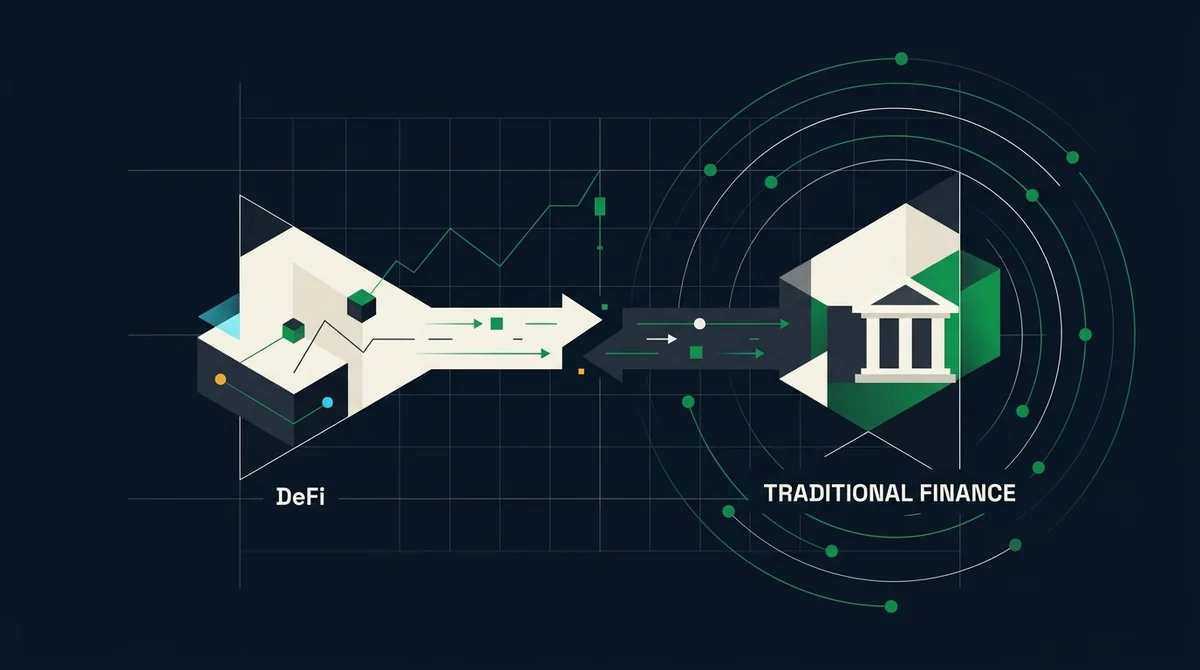
The key impact of this mechanism is that users can transfer assets between DeFi on Solana and traditional finance venues (such as the New York Stock Exchange and Nasdaq) and complete transactions at token speed. Ferrante said the platform's security tokens currently deliver execution efficiency on Solana roughly 10 times that of comparable competitors; BlockWorks data analysis shows that some transaction prices may be up to about 45 times better than the on-chain product of a U.S. retail equities platform.
The reason is that these tokens correspond to real stocks: users can buy SpaceX tokens on Solana today and sell them on Nasdaq, or transfer them to brokerage accounts such as Fidelity. This differs from many synthetic exposures, derivatives, or debt securities on the market, which may not have 1:1 backing or a redemption process. When on-chain prices diverge, arbitrageurs buy shares from traditional markets and bring them onto Solana, pushing prices toward parity. This 1:1 redemption mechanism forms a two-way pipeline between DeFi and traditional finance, helping keep prices efficient.
Number of Stocks and Global Market Expansion
Regarding the number of stocks by year-end, Ferrante said it is difficult to give an exact figure, but he expects it to grow quickly from around 50 to hundreds, then thousands, and it is more likely that at some point "overnight" the entire U.S. stock market will be brought onto Solana, then gradually replicated globally. He believes traditional investors and long-time brokerage users will be significantly affected.
The process of redeeming stock tokens from the platform to brokerage accounts such as Schwab and Fidelity is described as being as simple as transferring assets from one retail broker to another. The team's goal is to provide similar experiences for crypto-native and non-crypto users.
New Scenarios Enabled by Programmable Stocks
Ferrante believes that introducing blockchain programmability into stock markets will create new applications that did not exist before, such as meme coin and stock pair trades, programmable baskets, automated treasury management on-ledger, and cross-regional asset transfers. Not just U.S. stocks, but equities from markets such as South Korea, Japan, and Hong Kong can also be placed into a unified ledger, forming a financial services system rebuilt on Solana.
Holder Growth and Competitive Landscape
Based on asset holder data by issuer, the platform has grown rapidly recently and competes with some larger platforms. Ferrante said many participants are either the most well-resourced giants or have been operating for years; by contrast, the project launched SpaceX IPO as its first token on the first day of product launch, with zero marketing spend. Its growth has come mainly from the push of the Solana DeFi ecosystem (including experiments and contributions from projects such as Sunrise, Radium, and Stockfun), as well as the aforementioned market structure advantage — it is currently the only stock token product that can flow bidirectionally between DeFi and traditional finance at token speed, similar to how USDC moves in and out of trading platforms.
When asked whether a certain large platform is moving too slowly, Ferrante said the platform deserves industry respect but is indeed slow, and a competitor's job is to move faster.
Permissioned Assets: Institutional and B2B Paths Beyond the Stablecoin Model
Regarding the permissioned assets on Solana mentioned in Metaplex's MPL-3643, Ferrante offered two interpretations. The crypto industry today generally uses the stablecoin model: assets are bearer instruments, freely movable, composable with DeFi, support self-custody, and offer some privacy and anonymity. Another type of permissioned tokenization will become increasingly important in institutional settings and B2B settlement, because compliance requirements differ across countries and need to be embedded into the assets themselves. As the market matures and moves beyond DeFi, this model may become more widespread in traditional finance.
Traditional Finance, DTCC, and Instant Settlement
Regarding the DTCC's upcoming move in October, Ferrante believes the "awakening" of traditional finance has already happened: many people in the market are discussing tokenization, some are building, and most choose to cooperate. He is personally excited about the DTCC model, not because it will dominate retail or on-chain trading, but because the efficiency gains for intermediaries and financial services institutions are very significant. The most critical factor is settlement time: moving from T+1 and T+2 bank transfers to instant settlement will significantly improve capital efficiency and could bring roughly a 10x improvement in operations for all financial services firms.
Portfolio Usability: Unified Accounts and More DeFi Applications
The platform provides a unified portfolio margin system, allowing users to trade spot, spot margin, lending, perpetual contracts, and stocks in a single account. Future plans include more listed assets, opening stock markets in more regions, and making its built engineering capabilities and global compliance/licensing capabilities available to as many DeFi applications as possible. Ferrante said this is the part he is most excited about.
Competing with Existing Giants
On the statement that "a certain U.S. retail equities platform is not a cash machine," Ferrante said the related tweet was playful and not a dismissal of that platform. Established giants deserve respect, but young startups still have opportunities to compete through better products. He believes that when large companies enter fast-moving areas, they are often assumed to win easily, but innovation does not work that way. When the platform launched, there was a similar narrative that "big companies will win," but ultimately it still comes down to product competition; even if the other party is a company worth tens of billions of dollars, that does not mean later entrants cannot do better. Currently, the other party is pushing directions such as gas-free transactions to attract more traders, and the platform is also advancing in similar directions.
SEC Clarifications on Token Buybacks and Shareholder Voting
Ferrante believes the SEC's statement that announcements by decentralized crypto asset issuers do not constitute commitments to key managerial efforts is very positive for the industry overall. Over the past year, a so-called "revenue meta" trend has emerged in the token space: many tokens were once memes or empty promises, and the market has grown tired of promises that cannot be fulfilled, now demanding real cash flows and intrinsic value. Tokenization does not invalidate discounted cash flow valuation models; the market wants to build real products, services, and sustainable assets.
On shareholder voting, the SEC issued a no-action letter to Tesla, clearing the way for its voting plan. Subsequently, industry figures publicly said shareholders should be able to vote more easily. Ferrante believes signs of "voting gamification" have begun to appear; for example, some trading platforms present quarterly earnings reports in a format similar to game livestreams or post-game analysis by star athletes, with the core goal of increasing shareholder engagement. This trend is positive, and more modern companies will communicate directly with their audiences.
Stock Holding Rewards and Brand Loyalty
On directions such as stockholder rewards, stock loyalty programs, and the Visa card product launched in partnership with Jupiter, Ferrante said this is an interesting marketing dimension, but it may not fundamentally change the corporate landscape; it will become one of the tools for brand loyalty and community operations. One can refer to the AMC shareholder community case: AMC shareholders formed a strong community, which is related to the company's direct shareholder communications. In the future, stock assets may be further combined with payments, rewards, and other scenarios, but the more critical factor is whether related assets can be held and marketed around them to build an ecosystem.
Interest Rate Tools and On-Chain Treasury ETF Yields
The platform's website discloses a Treasury ETF interest rate table, breaking down the drivers of Treasury ETFs with different maturities such as 2-year and 10-year. Ferrante said this is a tool to help investors make informed decisions; interest rates are the most important signal in the market. For crypto-native users, such tools can reveal underlying assets that are common in traditional finance but not obvious in the crypto space. Treasury ETFs typically provide 3% to 4% dividend yields with relatively low risk; compared with DeFi lending, although similar rates may appear, the risk structure is different (e.g., smart contract risk). As assets move on-chain, the avenues for obtaining alternative yields on-chain will continue to expand.
USD Stablecoin Settlement and Derivatives Clearing
On the move by a major trading platform to launch a clearing unit and settle in USDC, Ferrante analyzed that the clearing unit is a CFTC-regulated derivatives clearing organization (DCO), currently used for prediction markets and not yet for margin trading. The move reflects the platform's heavy investment in prediction markets, and its mobile app has made prediction markets a core entry point. More importantly, these markets settle in USDC. The shift from cash to stablecoins is not a minor matter in regulated market structures: the greater the acceptance of stablecoins as dollar-equivalent collateral, the further stablecoins will spread, which is also a prerequisite for the expansion of assets such as tokenized equities.
Canadian Stablecoins and Fiat On-Chain
Canada has recently seen some moves in digitizing the Canadian dollar; for example, Tetra Digital launched a Canadian dollar stablecoin on Solana, using a 1:1 reserve model similar to USDC. Ferrante said the platform already offers Canadian-related ETF products, and more importantly, bringing national fiat currencies on-chain will drive foreign exchange markets, payments, and cross-border consumption. For example, swiping a card while traveling incurs high exchange rate costs, which could be narrowed and reduced through stablecoins in the future. He believes this process will neither take a decade nor be completed within a year, estimating roughly 3 to 5 years for relatively broad integration.
KYC, AML, and Zero-Knowledge Proofs
Former U.S. SEC Commissioner Hester Peirce has warned that existing KYC and AML databases may become attack targets, with higher risks as AI develops. Ferrante believes zero-knowledge proofs for KYC/AML are one of the most exciting directions in compliance, but the biggest challenge is getting global regulators to accept them. Even though U.S. regulators have moved relatively quickly on financial innovation in recent years, it is only one country; rules in Europe, Canada, Japan, and elsewhere vary, with customized requirements, so global implementation will take time.
Tokenized Trading Cards and Collectibles
Regarding the trend of tokenized trading cards (TCG), the market has seen some new attempts; for example, a major platform upgraded its card album and launched gameplay similar to opening packs. Ferrante said any team trying new directions should be respected; whether the product suits a large platform remains questionable, but the attempt itself is commendable. There is real demand in the collectibles market, and well-known investors wearing valuable trading cards also reflect the heat of this market. This direction is a natural extension of the previous cycle's NFTs. With the social scarcity and shared narratives enabled by AI, collectibles such as sports, art, and Pokémon will continue to grow.
Design Logic of Token Economic Models
Ferrante used Uber as an example to illustrate the problem of restricted equity distribution: platforms like Uber relied on drivers to build their networks early on, but could not give drivers stock due to securities law restrictions. He believes those who create value for a project, company, or protocol should have the right to participate in the upside. The platform's token model attempts to make tokens convertible into underlying company equity, which users can earn by providing liquidity, contributing to the trading market, and other means. He said this may be one of the earlier approaches in the market that allows tokens to be converted into underlying company equity.
In addition, he said the token model aims to avoid the traditional exit structure of "spiking on day one and declining over the long term." Traditionally, many tokens spike on TGE day, becoming an exit window for teams and investors, then gradually go to zero. The platform wants to do the opposite, allowing tokens to grow with the product. The team has no traditional unlocks; before milestones such as an IPO, all tokens entering circulation are unlocked by platform users: 25% are allocated to users at TGE, and 37.5% will be released upon reaching major milestones. One example is unlocking after entering the U.S. and Japanese markets, because the current core product does not yet serve those markets and covers only 48% of the global addressable market, so a considerable portion of future development will focus on expanding into new markets.
Risk Disclaimer
Tokenized equities, DeFi protocols, and cross-border securities trading involve market volatility, liquidity, smart contract, and compliance risks. The above content is only a compilation of industry views and does not constitute investment advice.