Bitcoin Accounts vs Wallets: Custody, Backup Responsibility, and Beginner Choices (2026 Verification)
Bitcoin accounts (custodial, like OKX) vs self-custody wallets: key control, backup, recovery, use cases, and beginner tips; verified via official docs, 2026.
Article Citation Summary
Bitcoin accounts (custodial, like OKX) vs self-custody wallets: key control, backup, recovery, use cases, and beginner tips; verified via official docs, 2026.
Article Summary
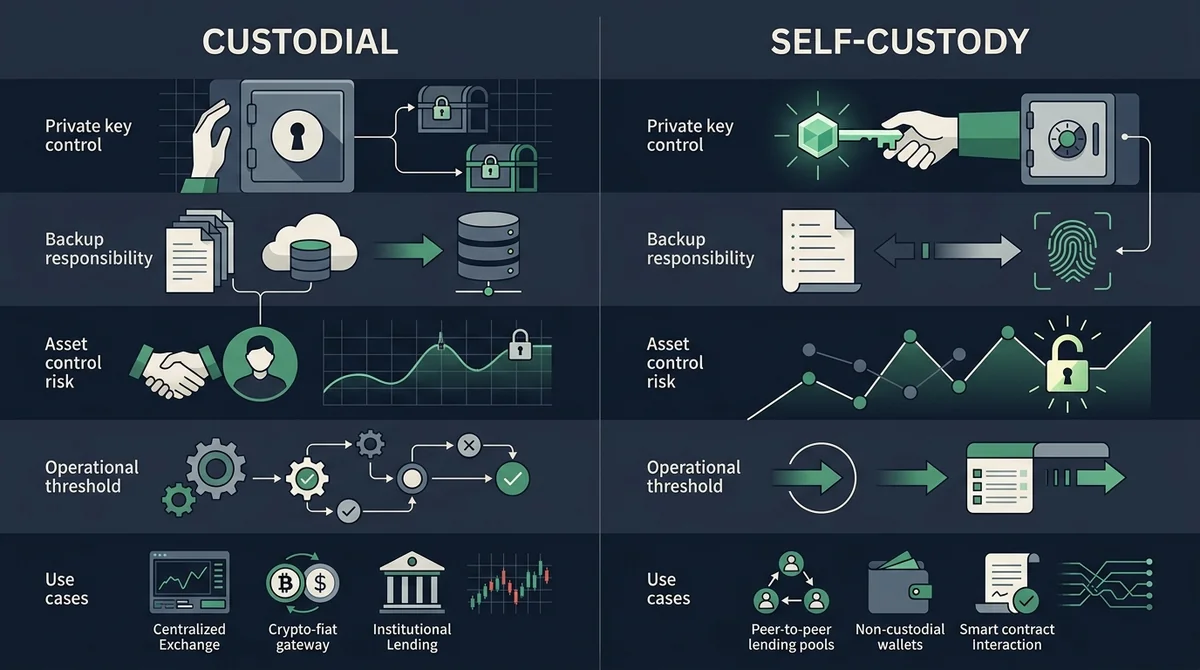
- A Bitcoin account usually refers to an account registered with a custodial platform, such as an OKX account; the platform is responsible for safeguarding private keys, and users access assets through account passwords or two-factor authentication, with control mainly held by the platform.
- A Bitcoin wallet (non-custodial) is created and controlled by the user, who generates and keeps the private key or seed phrase; users have full control but also bear full responsibility for backup and safekeeping.
- Backup responsibility differs significantly: if you forget the password for a custodial account, you can usually recover it through the platform's identity verification; if you lose the seed phrase for a non-custodial wallet, assets may be permanently lost, and the platform cannot help.
- The risks of the two models differ: custodial accounts face centralized risks such as platform bankruptcy, freezing, and hacking; self-custody wallets face personal risks such as user error, device loss, and malware; neither is absolutely safe.
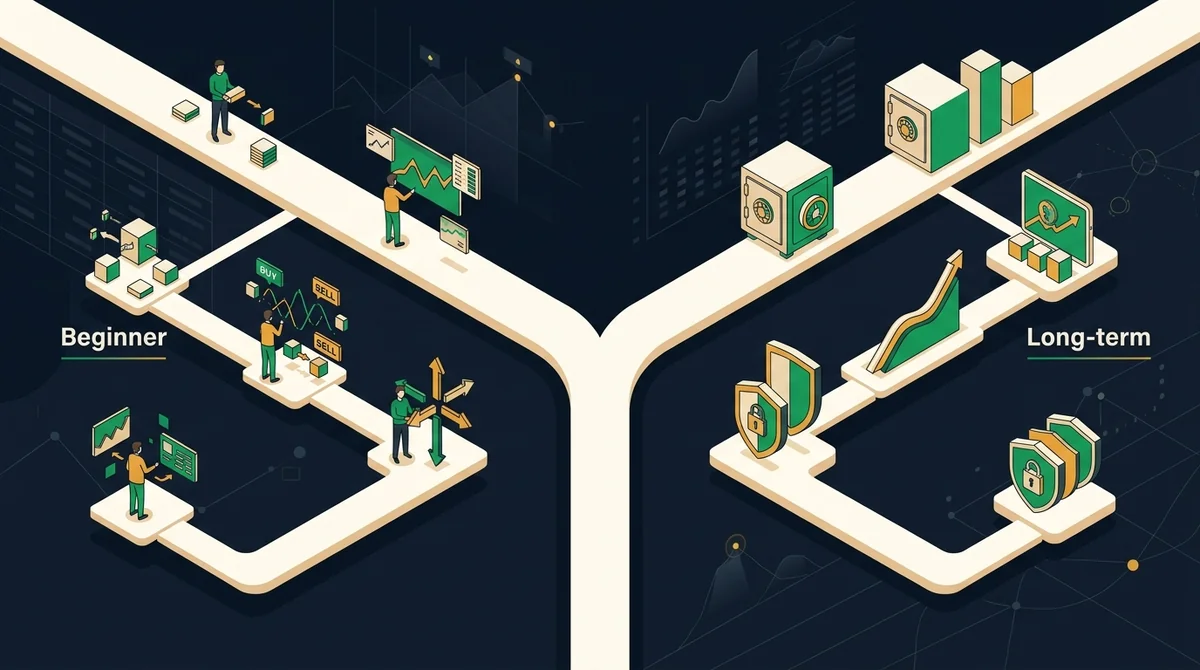
- Beginners should choose based on use cases: for small transactions, frequent trading, or getting started, a custodial account may be preferable; for long-term holding, privacy protection, or censorship resistance, a self-custody wallet may be worth researching. This article does not recommend specific products.
Custodial Accounts vs Self-Custody Wallets: Five Key Dimensions Compared
Bitcoin wallet types are mainly custodial and non-custodial. The table below is compiled from publicly verified paths, focusing on dimensions such as wallet backup responsibility, and does not include real-time fees or unverified figures; for specific terms, please refer to the OKX official help center and non-custodial wallet official documentation.
| Dimension | Custodial account (such as OKX account) | Self-custody wallet (non-custodial) |
|---|---|---|
| Private key control | Platform holds private keys; users rely on platform security | User generates and controls private key/seed phrase; platform cannot freeze assets |
| Wallet backup responsibility | Forgotten password can be recovered through platform identity verification | Lost seed phrase usually cannot be recovered; user bears permanent loss risk |
| Asset control risk | Platform bankruptcy, freezing, hacking, and other centralized risks | User error, device loss, malware, and other personal risks |
| Barrier to entry and recovery process | Simple registration, trading, and withdrawal; suitable for high-frequency use | Requires understanding on-chain fees, UTXO, etc.; recovery process is more complex |
| Suitable scenarios | Small transactions, beginners, frequent trading | Long-term holding, privacy protection, censorship resistance |
Private Key Control: Platform or User?
A custodial account has the platform holding the private key, and users rely on the platform's security system; this means the platform can technically freeze assets or restrict withdrawals. A self-custody wallet is created and controlled by the user, who generates and controls the private key or seed phrase; as long as the private key is not leaked, platforms or third parties usually cannot freeze assets. Verification method: search for "account security" or "private key" in the OKX help center, and read the "keep your own private key" notice page on a non-custodial wallet's official site to confirm control ownership.
How Are Backup and Recovery Responsibilities Divided?
For a custodial account, if you forget the password, you can usually recover it through the platform's identity verification process, provided you meet the platform's identity and risk-control requirements. For a self-custody wallet, the backup responsibility lies entirely with the user: if the seed phrase or private key is lost and there is no other backup, on-chain assets generally cannot be recovered, and the platform cannot help. Verification path: check the password recovery instructions in the OKX help center and the official warnings about seed phrase backups from non-custodial wallets such as Electrum and BlueWallet.
Beginner Choices: Which Scenarios Are Better Suited to Custody?
Small transactions, beginners, and high-frequency trading are usually better suited to starting with a custodial account, because registration, deposits, trading, and withdrawals are relatively simple, and you can contact platform support if you encounter problems. Users holding larger amounts long-term, valuing privacy, or needing censorship resistance may research self-custody wallets after learning about backups and on-chain operations. This site does not recommend specific products and only provides a decision framework; if you need to complete exchange account registration and first-time operations, refer to the site tutorial "2026 Exchange App Beginner Tutorial: Registration, KYC, Deposits, and Your First Trade - Complete Steps." For basic concepts about Bitcoin and blockchain, you can read "Bitcoin and Blockchain: Basic Analysis of Decentralized Digital Assets."
Data Scope, Sources, and Boundaries
The verification scope of this article is based mainly on relevant pages in the OKX official help center and official documentation of non-custodial wallets; no dynamic market data, fees, or security incident data are cited. Because the input materials did not provide real-time links, this article does not directly give official URLs; readers should visit the corresponding platforms' official websites to verify. Judgments such as "control" and "security risk" in this article are conditional analyses, not absolute guarantees of the security of any platform or product. The risks of custodial platforms and self-custody wallets cannot simply be compared as "which is safer"; the choice depends on asset size, technical ability, and frequency of use.
Risk warning: Digital asset prices are highly volatile and you may lose your entire principal; custodial platforms carry centralized risks such as bankruptcy, freezing, and hacking, while self-custody wallets carry user responsibility risks such as seed phrase loss and device damage. This article does not constitute investment, legal, or tax advice. All materials and rules may change at any time; before making decisions, refer to the latest official announcements and actual product pages.
FAQ
What is the difference between a Bitcoin account and a wallet? ▼
A Bitcoin account usually refers to a custodial platform account where the platform holds the private key; a wallet generally refers to a self-custody wallet where the user keeps the private key and seed phrase. The two differ in control, backup responsibility, and recovery process.
Are custodial wallets safe? Can the platform control my coins? ▼
A custodial account has the platform holding the private key, so the platform can technically freeze or restrict withdrawals; at the same time, the platform provides account security and recovery mechanisms. Whether it is safe depends on the platform's risk controls and the user's own account protection; there is no absolute safety.
Is backing up the seed phrase mandatory? What if I lose it? ▼
For a self-custody wallet, the seed phrase is the only credential for recovering assets; if lost without a backup, it usually cannot be recovered. A custodial account can recover a forgotten password through platform identity verification, but you still need to meet the platform's risk-control requirements.
Should beginners use an exchange account or set up their own wallet? ▼
For small transactions, high-frequency operations, or getting started, a custodial account may be preferable; users holding larger amounts long-term, valuing privacy, or needing censorship resistance may consider a self-custody wallet after learning about backups and on-chain operations.
Is an OKX account custodial or non-custodial? ▼
According to mainstream classification, an OKX account is custodial, with the platform holding the private key. The specific classification should be based on the OKX official user agreement and the latest help center instructions.
How can I verify that a wallet truly lets me control the private key? ▼
Check whether the wallet offers the ability to export the seed phrase or private key and can complete signature verification offline; also see whether the official documentation clearly states that 'the user keeps the private key.' Do not rely solely on product marketing.