Bitcoin Holds $81,000: September 3 ETF Flows and FHFA Crypto Mortgage Plans Explained
Sep 3, 2026: U.S. spot Bitcoin ETFs +$101.15M net inflows; BTC $81,491; Ether/XRP ETF streaks end; FHFA to count crypto as mortgage assets—data, policy, risks.

Article Citation Summary
Sep 3, 2026: U.S. spot Bitcoin ETFs +$101.15M net inflows; BTC $81,491; Ether/XRP ETF streaks end; FHFA to count crypto as mortgage assets—data, policy, risks.
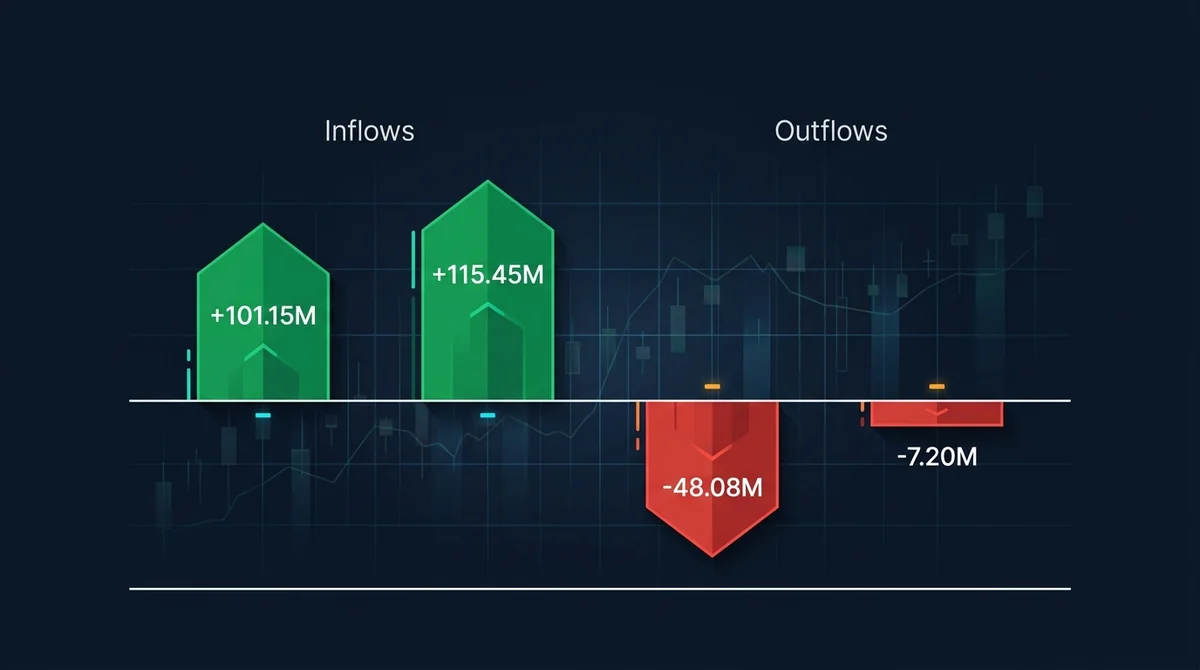
On September 3, U.S. spot Bitcoin ETFs recorded $101.15 million in net inflows, reversing the previous day's net outflow; BTC closed at $81,491, marking its first close above $80,000 in September. Ether ETFs saw net outflows of $48.08 million and XRP ETFs net outflows of $7.2 million, each ending a streak of consecutive net inflows. The FHFA director has ordered Fannie Mae and Freddie Mac to prepare to count cryptocurrencies as mortgage loan assets, though the relevant rules have not yet formally taken effect. The above data is as of September 3–4, 2026, sourced from public reports by Yahoo Finance and Decrypt.
September 3 Session: How Bitcoin Held $81,000
September 3 Price Action and September 4 Opening
According to a Yahoo Finance report on September 3, 2026, Bitcoin rose 5.5% on the day to $81,491, marking its first close above $80,000 in September. On September 4, it opened at $81,271.92, up 5.1% from Thursday's open; Ether opened at $2,507.70, up 4.9%. A single-day gain should not be viewed as trend confirmation and needs to be assessed alongside subsequent volume and policy developments.
Short-Term Impact of the US-Iran Hostilities Pause on Crypto Markets
In the same report, Yahoo Finance linked Bitcoin's move back above $80,000 to the earlier pause in US-Iran hostilities. External geopolitical events can provide short-term sentiment-driven support for risk assets, but they cannot by themselves form a long-term price foundation. Users should distinguish event-driven short-term volatility from fundamental changes.
Spot ETF Flows: Three Scenarios for BTC, ETH, and XRP
Why Bitcoin ETFs Reversed Net Outflows
Decrypt reported on September 3, 2026 that Wednesday's spot Bitcoin ETF net inflows were $101.15 million, reversing the prior day's $236.5 million net outflow. BlackRock's IBIT posted a single-day net inflow of $115.45 million, contributing more than the total Bitcoin ETF net inflow and serving as the main source of the day's inflows.
What the End of Ether and XRP Inflow Streaks Means
The same source showed that U.S. spot Ether ETFs had net outflows of $48.08 million, ending a 12-day streak of net inflows; spot XRP ETFs had net outflows of $7.2 million, ending an 11-day streak of net inflows. An interruption in consecutive net inflows does not necessarily mean a trend reversal; single-day flows are affected by many trading factors and need to be tracked over subsequent days.
BlackRock IBIT Single-Day Net Inflow Data
BlackRock's IBIT posted a single-day net inflow of $115.45 million, higher than the total Bitcoin ETF net inflow of $101.15 million. This indicates that other Bitcoin ETF products saw net outflows that offset part of IBIT's inflow. This structural difference reminds users not to judge all products solely by overall net inflows.
FHFA Crypto Mortgage Loans: Confirmed Actions and Details to Verify
What FHFA Director Pulte Ordered
According to a Yahoo Finance report on September 4, 2026, William J. Pulte, Director of the Federal Housing Finance Agency, has ordered Fannie Mae and Freddie Mac to prepare to count cryptocurrencies as mortgage loan assets. This action is still in the preparation stage; formal rules and implementation timelines have not been announced.
Timing and Rule Scope for Fannie Mae and Freddie Mac Implementation
As of publication, Fannie Mae and Freddie Mac have not issued formal implementation rules. Counting cryptocurrencies as mortgage loan assets involves multiple processes such as asset valuation, custody, settlement, and risk management; the specific scope of support and technical standards still need to be confirmed by official documents.
Regulatory Context with the CLARITY Act
The Senate is scheduled to hold a final debate vote on the CLARITY Act on September 15, 2026; the bill would divide regulatory authority over digital assets between the SEC and CFTC. This legislative process and the FHFA order are both part of adjustments to the U.S. crypto regulatory framework, but they differ in legal level and implementation path.
How Regular Participants Can Verify Data and Set Risk Boundaries
The Time Lag Between Spot Prices on Platforms Like OKX and ETF Flow Data
ETF flow data comes from post-close aggregates of the U.S. market and has a time lag relative to the 24-hour cryptocurrency spot market. When viewing spot prices on platforms like OKX, users should verify the price basis, opening time, and data update time, and avoid directly applying ETF data as a real-time trading signal.
Do Not Treat Single-Day ETF Net Inflows as a Buy Signal
Single-day fund flows are affected by accounting adjustments, market maker behavior, and market sentiment, and do not constitute a reliable basis for buying. Any investment decision should be made independently after verifying sources, timing, and statistical definitions; this article does not constitute investment advice for any platform or asset.
Distinguishing Crypto Mortgage Loans from Crypto Asset Allocation
Even if the FHFA order is eventually implemented, it does not mean users can immediately use Bitcoin to apply for a mortgage. Before the policy is finalized, one should not assume the scope of support in advance. Crypto asset allocation and mortgage qualification are two different matters and each must be verified against official rules.
Sources and Limitations
All facts in this article come from public reports published by Yahoo Finance and Decrypt on September 3–4, 2026. ETF fund flows are single-day data and may be subject to differences in statistical definitions and later revisions; the FHFA director's order and the CLARITY Act are policy processes that have not yet formed final effective rules. OKX Radar is an independent third-party media outlet with no official affiliation with OKX, and the operational reminders in this article are for general educational purposes only and do not constitute investment advice.
References and verification links
These are the article-level sources stored with this page. Interpret dynamic facts and rules in light of their dates, regions, and subsequent updates.
FAQ
Why did the opening price remain below the previous day's high despite Bitcoin ETF net inflows of $101.15 million? ▼
ETF net inflows reflect post-close capital aggregation of the U.S. market, while the crypto spot market trades 24 hours; the two use different timeframes. Opening prices are also affected by overnight macro sentiment and liquidity, so single-day ETF data cannot be used to directly predict opening prices.
Will the end of Ether ETFs' 12-day net inflow streak trigger further declines? ▼
An interruption in consecutive net inflows does not necessarily lead to further declines; single-day fund flows are affected by many factors, and subsequent days need to be observed before judging a trend.
Does the FHFA counting cryptocurrencies as mortgage loan assets mean Bitcoin can now be used to buy a house? ▼
No. The FHFA director's order only requires Fannie Mae and Freddie Mac to prepare to count cryptocurrencies as mortgage loan assets. Formal rules and implementation timelines have not been announced, so this cannot currently be equated with being able to use Bitcoin to apply for a mortgage.
Will the passage or failure of the CLARITY Act vote on September 15 directly affect Bitcoin's price? ▼
If passed, the bill will clarify the regulatory authority of the SEC and CFTC and may cause short-term sentiment swings, but the price impact depends on how the market interprets it and the implementation details, and cannot be simply attributed to the vote result.
How should regular users avoid mistakenly treating ETF data as a real-time signal when buying and selling Bitcoin on OKX? ▼
They should first distinguish the statistical time of ETF fund flows from the real-time price time of the spot market, verify the market update time on platforms like OKX, and refer to multiple sources instead of relying solely on single-day ETF data.