Bitcoin ETF posts $217M single-day net inflow, BlackRock contributes 95%; Ethereum, XRP and other altcoin ETFs see consecutive net inflows in 2026
On Sep 1, 2026, US spot Bitcoin ETFs had a $217M net inflow with BlackRock at 95%; ETH ETFs extended to 11 days and XRP/Solana ETFs to 10 days of net inflows.

Article Citation Summary
On Sep 1, 2026, US spot Bitcoin ETFs had a $217M net inflow with BlackRock at 95%; ETH ETFs extended to 11 days and XRP/Solana ETFs to 10 days of net inflows.
On September 1, 2026, U.S. spot Bitcoin ETFs recorded a net inflow of $216.7 million, reversing the previous trading day's outflow of $201.8 million. BlackRock's iShares Bitcoin Trust ETF contributed about 95% of the net inflow; spot Ethereum ETFs recorded net inflows for the 11th consecutive day, and XRP and Solana spot ETFs recorded net inflows for the 10th consecutive day. Data comes from a Cointelegraph report on the same day. A single day's fund flow is not enough to confirm a trend, and OKX users should combine market conditions and on-chain data for independent judgment.
Bitcoin ETF posts $217M single-day net inflow: a BlackRock-led reversal
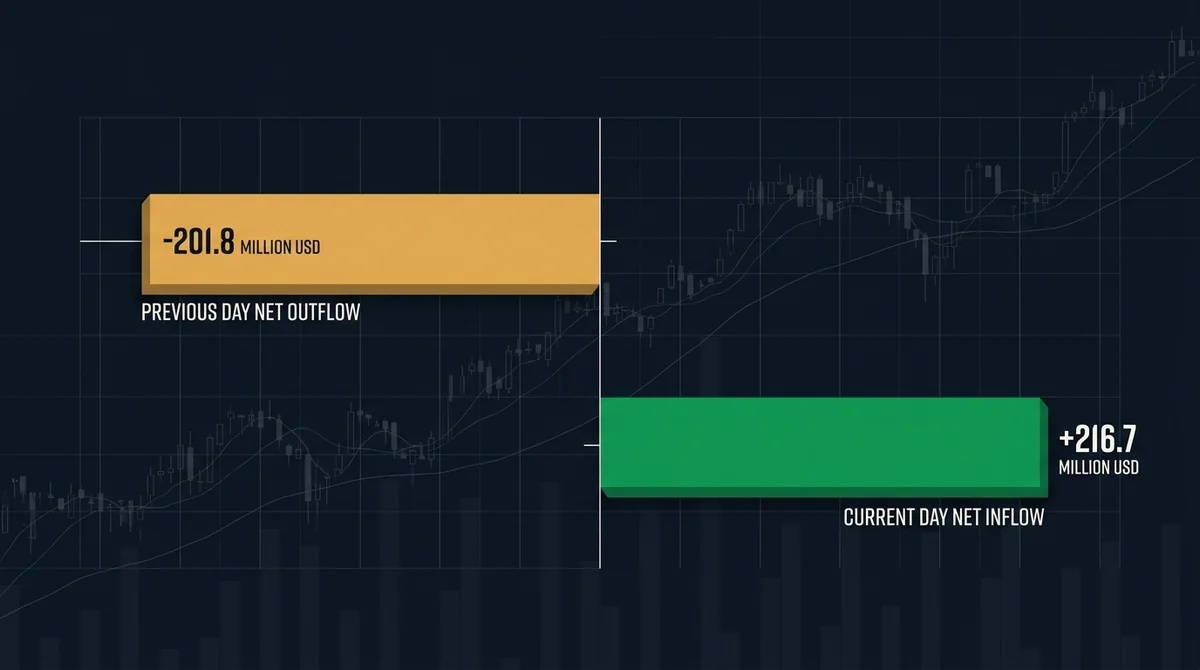
Cointelegraph reported on September 1, 2026, that U.S. spot Bitcoin ETFs recorded a net inflow of $216.7 million that day, versus a net outflow of $201.8 million on the previous trading day (Friday). The day's net inflow was highly concentrated in BlackRock's iShares Bitcoin Trust ETF, which contributed about 95% of the increase. This is a signal that short-term fund flows shifted from outflow to inflow, but a single-day reversal cannot be extrapolated into a sustained buying trend. For related background, see the on-site article Why institutions bought Bitcoin intensively in late August? A full analysis of Strive, Strategy and ETF fund flows.
What does the reversal from net outflow to net inflow mean?
A reversal from net outflow to net inflow indicates that subscription demand exceeded redemptions on the day, but market sentiment often swings between adjacent trading days. Two trading days of data alone cannot tell whether institutions are adding positions again. The OKX Radar editorial team recommends using the direction of net inflows/outflows over 5 to 10 consecutive trading days as a reference, rather than treating single-day changes as a basis for buying or selling.
How should BlackRock's 95% contribution be interpreted?
BlackRock's roughly 95% contribution means that most of the day's new money went into a single product. This may reflect the liquidity and brand advantages of BlackRock's ETF, or it may be because other ETFs saw relatively low inflows that day. To assess concentration risk, one needs to examine the distribution of fund flows across products over a longer period, rather than directly concluding from a single day's concentration that demand for other ETFs is weak.
Ethereum, XRP, and Solana ETFs see consecutive net inflows: altcoin fund flow signals
As of September 1, 2026, spot Ethereum ETFs recorded a net inflow of $87.7 million on Monday, marking the 11th consecutive trading day of net inflows; XRP and Solana spot ETFs each recorded net inflows for the 10th consecutive trading day. These figures are also from Cointelegraph's ETF fund flow statistics. Consecutive net inflows in altcoin ETFs suggest short-term improvement in fund flows, but the amounts and continuity still need to be monitored.
Ethereum ETF logs 11 consecutive days of net inflows
The $87.7 million net inflow into Ethereum ETFs is verified data, but existing information does not break it down by specific product. The 11 consecutive days of net inflows show that fund flows have not experienced persistent outflows over the past two weeks, but they cannot predict that inflows will necessarily continue. Going forward, attention should be paid to whether daily net inflows are maintained and whether amounts expand.
XRP and Solana log 10 consecutive days of net inflows
XRP and Solana spot ETFs also recorded net inflows for the 10th consecutive trading day. Since the input materials do not provide exact single-day amounts for either, this article does not compare their amounts. From a trend perspective, altcoin ETF and Bitcoin ETF fund flows are warming up in tandem, but more trading days of data are still needed to confirm.
On-chain anomaly: dormant 12-year wallet burns Bitcoin and links to Mt. Gox
Cointelegraph Magazine reported on August 31, 2026, that a Bitcoin wallet dormant for nearly 12 years sent 20.00010537 BTC to a large custodian in March 2026; almost the same amount was returned, and in May it was deliberately burned to an unspendable address.
Timeline of the wallet burning event
The wallet transferred about 20 BTC in March, and the funds were burned in May. Burning means these bitcoins permanently leave circulation, representing an on-chain verifiable supply-side change. The scale of a single burn of about 20 BTC is relatively limited and has a small direct impact on market liquidity, but it may trigger speculation about whale behavior.
Chainalysis's linkage analysis
Blockchain analytics firm Chainalysis said that five wallets that ultimately burned Bitcoin may be controlled by the same person, and the funds in those wallets can be traced back to the defunct Mt. Gox exchange. Chainalysis's conclusions are based on public on-chain data and may be subject to uncertainty; the OKX Radar editorial team does not infer price direction from this.
August crypto market performance and the industry context of BitMEX shutdown
According to a Cointelegraph Magazine article on September 1, 2026, Bitcoin's return in August 2026 was 26% and Ethereum's return was 34%, making it one of the best Augusts for Bitcoin in many years.
Bitcoin's 26% return in August
A 26% monthly return is historically high, but past returns do not represent future performance. The figure comes from Cointelegraph Magazine's statistics, and the specific calculation methodology is not detailed in the input. Investors should consider their own risk tolerance and not chase gains based on a single month's return.
BitMEX to shut down after 11 years of operation
Crypto derivatives exchange BitMEX will cease operations in September 2026 after 11 years of operation. The news comes from the same source. BitMEX's shutdown may reflect industry consolidation and changes in the regulatory environment, but the direct impact on other exchanges requires monitoring subsequent announcements.
OKX user perspective and risk warning
The OKX Radar editorial team reminds: the data in this article is as of September 1, 2026, and may change later. To follow related assets, OKX users can log in to the platform to view spot prices and order book depth for BTC, ETH, etc.; this article does not provide specific tool names, and the official OKX page shall prevail. For guidance on placing OKX spot limit orders, see How to place an OKX spot limit order: Maker order, cancellation, and execution check tutorial.
How to track fund flows using OKX market data and on-chain tools
Users can treat public ETF fund flows as an external reference and combine them with spot prices, depth, and trading activity seen on the OKX platform. Do not place orders solely based on a single day's ETF net inflows. On-chain anomalies (such as wallet burns) can be monitored, but they should not be the sole basis for decisions.
Operational principles to avoid chasing rallies and selling panics
Whether the August return is high or low or a single day's ETF net inflow turns positive, such events may induce emotional trading. It is advisable to set take-profit and stop-loss levels and diversify risk, and not to use funds beyond one's risk tolerance. This article does not constitute investment advice.
References and verification links
These are the article-level sources stored with this page. Interpret dynamic facts and rules in light of their dates, regions, and subsequent updates.
FAQ
Does the single-day net inflow of $217 million into Bitcoin ETFs signal a bull market return? ▼
A single day's data cannot be used to judge a bull market return. The net inflow of $216.7 million on September 1, 2026, came mainly from BlackRock's iShares Bitcoin Trust ETF, but the previous Friday saw an outflow of $201.8 million; a single day's fund flow fluctuation cannot form a trend judgment, and it is necessary to observe consecutive days of net inflows as well as price and on-chain data.
Does BlackRock's 95% contribution to Bitcoin ETF net inflows mean demand for other ETFs is weak? ▼
BlackRock's roughly 95% contribution shows that the day's increase was highly concentrated in a single product, which may reflect weaker demand for other ETFs or a temporary difference, but more days of data are needed to compare fund flows across products horizontally; a single day's concentration is not enough to conclude that demand is weak.
What are the driving factors behind the consecutive net inflows into Ethereum ETFs? ▼
Based on verified data, spot Ethereum ETFs recorded a net inflow of $87.7 million on Monday and net inflows for the 11th consecutive day, but the input materials do not provide specific driving factors; investors should pay attention to U.S. regulation, disclosures by spot ETF issuers, and on-chain activity, rather than infer reasons solely from consecutive days.
What is the market impact of the dormant wallet burning Bitcoin and its link to Mt. Gox? ▼
Chainalysis analysis shows that the five wallets that burned Bitcoin may be controlled by the same person and the funds can be traced back to Mt. Gox, but this on-chain anomaly is small in scale (about 20 BTC) and has limited direct impact on overall market liquidity; it is more of an on-chain behavior or psychological signal and should not be exaggerated as a price driver.
How can OKX users obtain operational references from ETF fund flow data? ▼
OKX users can treat public ETF fund flows as a supplementary observation indicator, while also checking spot market data and depth on the OKX platform; do not take a single day's fund flow as the sole trading basis, incorporate risk management, and verify the latest data before making decisions.