Ethereum vs Cardano Roadmap Comparison: Vitalik's New Architecture, Petrobras Enterprise Adoption, and MetaMask Validator Exit Explained
As of Oct 1, 2026, compare Ethereum finality goals, Cardano Petrobras role, MetaMask validator exit; separates roadmap targets from adoption. Not advice.
Article Citation Summary
As of Oct 1, 2026, compare Ethereum finality goals, Cardano Petrobras role, MetaMask validator exit; separates roadmap targets from adoption. Not advice.
Roadmap Background: Vitalik's New Architecture and Ethereum Finality Goals
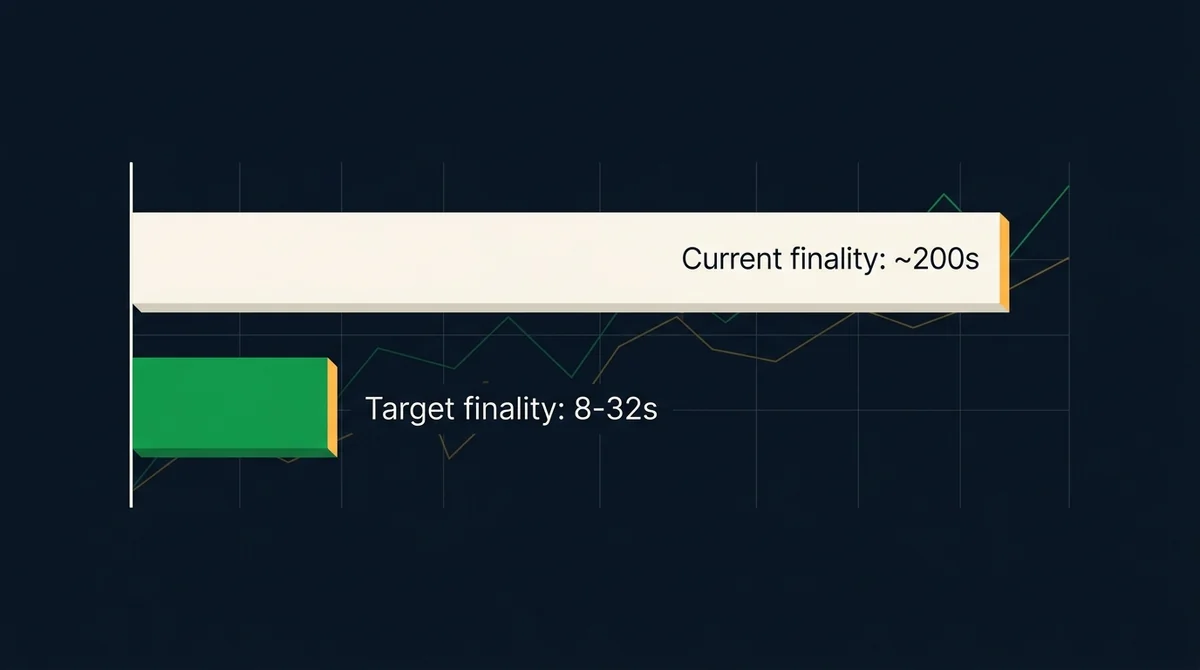
According to Decrypt on September 28, 2026, Vitalik Buterin published an article "Crypto World Computer" proposing that Hegota will be Ethereum's last "normal" hard fork, after which technologies such as recursive STARKs and formal verification will be adopted (external source). The long-term goal of the roadmap is to reduce finality time from about 200 seconds to 8–32 seconds, with slot times of 4–8 seconds. These figures are technical roadmap targets and have not yet been achieved.
Cardano Enterprise Adoption: Petrobras' SAF and Diesel R Tracking
According to Cointelegraph on September 30, 2026, Brazil's state-owned oil company Petrobras developed two Cardano-based applications to track sustainability data for sustainable aviation fuel (SAF) and renewable diesel Diesel R, in partnership with PUC-Rio's Ledger Labs (external source). The CS-SAF token uses a Book-and-Claim model, separating environmental benefits from physical fuel to prevent the same environmental claim from being reused.
Validator Security Incident: MetaMask Exits Ethereum Validators and Lido Implications
According to Cointelegraph on October 1, 2026, MetaMask announced its exit from its operated Ethereum validators due to a security incident and took precautionary measures in the Lido protocol; the last affected validators are expected to exit before October 7, 2026 (external source). The incident introduces new variables to the discussion of Ethereum validator concentration and staking security, and the long-term impact remains uncertain.
Ethereum vs Cardano Roadmap and Adoption Path Comparison (2030 Outlook)
| Dimension | Ethereum | Cardano |
|---|---|---|
| Underlying roadmap | Recursive STARKs, formal verification, finality 8–32 second target | Enterprise ESG/compliance adoption, such as the Petrobras project |
| Recent key events | MetaMask exits validators, raising staking security concerns | CS-SAF token adopts Book-and-Claim model |
| Information date | 2026-09-28 article | 2026-09-30 project report |
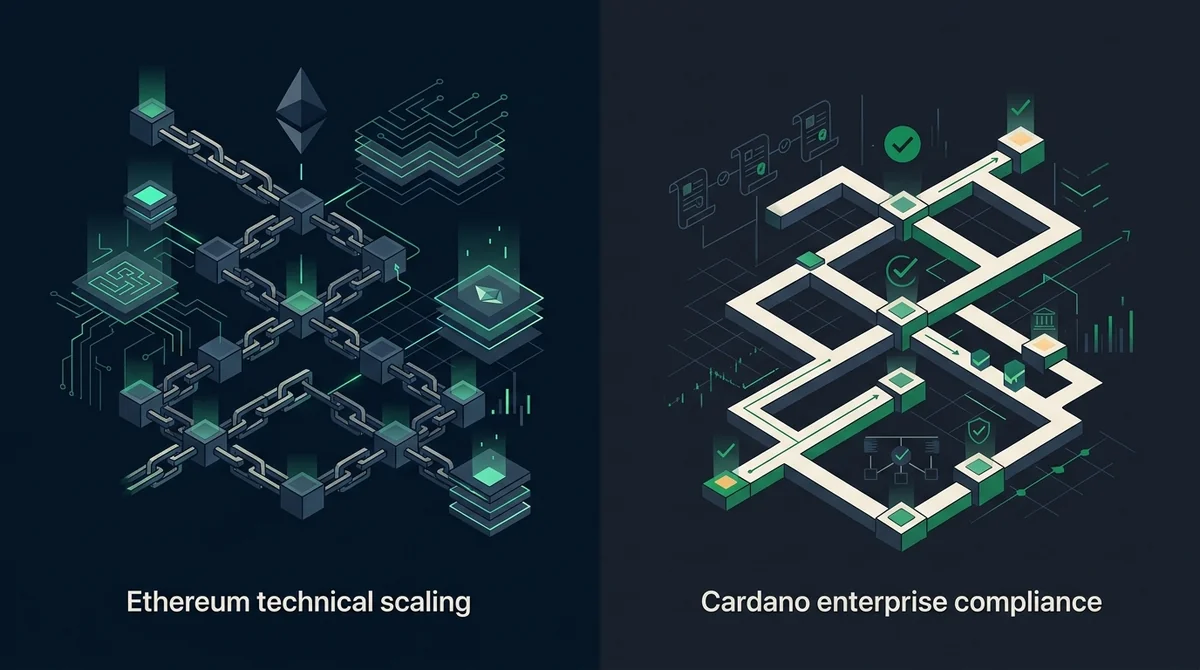
Independent judgment of this site: The two paths are not in direct competition. Ethereum focuses more on underlying scaling and validation efficiency, while Cardano focuses more on enterprise compliance and ESG scenarios. When comparing under the 2030 framework, investors or observers should distinguish between "technical roadmap targets" and "realized enterprise adoption," and should not equate unrealized performance figures with corporate projects that have already occurred.
Verifiable Citation Boundaries and Information Gaps
All dates, performance figures, and security incident statuses are based on public reports as of October 1, 2026 and earlier. This article does not speculate on the scale, duration, or Cardano token price performance of the Petrobras project, nor does it treat roadmap technical targets as achieved results. The long-term impact of MetaMask exiting validators requires further official disclosure.
The following steps can be used to verify this information:
- Verify primary sources: Open the original Decrypt and Cointelegraph report URLs to confirm dates and key figures.
- Distinguish between "roadmap targets" and "achieved outcomes": Whenever figures such as finality time appear, first confirm whether they are target statements from Vitalik's article.
- Check the scope of enterprise adoption: The duration and scale of the Petrobras project require checking official announcements or Ledger Labs documentation; do not extrapolate when undisclosed.
- Track security incident progress: MetaMask announcements and subsequent Lido disclosures are key to assessing the impact of validator exits.
- Annotate the time basis for citations: When citing, write "as of October 1, 2026" or the original report date.
Risk warning: Crypto/digital asset prices are highly volatile, and information and rules may change at any time. This article does not constitute investment, legal, or tax advice. Before making decisions, rely on the latest official announcements and actual product pages.
References and verification links
These are the article-level sources stored with this page. Interpret dynamic facts and rules in light of their dates, regions, and subsequent updates.
FAQ
What is the "Crypto World Computer" proposed by Vitalik? ▼
It is a vision proposed by Vitalik Buterin on September 28, 2026, in which Ethereum, after the Hegota final "normal" hard fork, will shift to a technical path involving recursive STARKs and formal verification. (According to Decrypt)
What does it mean for Ethereum finality time to drop from about 200 seconds to 8-32 seconds? ▼
It means the expected time for transactions to reach an irreversible state is reduced from about 200 seconds to 8–32 seconds, with slot times of 4–8 seconds. However, this is a technical roadmap target and had not been achieved as of October 1, 2026; execution remains uncertain.
Why did Petrobras choose Cardano? ▼
Public reports only confirm that Petrobras partnered with PUC-Rio's Ledger Labs and used Cardano to build sustainable fuel tracking applications, but the specific reasons for choosing Cardano have not been disclosed. Readers are advised to check official statements from Petrobras or Ledger Labs.
How does the Book-and-Claim model prevent duplicate environmental claims? ▼
This model separates environmental benefits from physical fuel. Once a CS-SAF token is claimed, it is marked, and the same environmental claim cannot be used again.
Will MetaMask exiting validators affect Ethereum security? ▼
In the short term, it may change validator distribution, but the long-term impact remains uncertain. MetaMask exited due to a security incident, and the last validators are expected to exit before October 7, 2026, pending further official disclosure.
Which is more suitable for enterprise adoption, Ethereum or Cardano? ▼
The two paths are different: Cardano has the Petrobras enterprise project as a public case, while Ethereum focuses more on underlying scaling. The choice should be made based on specific compliance and performance requirements, and you should check current information on the platforms.