Fed Policy Drives Bitcoin Fund Flows: Stablecoin Bank Dependence and the Core EIPs of Ethereum's Hegotá Upgrade
Explains Fed policy impact on Bitcoin's $80,000 ceiling, why stablecoin payments are just 0.02% of volume and need banks, and two core EIPs in Ethereum Hegotá.
Article Citation Summary
Explains Fed policy impact on Bitcoin's $80,000 ceiling, why stablecoin payments are just 0.02% of volume and need banks, and two core EIPs in Ethereum Hegotá.
As of September 7, 2026, Fed policy continues to influence Bitcoin fund flows through the interest rate path and Treasury buybacks, with CoinShares Head of Research James Butterfill seeing a price ceiling around $80,000; stablecoin payments run at an annualized roughly $390 billion and account for only 0.02% of global payment volume, with scaling still dependent on bank infrastructure; and the two 'must-ship' EIPs in Ethereum's Hegotá upgrade are EIP-7805 (FOCIL) and EIP-8141 (Frame Transactions). This article was compiled by the OKX Radar editorial team from public sources and is for information verification only, not investment advice.
How Fed Policy Sets a Roughly $80,000 Price Ceiling for Bitcoin
Why Does Bitcoin Trade Like Gold?
CoinShares Head of Research James Butterfill was quoted by Cointelegraph on September 7, 2026 as saying that Bitcoin currently trades similarly to gold, but Fed policy still sets its price ceiling at around $80,000. This view is a research firm's opinion, not a definitive forecast, and does not represent a commitment by OKX Radar to any price trajectory.
Which Policy Signals Are Capping or Lifting the Price?
The same report shows that after the U.S. Treasury doubled some long-term bond buyback operations from $2 billion to $4 billion, Bitcoin climbed that month from a low of $60,000 to above $80,000. It is important to distinguish policy expectations from actual fund flows: Treasury buybacks change market liquidity conditions, but prices are still affected by multiple factors.
Fund Flow Reversal: From $100 Million Outflows After Jackson Hole to $1 Billion Inflows on September 4
How Do Fund Flow Data Reflect Institutional Sentiment?
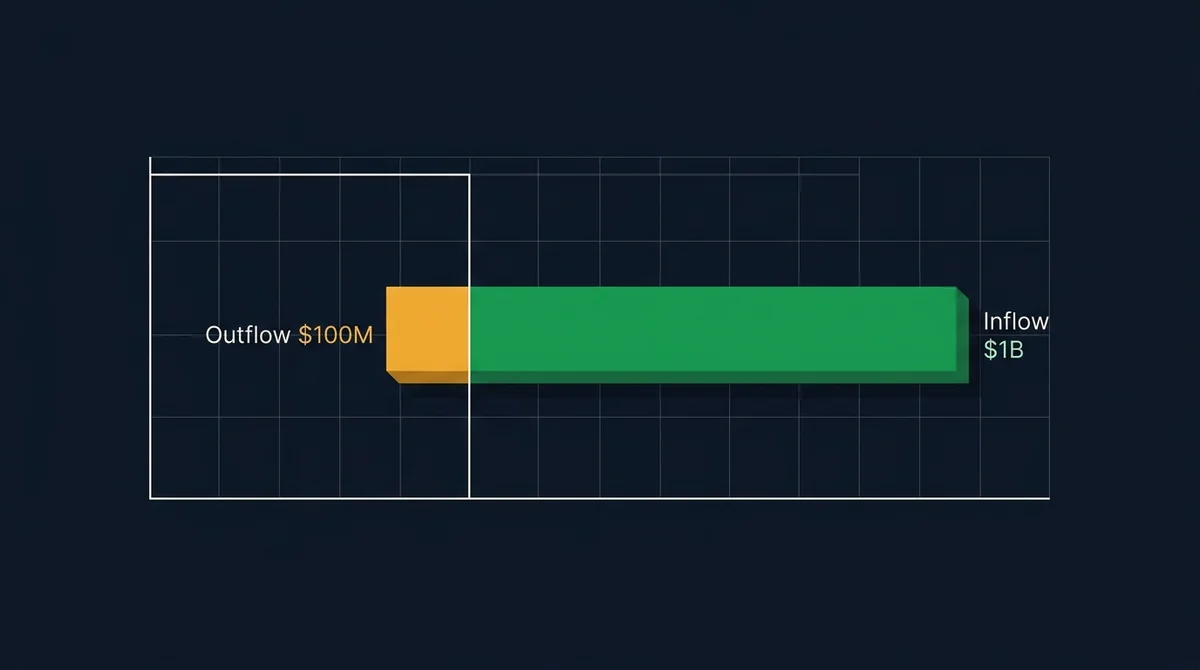
CoinShares weekly digital asset fund flow data show that after Fed Chair Kevin Warsh's Jackson Hole speech, about $100 million flowed out of digital asset investment products; the following week flows reversed and reached $1 billion on September 4. Short-term swings reflect investors trading the Fed's rate path more than exiting the market.
Why Did Flows Reverse Within a Week?
According to Cointelegraph's September 7, 2026 report, flows briefly left after Jackson Hole and then returned as the rate path was repriced and Treasury buyback news emerged. This reversal cannot by itself be used to identify a trend turning point; it needs to be verified against on-chain data and trading structure.
Why Stablecoin Scaling Cannot Avoid Bank Infrastructure
The cross-border payments market reached $208 trillion in 2025, while genuine stablecoin payments run at an annualized scale of about $390 billion, only 0.02% of global payment volume. Stripe acquired Bridge for $1.1 billion, and Bridge's core product is coordinating banks; Citi is rolling out crypto custody services, and Standard Chartered is testing stablecoin settlement in Singapore.
What Is the Current Real Scale of Stablecoin Payments?
According to a Yahoo Finance report dated September 6, 2026, the cross-border payments market was $208 trillion in 2025, while stablecoin payments ran at an annualized scale of about $390 billion, only 0.02% of global payment volume. Under this statistical approach, the two measures are not fully comparable, but they show that stablecoin payments remain very small in overall payments.
For further reading, see this site's related explainer: 'Stablecoin Cross-Border Payments Are Only 0.02%: Bank Infrastructure Is Irreplaceable, and How QuFi Post-Quantum Verification Strengthens Settlement Security, 2026.'
What Role Do Banks Play in Stablecoin Settlement?
The same report says Stripe acquired Bridge for $1.1 billion, and Bridge's core product is coordinating banks; Citi is rolling out crypto custody services, and Standard Chartered is testing stablecoin settlement in Singapore. This shows that if stablecoins want to expand payment use cases, they need banks to provide compliant custody, settlement channels, and liquidity support.
Ethereum's Hegotá Upgrade: The Two Core EIPs That Must Ship
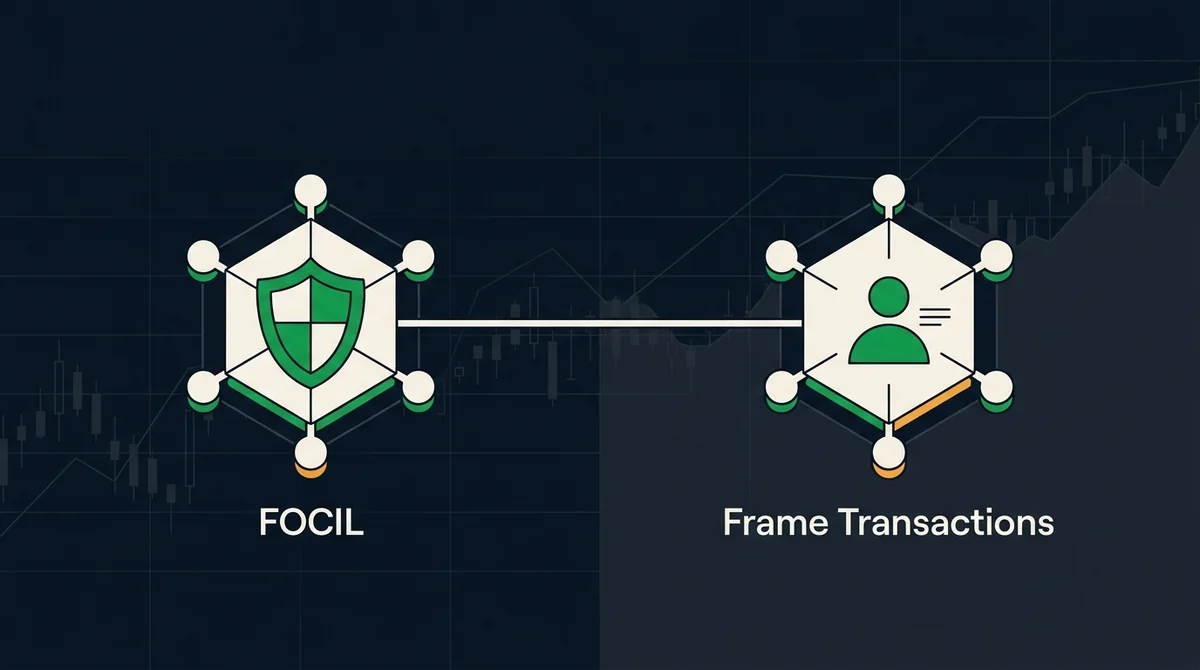
The Ethereum Foundation has listed EIP-7805 (FOCIL) and EIP-8141 (Frame Transactions) as 'must-ship' proposals for the Hegotá upgrade, with FOCIL aimed at strengthening censorship resistance and Frame Transactions introducing native account abstraction.
How Does EIP-7805 (FOCIL) Strengthen Censorship Resistance?
Cointelegraph reported on September 7, 2026 that the Ethereum Foundation listed EIP-7805 (FOCIL) as a 'must-ship' proposal for the Hegotá upgrade, with the goal of strengthening censorship resistance. Actual inclusion in mainnet still depends on testnet results and developer consensus, and this article does not treat it as a definite timeline.
What Does EIP-8141 (Frame Transactions) Introducing Native Account Abstraction Mean?
EIP-8141 (Frame Transactions), as another 'must-ship' proposal, introduces native account abstraction. Directionally, this usually means greater flexibility in on-chain transaction execution and account control logic, but the final scope is subject to the official EIP-8141 specification text. Developers should follow the Ethereum Foundation's subsequent testnet announcements.
How OKX Users Can Track These Macro and Technical Signals
How to Observe Bitcoin Fund Flows Using Public Data?
Users can follow CoinShares fund flow weekly reports, on-chain data, and price and volume changes on OKX market data pages; however, the items displayed on OKX pages are subject to the platform's actual interface. If you are not yet familiar with OKX spot limit orders, you can first read 'How to Place an OKX Spot Limit Order: Maker Order Placement, Cancellation, and Fill Check Tutorial.'
What Dimensions Can Help Understand Stablecoin and Ethereum Upgrade Impacts on OKX?
Understanding stablecoins' dependence on bank infrastructure can help assess risks in stablecoin-related assets; following the progress of Ethereum's Hegotá upgrade can aid in understanding long-term fundamental changes in ETH-related assets. The above is only an information-verification angle and does not constitute specific trading advice.
References and verification links
These are the article-level sources stored with this page. Interpret dynamic facts and rules in light of their dates, regions, and subsequent updates.
FAQ
How does Fed policy affect Bitcoin's price ceiling? ▼
Fed policy affects Bitcoin's price mainly through funding conditions such as interest rate expectations and Treasury buybacks. CoinShares Head of Research James Butterfill was quoted by Cointelegraph on September 7, 2026 as saying Bitcoin trades like gold, but Fed policy still sets its price ceiling at around $80,000. This view comes from a research firm's opinion and is not a definitive forecast.
Why does Bitcoin trade like gold? ▼
CoinShares Head of Research James Butterfill observed that Bitcoin currently trades similarly to gold, showing sensitivity to macro policy and being driven by fund flows rather than a persistent one-sided risk appetite. The statement comes from a Cointelegraph report dated September 7, 2026 and is a research view; investors should verify it against other indicators.
Why is stablecoin payment scale only 0.02% of global payment volume? ▼
According to a Yahoo Finance report dated September 6, 2026, the cross-border payments market was $208 trillion in 2025, while stablecoin payments ran at an annualized scale of about $390 billion, accounting for about 0.02%. Under this measurement, stablecoins still need banks to provide custody, settlement, and liquidity support in order to expand their use cases.
What problems do FOCIL and Frame Transactions solve in Ethereum's Hegotá upgrade? ▼
The Ethereum Foundation has listed EIP-7805 (FOCIL) and EIP-8141 (Frame Transactions) as 'must-ship' proposals for the Hegotá upgrade. FOCIL aims to strengthen censorship resistance, while Frame Transactions introduces native account abstraction. Actual inclusion in mainnet still depends on testnet results and developer consensus.
Can OKX users directly participate in the Ethereum Hegotá upgrade? ▼
No, users cannot directly participate in the Ethereum protocol upgrade through OKX; the upgrade is advanced by Ethereum developers, validators, and ecosystem participants. OKX users can observe price, volume, and volatility of ETH-related assets via market data pages, and specific features are subject to the platform's actual interface. This article does not constitute trading advice.