Kraken Launches Tokenized Stock Yield Vault, WTO Says Fragmented Regulation Limits Stablecoin Adoption: Web3 Crypto Market Briefing
Kraken's xStocks vaults earn DeFi yield on tokenized stocks/ETFs, while WTO data shows stablecoin cross-border payments grew 35x from 2020 to mid-2024.
Article Citation Summary
Kraken's xStocks vaults earn DeFi yield on tokenized stocks/ETFs, while WTO data shows stablecoin cross-border payments grew 35x from 2020 to mid-2024.
Core Summary: Kraken launched xStocks yield vaults in September 2026, supporting SPYx, QQQx, and NVDAx tokenized stocks/ETFs. They generate yield through DeFi lending, with withdrawal requests processed within 3 days. A WTO report shows stablecoin cross-border payments grew 35x from 2020 to mid-2024, but account for only 3% of total international payments; among 28 surveyed jurisdictions, only 39% have completed regulatory frameworks. This article breaks down the Web3 crypto developments, data, and risks from an OKX user perspective.
What Is the Kraken xStocks Yield Vault? How Tokenized Stocks/ETFs Generate Yield
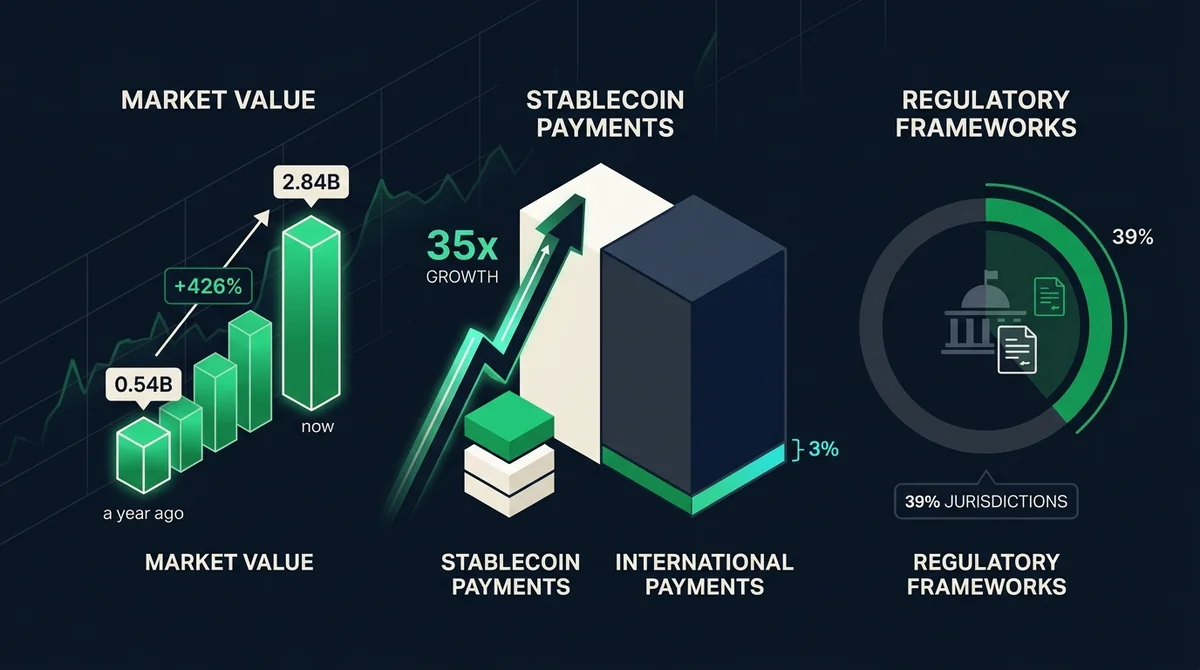
According to Cointelegraph on September 14, 2026, Kraken launched xStocks yield vaults supporting SPYx, QQQx, and NVDAx tokenized stocks/ETFs. These tokenized assets generate yield through DeFi lending and use the same infrastructure as Kraken DeFi Earn. Withdrawal requests are processed within 3 days. RWA.xyz data shows that the distributed value of tokenized stocks and ETFs is about $2.84 billion, compared with about $540 million a year earlier. You can also read an onsite article: Nasdaq Takes Stake in Kraken Parent.
Which Underlyings Does the xStocks Vault Support?
SPYx, QQQx, and NVDAx correspond to the S&P 500 ETF, Nasdaq-100 ETF, and Nvidia stock, respectively. These tokenized products are backed by the underlying securities, and the specific structure should be verified against Kraken's official documentation.
What Is the Specific Path for DeFi Lending Yield?
The vault generates yield through DeFi lending and uses the same infrastructure as Kraken DeFi Earn. After users deposit tokenized stocks/ETFs into the vault, borrowers pay interest. As of September 14, 2026, Kraken DeFi Earn has attracted more than $800 million in deposits.
How Long Do Withdrawals and Processing Take?
Withdrawal requests are processed within 3 days. This processing time comes from Kraken's product description, and actual crediting may be affected by network conditions and compliance review.
WTO Stablecoin Report: The Contradiction Between 35x Growth and 3% Adoption
According to Cointelegraph on September 14, 2026, the WTO's Juan Marchetti said stablecoins account for only 3% of total international payments. The WTO report notes that stablecoin cross-border payments grew 35x from 2020 to mid-2024. According to the FSB report from October 2025, only 39% (11) of the 28 surveyed jurisdictions have completed stablecoin regulatory frameworks. Fragmented regulation is a major factor limiting stablecoin adoption.
Why Did Stablecoin Cross-Border Payments Grow 35x?
Improved cross-border payment efficiency, high costs in traditional correspondent banking chains, and stablecoin programmability have driven growth, but WTO data also shows that the absolute share remains low.
How Does Fragmented Regulation Limit International Adoption?
Juan Marchetti pointed out that fragmented regulation limits stablecoin adoption. Different jurisdictions have inconsistent requirements for issuance, reserves, anti-money laundering, and other areas, increasing compliance costs and cross-border friction.
What Does the FSB's 39% Regulatory Framework Data Show?
As of October 2025, only 11 of the 28 surveyed jurisdictions have completed regulatory frameworks, indicating that most regions remain in a wait-and-see or draft stage. Users need to verify the rules in their own jurisdictions.
Practical Impact on OKX Users and Web3 Crypto Investors
From an OKX user perspective, tokenized stock vaults are yield-bearing products that bring traditional assets on-chain, and it is necessary to evaluate how they differ from CEX wealth management products. Whether OKX offers similar products should be based on OKX's official page. Our independent judgment: These vaults are fundamentally different from centralized exchange wealth management products in custody methods, yield sources, and redemption mechanisms, and are not suitable for simple comparison.
Stablecoin regulatory progress may affect stablecoin usage experience, compliance requirements, and cross-border transfers on OKX. Investors should verify product terms, underlying assets, and yield sources before deciding whether to participate. For more on RWA data tools, see the onsite article: RWA.xyz Directory V2 and Goldfinch On-Chain Distressed Debt.
How to Assess the Risks of Tokenized Asset Vaults and Stablecoin Use
Tokenized stocks may involve securities regulations in different jurisdictions, and yield is not guaranteed. DeFi lending involves smart contract risk, liquidation risk, and volatility risk of the underlying assets. Stablecoin cross-border payments face risks such as regulatory fragmentation and the reserve transparency of stablecoin issuers. Users should consult official documentation, audit reports, and regulatory registration information, and should not rely on a single data source. For related stablecoin payment credibility analysis, see: Stablecoin Payment Credibility Dispute: BIS Questions, Visa and Dunamu Partnership.
Action Steps: How to Verify These Yield Opportunities from an OKX User Perspective
- Verify the product issuer and supported regions: Confirm whether Kraken and the xStocks vault are available in your jurisdiction and whether non-U.S. users are allowed to participate, to avoid cross-border compliance risks.
- Confirm the yield source and underlying assets: Check whether the vault generates yield entirely through DeFi lending, and whether the custody and collateral arrangements for the underlying tokenized stocks/ETFs are transparent.
- Compare the differences between CEX wealth management and on-chain vaults: Pay attention to redemption time (such as 3 days), smart contract risk, and insurance or reserve mechanisms. Do not compare only headline yields.
- Review regulatory frameworks and compliance status: According to FSB data from October 2025, only some jurisdictions have completed stablecoin regulatory frameworks. Verify the rules for tokenized securities and stablecoins in your region.
- Track changes in stablecoin cross-border payment rules: WTO data shows that stablecoin adoption is limited by regulatory fragmentation. Users should pay attention to issuer reserve disclosures and cross-border payment compliance requirements.
Risk warning: Crypto/digital asset prices are highly volatile, and materials and rules may change at any time. This article does not constitute investment, legal, or tax advice. Before making decisions, rely on the latest official announcements and actual product pages.
References and verification links
These are the article-level sources stored with this page. Interpret dynamic facts and rules in light of their dates, regions, and subsequent updates.
FAQ
Where does the yield from the Kraken xStocks yield vault come from? ▼
The yield comes from DeFi lending. The vault uses the same infrastructure as Kraken DeFi Earn. After users deposit tokenized stocks/ETFs, borrowers pay interest. This mechanism is disclosed in Kraken's product description, and actual yield is affected by market interest rates and lending demand, so it is not fixed.
How long does it take to withdraw tokenized stocks/ETFs? ▼
Kraken's withdrawal requests are processed within 3 days. This timeframe comes from the product description dated September 14, 2026; actual crediting may be affected by network congestion, compliance review, or liquidation processes.
Why does the WTO say stablecoin adoption is limited by regulatory fragmentation? ▼
The WTO's Juan Marchetti said fragmented regulation limits stablecoin adoption. Different jurisdictions have inconsistent rules on issuance, reserves, anti-money laundering, and other areas, increasing compliance costs. According to the FSB report from October 2025, only 39% of the 28 jurisdictions have completed regulatory frameworks.
Can OKX users directly purchase Kraken's xStocks products? ▼
Generally no, unless the user also has a Kraken account and meets its regional and compliance requirements. OKX does not offer this product. This article only analyzes industry developments; OKX users need to check the official website to see whether similar services have been launched.
How large is the tokenized stock and ETF market? ▼
RWA.xyz data shows that as of September 14, 2026, the distributed value of tokenized stocks and ETFs is about $2.84 billion, compared with about $540 million a year earlier, an increase of about 5x.