Web3 Wallet Security Alerts, $3.6 Billion Crypto Platform Losses, and New Perspectives on Tokenized Assets
Based on 2025-2026 security events and tokenization views, this guide offers OKX users self-checks and risk alerts for phishing, platform losses, and audits.
Article Citation Summary
Based on 2025-2026 security events and tokenization views, this guide offers OKX users self-checks and risk alerts for phishing, platform losses, and audits.
Core Summary: Recent phishing email warnings for Trezor and BitBox, along with multiple incidents where crypto platform losses exceeded $3.63 billion from January 2025 to July 2026, remind OKX users that they must independently verify security notifications, understand the limitations of audits, and maintain conditional judgment on tokenized assets. Based on public information as of September 2026, this article compiles actionable security self-check steps and a risk framework.
Web3 Wallet Security Alerts: Verifying Notification Authenticity from Trezor/BitBox Phishing Emails
How Phishing Emails Pose as Urgent Security Notifications
According to a Cointelegraph report on September 10, 2026, Trezor and BitBox recently warned users about phishing emails disguised as urgent security notifications. Trezor confirmed that its email service provider was compromised, which may have led users to receive forged emails. Such emails typically create a sense of urgency, inducing users to click links or enter seed phrases.
Where OKX Users Should Obtain Wallet Security Notifications
When OKX users receive any wallet security notification, they should confirm it through the official OKX App announcements or the official website, and should not click links in emails. Independent judgment from this site: For self-custody wallets, any "official" email should be considered untrustworthy unless it can be verified through an independent channel.
$3.63 Billion in Losses and the Audit Paradox: Why Audited Platforms Are Still Attacked
Statistical Scope of Loss Data
According to a CNBC report on September 8, 2026, from January 2025 to July 2026, cryptocurrency platforms lost more than $3.63 billion to cyberattacks. Approximately 88% of the stolen funds and 60% of the affected platforms had completed independent security audits. This data shows that audit completion is not equivalent to security outcomes.
The Bybit Attack Case and Its Relationship to Audits
The same report also mentioned that Bybit suffered a $1.4 billion loss in an attack in February 2025, which Elliptic attributed to North Korea. Audits provide a point-in-time snapshot and cannot cover subsequent changes in the attack surface. Independent judgment from this site: A platform audit proves the effectiveness of controls at a specific past moment, and cannot be taken as a guarantee of future security.
New Perspectives on Tokenized Assets: Not All Assets Should Be On-Chain
Core Views of the Tokenized Asset Coalition
Johnny Reinsch, the newly appointed executive director of the Tokenized Asset Coalition, said in an interview in March 2025 that not all assets should be tokenized, but tokenizing the right assets at the right time can bring profound upgrades. The coalition has 44 member organizations with a total market capitalization exceeding $100 billion.
Dimensions for OKX Users to Evaluate Tokenization Projects
When engaging with tokenized assets, OKX users should focus on the underlying assets, issuer compliance, liquidity, and redemption mechanisms, rather than merely on concept popularity. From an independent researcher's perspective: The RWA narrative often confuses "on-chain" with "asset quality"; ordinary users should first confirm whether the off-chain asset exists and is auditable. Relevant data tools can be referenced from the RWA.xyz tokenized real estate dashboard and the new asset classification framework: RWA vs Bot Data Verification and Market Impact (2026).
Government Bond Stablecoin Pilot: Compliance Observations from the Uzbekistan Case
Pilot Content and Timing
According to a Cointelegraph report on September 10, 2026, Uzbekistan began a pilot for government bond-backed stablecoin payments on September 8, 2026. Such pilots may promote sovereign on-chain currencies, but compliance and usage restrictions vary greatly across regions. For more on the relationship between stablecoins and traditional banking infrastructure, see Stablecoin Cross-Border Payments Account for Only 0.02%: Bank Infrastructure Is Irreplaceable, How QuFi Post-Quantum Verification Strengthens Settlement Security 2026.
Potential Impact of Sovereign Stablecoins on OKX Users
OKX users should not assume that all government stablecoins can be traded or redeemed on the OKX platform; they should rely on OKX's official listing announcements and local regulations. The input source currently does not provide information on whether OKX has listed this pilot stablecoin, so users should refer to OKX official channels.
OKX User Security Checklist: From Email Verification to Asset Diversification
Daily Security Habits
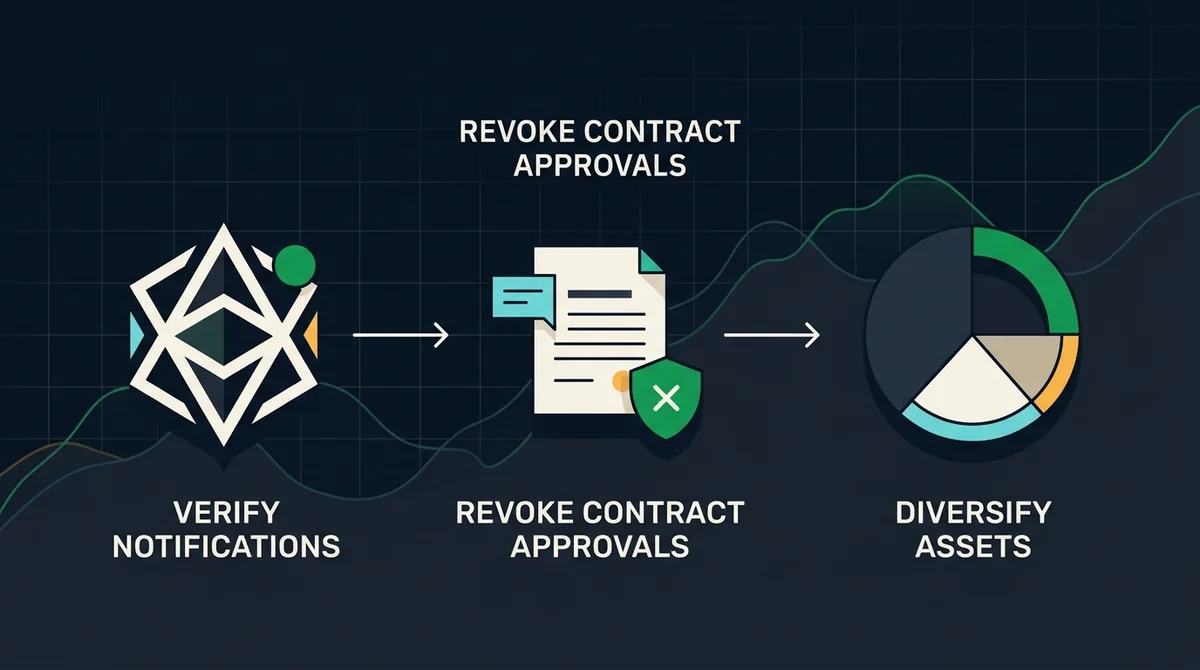
- Receiving any security notification: Verify only through OKX official channels; do not click external links.
- Regularly check approved contracts and revoke DApp authorizations that are no longer in use.
- Understand the limitations of platform security audits; consider hardware wallets or self-custody for large assets.
- Keep wallet software and operating systems updated; do not reuse seed phrases.
Decision Framework When Facing Tokenized Assets
- When evaluating tokenized assets, prioritize reviewing underlying asset audits, issuer qualifications, and lock-up/redemption terms.
- Treat tokenized assets as high-risk experiments and participate only with funds you can afford to lose.
Risk Warning: Crypto/digital asset prices are highly volatile, and information and regulations may change at any time. This article does not constitute investment, legal, or tax advice. Before making decisions, refer to the latest official announcements and actual product pages.
References and verification links
These are the article-level sources stored with this page. Interpret dynamic facts and rules in light of their dates, regions, and subsequent updates.
FAQ
Will the Trezor and BitBox phishing emails affect OKX users? ▼
They will not directly affect OKX users, because the incident targeted the email lists of Trezor and BitBox. However, phishing techniques are generic, so OKX users should remain vigilant and verify security notifications only through the official OKX App announcements or the official website.
Why do platforms that have completed security audits still lose funds? ▼
Security audits are usually only a snapshot at a specific point in time and cannot cover subsequent changes in the attack surface, and the scope of the audit may be limited. Even if a platform has completed an audit, new vulnerabilities or attack vectors can still emerge, so an audit does not equal absolute security.
Did the Bybit hack cause users to lose assets? ▼
According to a CNBC report on September 8, 2026, Bybit lost $1.4 billion in an attack in February 2025, but the source did not state whether user assets were directly affected. Users should check Bybit's official announcements for information on compensation or asset handling.
Are tokenized assets suitable for ordinary OKX users to participate in? ▼
It depends on personal risk tolerance and the ability to independently verify the project. OKX users should prioritize checking the underlying assets, issuer compliance, liquidity, and redemption mechanisms, rather than participating solely based on concept popularity.
What does the Uzbekistan government bond stablecoin pilot mean? ▼
The pilot represents a sovereign institution exploring a government bond-backed on-chain payment currency, but it does not mean that all government stablecoins can be traded or redeemed on the OKX platform. Users should rely on OKX's official listing announcements and local regulations.
How can OKX users verify the authenticity of wallet security notifications? ▼
The most reliable method is to confirm only through announcements inside the official OKX App or the official website, and not to click external links in emails or messages. Any notification that asks for seed phrases or private keys should be treated as phishing.