OKX Radar US Stock Daily Observation: Nvidia and Byrna: New AI Infrastructure Financing Initiatives and FY2027 Valuation at 24.7x, Byrna Downgraded to Hold with Sales Down 46% YoY
Oct 11, 2026, Seeking Alpha rated Nvidia Buy on AI infrastructure demand and financing innovation at 24.7x FY2027 EPS, but cut Byrna to Hold on 46% sales drop.

Article Citation Summary
Oct 11, 2026, Seeking Alpha rated Nvidia Buy on AI infrastructure demand and financing innovation at 24.7x FY2027 EPS, but cut Byrna to Hold on 46% sales drop.
I. Nvidia Maintains Buy Rating: AI Infrastructure Demand and New Financing Initiatives Provide Dual Support
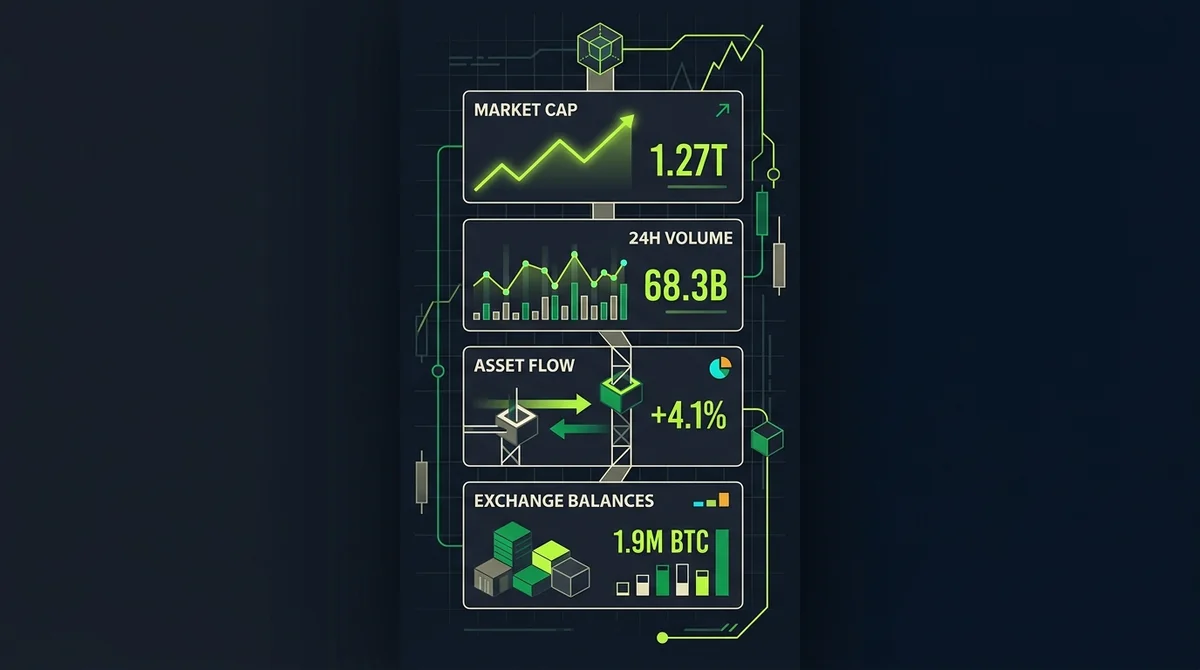
1. Demand side: AI infrastructure demand cited as core driver of earnings growth
According to Seeking Alpha, on October 11, 2026, the author of the article maintained a Buy rating on Nvidia stock and cited AI infrastructure demand as the core driver of earnings growth. This assessment is the author's independent evaluation based on industry demand and the company's product position, not official company guidance, nor does it equate to realized financial data; readers should understand "Buy" as an analyst's opinion, not an established fact.
From a verifiable perspective, the core logic presented is: the continued consumption of computing power by AI model training and inference keeps high-end accelerators in an upcycle of demand. The article did not disclose specific order volumes, customer lists, or capital expenditure figures, but its conclusion points to a key observation—Nvidia's growth narrative is extending from pure chip sales to whether customers can obtain deployment funding. For the market, this means the AI infrastructure cycle may be longer than a simple hardware replacement cycle, and its sustainability depends on downstream customers' financing capabilities. If capital expenditures by cloud providers or sovereign AI projects undergo a periodic contraction, this demand logic may face repricing; currently public information does not show that such risk has materialized.
Verification path: To validate this view, one may monitor Nvidia's subsequent quarterly data center revenue growth, capital expenditure guidance from major cloud providers, and whether the company discloses entities or amounts related to financing partnerships in its financial reports. This article does not extrapolate revenue or profit forecasts.
2. Supply side: Land, credit, and financial institution partnerships help customers bridge the funding gap
The article also mentions that Nvidia is helping customers bridge the funding gap for AI infrastructure by providing land, credit support, and partnering with financial institutions. This move is viewed by the author as an important supply-side action to expand the potential market, but its specific scale, counterparties, and land and credit terms are not disclosed.
Mechanically, AI infrastructure requires high upfront investment and long payback periods, so many potential customers may postpone deployment due to balance sheet constraints. If Nvidia provides financing arrangements through its own credit or partner institutions, it effectively packages equipment sales with project financing, lowering the entry threshold for customers. Compared with traditional one-time hardware sales, such arrangements may shorten customer decision cycles and amplify potential orders, but they may also increase contingent credit risk, revenue recognition complexity, and capital occupation. Existing public information has not confirmed the impact on current profits, nor provided any recalculable amounts or proportions; the list of partner institutions or credit exposure is not disclosed.
II. Nvidia Valuation Metric: FY2027 EPS at 24.7x, FY2028 Outlook Clearly Improved
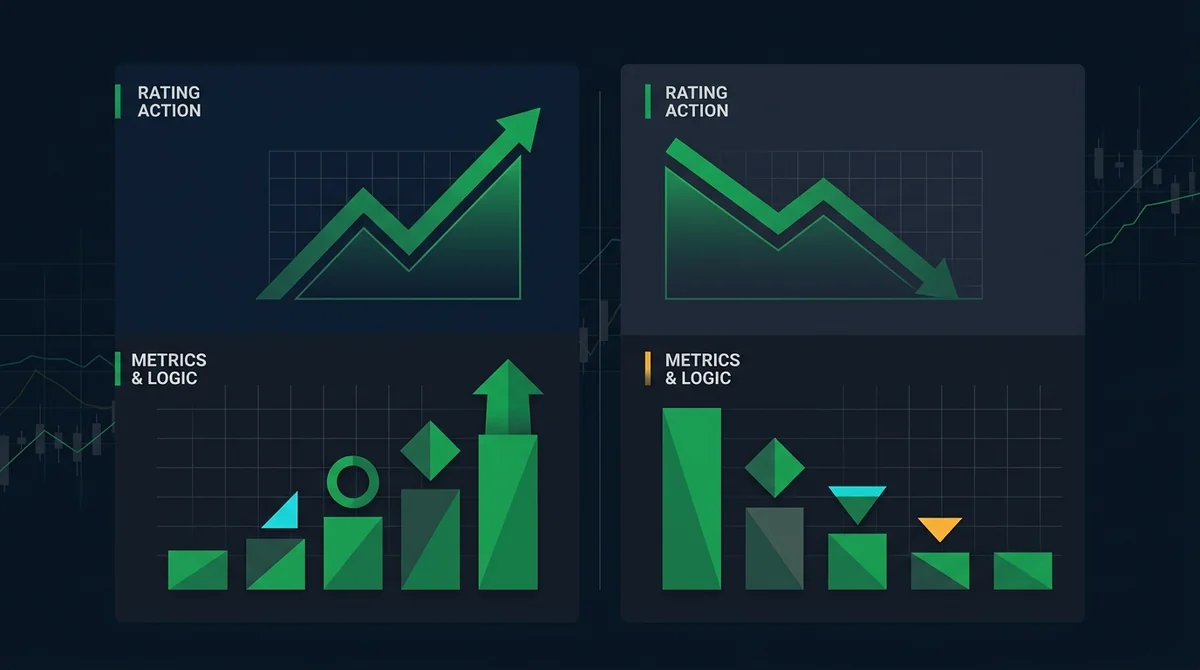
1. FY2027 valuation multiple: 24.7x earnings per share
The valuation metric given in the article is: Nvidia is valued at 24.7 times fiscal year 2027 earnings per share. This metric is a forward P/E ratio, calculated as the current stock price divided by the consensus expected EPS for fiscal 2027. A 24.7x multiple means the market pays about $24.7 for every $1 of expected FY2027 earnings; however, the source on this page does not provide the specific stock price and EPS figures used in the calculation, so the multiple is a conclusion value given by the article and cannot be directly recalculated from this page.
For investors, the key to a forward P/E is not just the level of the multiple itself, but also the degree of alignment with growth expectations. The author also points out that the FY2028 outlook is clearly improved, implying that if earnings growth accelerates, the current 24.7x valuation on FY2027 may be absorbed by future earnings. However, this "improved" judgment lacks specific financial forecasts and needs to be verified by the company's subsequent guidance and financial reports. Since this source does not provide Nvidia's historical forward P/E range, this article cannot assert whether 24.7x is overvalued or undervalued; readers may compare it with the company's forward P/E median over the past three years.
Recalculable metric: Readers may take Nvidia's latest closing price around October 11, 2026, and divide it by the market consensus for FY2027 GAAP or Non-GAAP EPS to obtain a comparable forward P/E. This article only cites the 24.7x given by Seeking Alpha and does not replace independent calculation.
2. FY2028 outlook: clearly improved
The article mentions that the FY2028 outlook is clearly improved. Relative to the FY2027 24.7x metric, this statement suggests that Nvidia's earnings growth curve may rise in the next fiscal year, but the article does not provide specific revenue or EPS forecasts, nor does it disclose the drivers of the improvement.
From a market perspective, if the improvement in FY2028 is mainly driven by sustained volume growth in AI accelerators, a higher share of software and networking products, or incremental customers supported by new financing arrangements, then Nvidia's valuation logic may shift from cyclical hardware to platform-based computing power supply. However, these are hypotheses to be verified; the existing source only provides a directional judgment without a recalculable quantitative basis. Conversely, if the improvement mainly comes from one-time revenue or changes in accounting treatment, the mapping of current valuation to growth would need to be revised downward.
Final Note
In the same time window, Nvidia and Byrna received opposite ratings from Seeking Alpha authors: the former maintained a Buy due to AI infrastructure demand and financing innovation, while the latter was downgraded to Hold due to persistently declining sales. The two differ significantly in valuation and fundamentals: Nvidia corresponds to 24.7x FY2027 EPS, while Byrna's gross margin rose to 64.5% but sales fell 46% year-over-year.
The comparison is as follows:
| Target | Rating Action | Core Logic | Key Data |
|---|---|---|---|
| Nvidia | Maintain Buy | AI infrastructure demand + financing innovation expands potential market | FY2027 expected EPS 24.7x, FY2028 outlook improved |
| Byrna Technologies | Downgrade from Buy to Hold | Persistent sales decline | Gross margin 64.5%, sales down 46% YoY |
Independent judgment of this site: This same-day rating divergence is not an overall cooling of market risk appetite, but rather different pressure points in cash flow across industries. AI infrastructure can extend current capital expenditure pressure by using land, credit, and institutional partnerships, thereby maintaining demand intensity; whereas in the consumer security/non-lethal weapons segment, once end-market sales turn negative, gross margin improvement can only slow the decline in gross profit, not create incremental support on the revenue side. The above comprehensive judgment is an editorial analytical perspective, based on a summary of facts from this source, not a conclusion from external institutions.
Data Metrics, Sources, and Boundaries
Statistical caliber and cutoff date: The facts in this article are as of October 11, 2026, from two Seeking Alpha articles: one on Nvidia's Buy rating and financing initiatives, and another on Byrna's downgrade and gross margin/sales changes. This page does not involve other sources or market snapshot data, nor does it include OKX platform fees or other trading data.
Unknown/unverified items: The specific counterparties, amounts, land and credit terms of Nvidia's financing initiatives are not disclosed; the drivers of Byrna's 46% year-over-year sales decline and subsequent order status are not disclosed; financial forecasts for the FY2028 outlook improvement are not disclosed.
Correlation and causality statement: Between Nvidia's financing initiatives and the maintained Buy rating, and between Byrna's outsourced manufacturing gross margin increase and the downgrade, existing public information only shows the author's opinion and does not prove a direct causal relationship; events adjacent in time are presented side by side, not as causal inference. The comparison of Nvidia's 24.7x valuation and Byrna's sales decline only reflects same-window data observation, not proof of systemic industry synchronization.
Reader verification paths:
- Verify Nvidia financing: Check Nvidia's investor relations page and 10-Q/10-K for disclosures on customer financing receivables, land acquisitions, and financial partners.
- Verify Byrna: Check Byrna's financial reports for sales, gross margin, outsourced manufacturing impact, and order backlog data.
- Verify valuation: Recalculate forward P/E using consensus EPS and the latest stock price, and compare with the 24.7x metric.
Risk Warning: Macroeconomic and US stock market volatility is severe. This content is for OKX Radar research observation reference only and does not constitute any investment advice. Crypto/digital asset prices are highly volatile, and information and rules may change at any time. This article does not constitute investment, legal, or tax advice. Before making decisions, please refer to the latest official announcements and actual product pages.
References and verification links
These are the article-level sources stored with this page. Interpret dynamic facts and rules in light of their dates, regions, and subsequent updates.
FAQ
What are the main reasons for maintaining a Buy rating on Nvidia? ▼
According to Seeking Alpha, AI infrastructure demand drives earnings growth, and new financing initiatives expand the potential market.
How does Nvidia help customers bridge the AI infrastructure funding gap? ▼
According to Seeking Alpha, Nvidia helps customers by providing land, credit support, and partnering with financial institutions.
What is Nvidia's current valuation multiple? ▼
According to Seeking Alpha, Nvidia is valued at 24.7 times fiscal 2027 earnings per share, and the fiscal 2028 outlook is clearly improved.
What happened to Byrna's rating? ▼
According to Seeking Alpha, Byrna Technologies was downgraded from Buy to Hold due to persistent sales decline; its gross margin rose to 64.5%, but sales fell 46% year-over-year.
Are these ratings official facts? ▼
These ratings are the opinions of Seeking Alpha authors, not official company or regulatory documents, and should be verified against company financial reports.