OKX Radar US Stocks Daily Watch: S&P 500 and Microsoft: Fed Chair Warsh's Hawkish Tone Lifts September Rate Hike Probability, Microsoft Expected to Raise Dividend for 24th Consecutive Year
Fed Chair Warsh's hawkish tone lifts September rate hike odds; S&P 500 hinges on jobs and CPI. Microsoft's expected dividend hike marks a 24th straight year.

Article Citation Summary
Fed Chair Warsh's hawkish tone lifts September rate hike odds; S&P 500 hinges on jobs and CPI. Microsoft's expected dividend hike marks a 24th straight year.
OKX Radar Editorial Desk Contributing Columnist @OKXRadar August 30, 2026 Approximately 4,850 words; full read takes about 14 minutes
Two clear main themes emerge for the US stock market in September: Fed Chair Warsh's hawkish tone lifts the probability of a September rate hike, leaving the S&P 500 closely tied to jobs and CPI data in the short term; Microsoft is expected to raise its dividend for a 24th consecutive year, and together with concentrated hikes from blue chips such as Texas Instruments and Lockheed Martin, this creates a dual main theme of 'rate expectations + dividend quality.' The historical resilience of midterm election years and the mildly bullish August pattern provide a buffer, and the market may extend a mildly bullish tone rather than being dominated by a single monetary policy expectation.
AI Summary
Core viewpoint: Fed Chair Warsh's hawkish tone lifts the probability of a September rate hike, leaving the S&P 500 closely tied to jobs and CPI data in the short term, but the historical statistics of midterm election years and the mildly bullish August close provide a buffer; Microsoft is expected to raise its dividend for a 24th consecutive year, and together with concentrated hikes from blue chips such as Texas Instruments and Lockheed Martin, this creates a dual main theme of 'rate expectations + dividend quality' for the US stock market in September.
Key elements:
- Fed Chair Warsh's hawkish tone has increased the likelihood of a September rate hike, making the upcoming jobs report and CPI data especially critical for the market.
- As of late August 2026, the S&P 500 is on track to close August with a mildly bullish technical pattern, and the historical performance of midterm election years from August through October is not as poor as some warnings suggest.
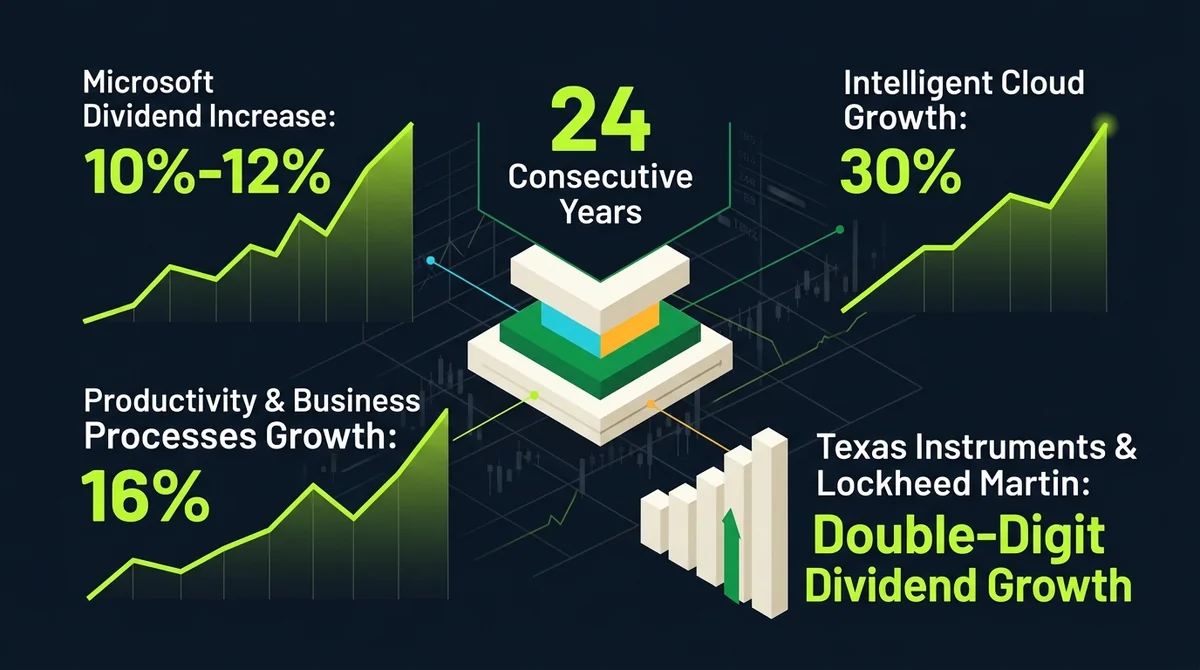
- Microsoft is expected to announce in September 2026 an annual dividend increase of 10% to 12%, bringing its streak of consecutive annual dividend increases to 24 years.
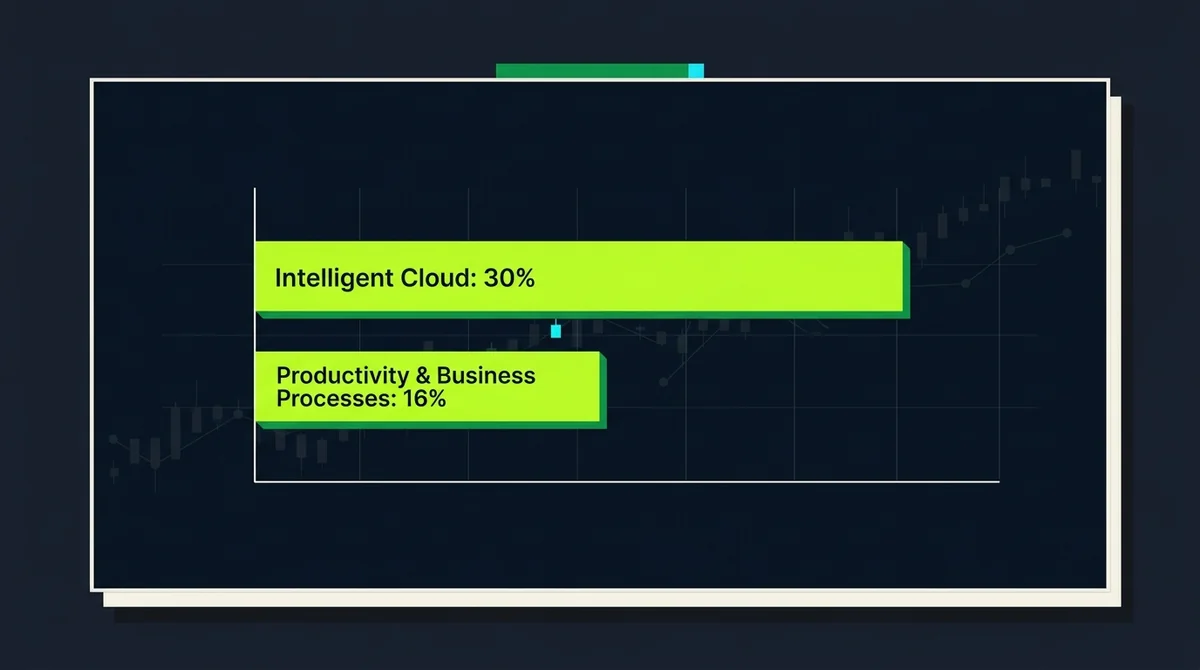
- Microsoft's Productivity and Business Processes segment and Intelligent Cloud segment achieved revenue growth of 16% and 30%, respectively, offsetting weakness in the personal computing business.
- In addition to Microsoft, Texas Instruments and Lockheed Martin are also expected to announce double-digit dividend increases in September, while McDonald's and RPM dividend hikes are seen as milestone moves.
1. Fed Chair Warsh's Hawkish Tone Lifts September Rate Hike Odds: Jobs and CPI Data Become Key Short-Term Variables for the S&P 500
1. Fed Chair Warsh's hawkish tone increases the likelihood of a September rate hike, shifting market focus to the upcoming jobs report and CPI data
Fed Chair Warsh's recent hawkish tone has clearly increased the likelihood of a September rate hike, a shift that makes the upcoming jobs report and CPI data a particularly critical verification window for the market. According to a Seeking Alpha report on August 30, 2026, Warsh's change in stance directly lifted expectations for the near-term rate path, and the consensus among investors that the Fed would stand pat in September began to show cracks. This means that any marginal fluctuation in employment or inflation data could be amplified into a repricing of the pace of monetary policy. For US equities, the marginal rise in rate expectations is not an isolated event; it interacts with current valuation levels, post-earnings-season inertia, and seasonal capital flows. If the August nonfarm payrolls report is stronger than expected, or if CPI rebounds month over month, the probability of a rate hike will rise further, and the S&P 500 may face short-term pullback pressure; conversely, if the data cools, the hawkish pricing may partially unwind, giving the index breathing room. In this highly sensitive environment, market volatility may expand in phases.
From the transmission mechanism perspective, the rising probability of a rate hike directly affects discount rates and risk appetite, exerting more significant valuation pressure on technology growth stocks and long-duration assets. However, as a broad-based index covering diverse sectors, the S&P 500 still has room for defensive and value rotation internally. This also explains why the market's focus has shifted from a single economic data point to a dual verification of 'employment + inflation': the jobs report reflects the heat of aggregate demand, while CPI reflects the rebalancing of supply and costs; together they determine whether the Fed has sufficient reason to act in September. For investors, the margin for error in short-term trading is shrinking, but panic selling is not a rational choice, because rate expectations are only one influencing factor, not the whole story.
2. Rising rate hike expectations create short-term headwinds for the S&P 500, but as of late August 2026 the index is still on track to close with a mildly bullish pattern
Although rising rate hike expectations create short-term headwinds for the S&P 500, as of late August 2026 the index is still on track to close with a mildly bullish technical pattern. Also according to the Seeking Alpha article, the S&P 500's move in the final stretch of August did not show a trend breakdown; instead, it found support near key moving averages, preserving a technical buffer for September trading. A mildly bullish closing pattern means that even in the face of hawkish Fed Chair rhetoric, internal buying power still exists, and some funds may be positioning for 'data ultimately weaker than expected' or 'risk clearing after the rate hike lands.' This divergence itself is part of the market's resilience.
Logically, hawkish rhetoric and a mildly bullish index are not contradictory: the former reflects expectation volatility, while the latter reflects actual funding behavior. Historically, the early stages of rising rate hike expectations are often accompanied by short-term selling, but if the economic fundamentals do not materially deteriorate, the index usually seeks direction again after data validation. For September, the initial volatility may be more about recalibration of expectations than trend reversal. Therefore, focusing on technical signals at key levels is more meaningful than focusing on any single event: if the S&P 500 can hold the August low after the September jobs and CPI releases, the mildly bullish pattern is likely to extend; if it breaks below key support, a deeper correction must be guarded against.
2. Historical Statistics for Midterm Election Years from August to October: S&P 500 Performance Is Not as Poor as Some Warnings Suggest
1. The S&P 500 is on track to end August 2026 with a mildly bullish technical pattern, weakening the linear extrapolation of seasonal fear
Around the seasonal fear of September, there has long been a linear extrapolation in the market: the belief that because US stocks historically perform poorly in September, September 2026 must also decline. However, according to the Seeking Alpha statistical article on August 30, 2026, this extrapolation ignores the particularity of midterm election years. In fact, the S&P 500 is on track to end August 2026 with a mildly bullish technical pattern, which itself weakens the simple extrapolation that 'September is bound to be weak.' A mildly bullish monthly close shows that the market did not price in the so-called seasonal risk in advance in August; instead, it maintained an upward structure amid fluctuations.
The significance of historical statistics lies in providing a probability reference, not a deterministic prophecy. The performance in midterm election years from August through October is generally not as poor as some warnings suggest, indicating that the policy cycle and political maneuvering may have altered seasonal patterns to some extent. If investors avoid the market based solely on seasonal patterns from non-election years, they may miss structural opportunities supported by policy expectations. Therefore, for September 2026, a more reasonable approach is to treat seasonal factors as background noise and focus on data validation and capital flows.
2. Historical statistics for midterm election years from August to October show index resilience providing a buffer for September trading
Historical statistics for midterm election years from August through October show that the S&P 500's resilience provides a buffer for September trading. This conclusion directly echoes the technical observation of a 'mildly bullish August pattern' in the first section: the market chose to consolidate upward rather than break downward in August, likely because of the policy expectations unique to midterm election years. In years approaching midterm elections, expectations of fiscal stimulus, infrastructure issues, and periodic easing of bipartisan wrangling often provide some support for risk assets. Therefore, even if rate hike expectations rise, the index is unlikely to suffer a one-sided collapse.
For investors, this buffer is not a 'buy the dip' signal but a correction of risk pricing: when the market faces both a hawkish Fed and seasonal fear, historical statistics remind us not to rely excessively on a single clue. The core contradiction of September trading lies in the tug-of-war between 'rising rates' and 'political cycle resilience.' Against this backdrop, the advantages of defensive positioning and high-dividend assets stand out, because regardless of how the index fluctuates, stable cash flows and a record of consecutive dividend payments can provide a relatively independent source of returns for a portfolio.
3. Microsoft Expected to Raise Dividend for 24th Consecutive Year: 10%-12% Increase and Dual-Engine Growth Build Defensive Appeal
1. Microsoft expected to announce a 10%-12% dividend increase in September, bringing its streak of annual payout increases to 24 years
Under the shadow of hawkish rate hike expectations, Microsoft's dividend action has become a representative of the other main theme. According to a Seeking Alpha report on August 30, 2026, Microsoft is expected to announce in September 2026 that it will raise its annual dividend by 10% to 12%, bringing its streak of consecutive annual dividend increases to 24 years. If this increase is realized, it will send a clear signal in the current environment: even as rates rise and market volatility intensifies, large technology companies with strong cash flow generation capacity still choose to reward shareholders with real money. A 24-year streak of dividend increases is itself a credibility asset that spans cycles, more convincing than any verbal guidance.
From a market perspective, Microsoft's dividend growth is not an isolated corporate action but a typical example of blue-chip stocks strengthening their defensive attributes during a rate hike cycle. When the risk-free rate rises, valuation pressure on growth stocks increases, but the relative attractiveness of high-dividend assets may actually rise, because investors can lock in more certain cash flows amid uncertainty. Microsoft's decision to put a dividend increase on the agenda shows that management remains confident in future earnings and free cash flow, which helps stabilize institutional holding willingness and reduce stock price volatility amid macro disturbances.
2. Productivity and Business Processes revenue up 16% and Intelligent Cloud up 30%, offsetting weakness in personal computing
Microsoft's ability to raise its dividend for 24 consecutive years is strongly supported by dual-engine growth. According to data disclosed by Seeking Alpha, Microsoft's Productivity and Business Processes segment and Intelligent Cloud segment achieved revenue growth of 16% and 30%, respectively, offsetting weakness in the personal computing business. This structure shows that Microsoft is no longer a company dependent on the PC cycle, but a growth platform centered on cloud services and productivity tools. The 30% growth in Intelligent Cloud is particularly noteworthy; it corresponds to the continued expansion of AI infrastructure and cloud consumption, and this high-growth business provides ample ammunition for dividend increases in the years ahead.
The weakness in personal computing reflects cyclical pressure in the consumer electronics and PC markets, but it has not dragged down overall profitability. The strong growth of the dual engines allows Microsoft to maintain a prudent capital allocation strategy even in a rate hike environment: investing in AI while also increasing shareholder returns. This narrative of 'balancing growth and returns' explains exactly why Microsoft is regarded as a key defensive allocation to watch in a volatile market. When macro uncertainty rises, the market is willing to pay a premium for this kind of certainty.
4. September Blue-Chip Dividend Increases Land in Force: Texas Instruments, Lockheed Martin, McDonald's, and RPM Form a Defensive Tier
Microsoft is not alone among the blue-chip dividend increases landing in September. The following table summarizes the expected dividend changes and key business metrics for major companies based on data from the Seeking Alpha article:
| Company | Expected Dividend Change | Key Data/Notes |
|---|---|---|
| Microsoft | Increase of 10%-12% (24th consecutive year) | Productivity and Business Processes revenue +16%, Intelligent Cloud +30% |
| Texas Instruments | Double-digit growth | Stable cash flow |
| Lockheed Martin | Double-digit growth | Defense order visibility |
| McDonald's | Milestone significance (specific amount undisclosed) | Stable free cash flow |
| RPM | Milestone significance (specific amount undisclosed) | Track record of consecutive dividend increases |
1. Texas Instruments and Lockheed Martin expected to announce double-digit dividend increases in September, strengthening the cash flow narrative in tech and defense
Microsoft is not an isolated case. According to the Seeking Alpha article, in addition to Microsoft, Texas Instruments and Lockheed Martin are also expected to announce double-digit dividend increases in September. Texas Instruments, as a cash flow benchmark in the semiconductor industry, its dividend increase implies that demand in the analog chip market remains steady, while the company maintains shareholder trust through a high capital return strategy. Lockheed Martin represents the cash flow resilience of the defense sector; against the backdrop of ongoing global geopolitical tensions, its order visibility and profit quality provide the basis for double-digit dividend growth. Both companies are blue-chip cores in their respective sectors, and their concentrated moves strengthen the cash flow narrative of 'tech + defense.'
Behind this phenomenon is a common choice by mature industry leaders during a rate hike cycle: rather than relying on high-leverage expansion, they convert stable profits into continuously rising shareholder returns. When the risk-free rate rises, such companies are not crushed by cost pressures; instead, they prove their earnings quality to the market by raising dividends. The significance for portfolio allocation is that defense does not have to mean choosing only low-beta utilities or consumer staples; high-cash-flow leaders in technology and defense also possess defensive attributes, and they offer greater growth elasticity.
2. McDonald's and RPM dividend increases seen as milestone moves, highlighting the allocation value of dividend growth strategies in a volatile market
The dividend increases at McDonald's and RPM are seen as milestone moves. As a global restaurant leader, McDonald's stable free cash flow and franchise model give its dividend growth benchmark significance; RPM, as a specialty chemicals manufacturer, its track record of consecutive dividend increases also demonstrates the ability to weather cycles in manufacturing. According to the Seeking Alpha report, the actions of these two companies are considered an important part of the September blue-chip dividend growth wave, forming a defensive tier together with Microsoft, Texas Instruments, and others.
When rate hike expectations and seasonal fear intertwine, the value of a dividend growth strategy lies not in providing high-beta returns but in reducing portfolio volatility and offering relatively certain returns. The concentrated release of dividend growth signals by multiple blue-chip stocks in September reflects corporate cash flow resilience and willingness to return capital to shareholders, providing more options for portfolio defense amid Fed rate hike expectations. This concentrated rollout also shows that company management is not pessimistic about the outlook for future earnings; otherwise, they would not choose to increase fixed-cost commitments at this time. For the market, this is an important bottom signal.
Final Thoughts
In September, the US stock market will shift from a singular monetary policy game to a dual main theme of 'rate expectations + dividend quality.' Fed Chair Warsh's hawkish tone lifts the probability of a September rate hike, and short-term S&P 500 volatility is closely tied to jobs and CPI data, but midterm election year historical statistics and the mildly bullish August pattern provide downside buffer. The market has not entered a unilateral risk-off mode; instead, it exhibits a complex feature of 'macro sensitivity and structural resilience.'
The concentrated rollout of dividend growth by Microsoft and other blue chips in September shows that, amid monetary policy uncertainty, stocks with stable cash flow and a record of consecutive dividend payments still have tactical allocation value. The follow-through from Texas Instruments, Lockheed Martin, McDonald's, and RPM further confirms the defensive logic of 'cash flow is king.' These signals are not isolated corporate announcements but a collective response by listed companies to the macro environment: rising rates have not crushed the earnings base; instead, they have triggered a race in shareholder returns.
A more macro signal is that the US stock market is shifting from a singular game on rate expectations to a comprehensive pricing of earnings quality and shareholder returns. Investors need to track both macro data and the pace of corporate shareholder returns, avoiding a binary mindset of 'only watching rate hikes' or 'only watching dividends.' At the same time, there is a linkage between US stock macro volatility and crypto market risk appetite, and OKX Radar will continue to track the linked data between US stock indices and the crypto market, providing an observation window for investors. In September, the real risk lies not in any single data surprise but in ignoring structural changes: even if the index faces short-term pressure, high-dividend quality assets may offer relative outperformance, and this is the core logic of the current market rebalancing.
Risk disclaimer: Macroeconomic and US stock market volatility is severe. This content is for OKX Radar research and observation reference only and does not constitute any investment advice.
Tags: Investing, AI, RWA, Finance
References and verification links
These are the article-level sources stored with this page. Interpret dynamic facts and rules in light of their dates, regions, and subsequent updates.
FAQ
What impact does Fed Chair Warsh's hawkish tone have on the probability of a September rate hike? ▼
It increases the likelihood of a September rate hike, making the upcoming jobs report and CPI data especially critical for the market.
What is the technical pattern of the S&P 500 at the end of August 2026? ▼
It is on track to close with a mildly bullish technical pattern, and the historical performance of midterm election years from August through October is not as poor as some warnings suggest.
What dividend increase is Microsoft expected to announce in September, and for how many consecutive years has it increased payouts? ▼
It is expected to raise the dividend by 10% to 12%, bringing its streak of consecutive annual dividend increases to 24 years.
Which Microsoft segments' revenue growth offset the weakness in personal computing? ▼
Productivity and Business Processes grew 16%, and Intelligent Cloud grew 30%.
Which other blue-chip companies are expected to announce dividend increases in September? ▼
Texas Instruments and Lockheed Martin are expected to deliver double-digit growth, while McDonald's and RPM dividend increases are seen as milestone moves.