From a MiCA Filing, the Real Positioning of RWA Tokens: Zero Rights, Access Keys, and Market Building
A MiCA filing shows a compliant RWA token has zero ownership, zero governance, and only grants access; value depends on markets launched, not price promises.
Article Citation Summary
A MiCA filing shows a compliant RWA token has zero ownership, zero governance, and only grants access; value depends on markets launched, not price promises.
Amid the rising heat around tokenized real-world assets (RWA), the market needs a more sober look at the narrative that “a token listing is already success.” A filing that appeared in the EU regulatory register on June 19, 2026, offers a rare sample: the token of a compliant RWA trading infrastructure project has been approved for trading in the EU under MiCA, and the issuer's own characterization of its token in the document is starkly different from the marketing language of many projects.
Zero-Rights Design: Rare Candor in the Issuer's Documents
The document records that holders of the token have exactly zero ownership, zero governance voting rights, and zero profit-sharing rights. This is not an outside interpretation but a direct quote from the project's whitepaper: “Holders obtain access rights within the ecosystem, and do not obtain ownership, governance, or profit-sharing rights.” That starting point is the opposite of most token promotion, yet it provides a basis for understanding another logic of RWA tokens.
Trading Infrastructure Comes First: The Real Difficulty of RWA Markets
The project is not a token that later gets wrapped around a product; it is an institutional-facing trading infrastructure provider, serving trading desks, over-the-counter flows, and market makers, with clients that handle large transactions as a matter of routine. The team operates three separate products, and the one directly related to the token is a secondary market platform for tokenized RWAs. The platform uses custody provided by BitGo, settlement is based on delivery versus payment (DVP), and KYC/AML checks are embedded directly into the platform's processes.
Its core argument deserves attention: tokenization alone is not enough. Minting a token against an asset does not equal creating a market. The starting point of a market is continuous price discovery, reliable settlement, and clear admission rules. Issuance happens only once, while a market must run every day. The real breakpoint is this: many teams can tokenize a building, a loan book, or a share of a fund, but almost no one has solved the step of selling it the next day to a genuinely willing buyer at a defensible price through trusted settlement. As a result, large numbers of tokenized assets have long lacked liquidity, and holders often realize the problem only when they try to exit. By comparison, this filing is more honest than the project's marketing.
The Access Key Model: Value Depends on the Number of Markets Launched
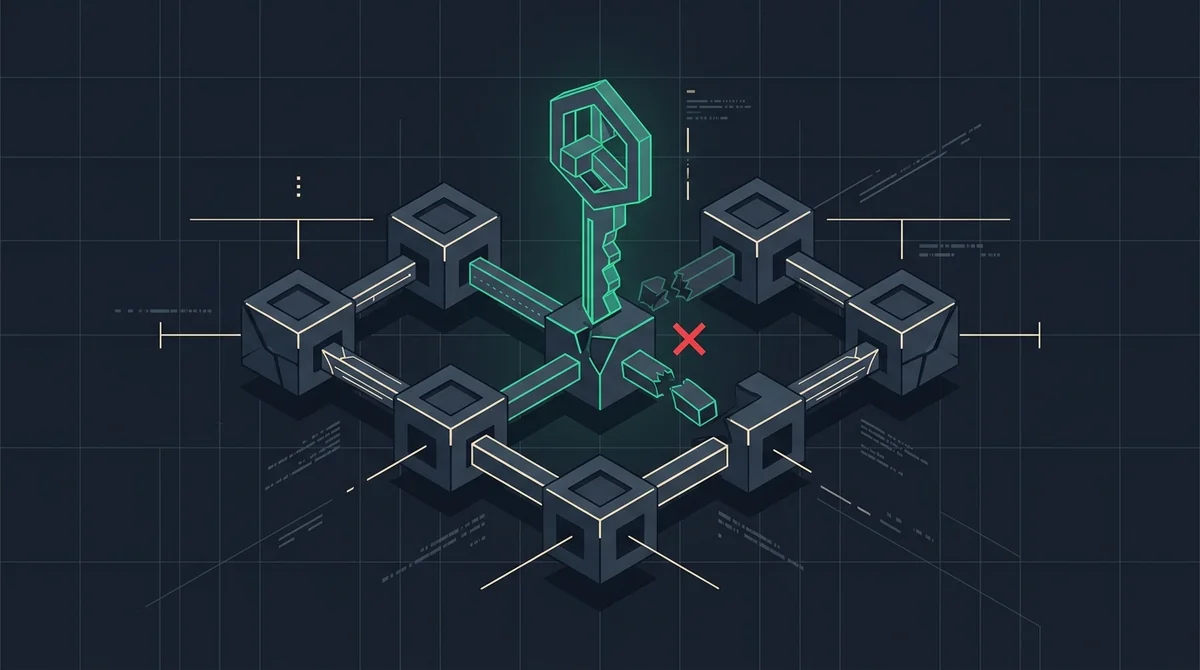
The token is positioned as an access key: it provides fee tiers, discounts on specific services, and cross-platform market participation rights. The token runs on Ethereum and Base, with a maximum supply of 6 billion tokens, 15% of which is held in the company treasury, all of which is recorded in the whitepaper. Its value logic is this: when issuers arrive and new markets open—whether private credit, sports equity, or student loans—each new market gives this key one more use. Therefore, the token's value is tied to the number of markets actually launched, not to price promises, and the number of markets is verifiable. By this logic, one can return six months later and count the actual implementation.
What MiCA Really Means: Disclosure, Not Regulatory Endorsement
The name “MiCA” can easily create associations with “approval,” but the document itself states the opposite in plain language: this whitepaper has not been approved by any EU member state competent authority, and the party seeking admission to trading bears full responsibility for its content. In other words, MiCA requires disclosure, not endorsement. Regulators are not saying “this is a good token”; they are requiring the issuer to describe itself in a prescribed format and to be responsible for every word. The mandatory warning section in the same document also states: this crypto-asset may lose part or all of its value, may not always be transferable, may not have liquidity, and is not covered by investor compensation schemes or deposit guarantee schemes. These are not outside bearish comments but the issuer's own sentences in its filing.
Three Takeaways: Return to Verifiable Market Facts
First, learn to open the original filing. The mandatory warning section is often more honest than other descriptions around the project, because it is a statement for which the issuer must bear responsibility. Second, “approved for trading,” “listing,” and “liquidity” are three different concepts; they may be months apart and are not always all achieved. Third, for projects of this kind, judge them by the market rather than by price. Whether issuers arrive and whether new markets go live is the core of the entire logic and the only fact that can be verified independently.
The ultimate point is this: this token is not an ownership claim on the company, but a key to enter a trading venue, and its value depends on the value that venue ultimately proves to have. The document is unusually blunt about this; everything after that depends on execution. The sign of a market maturing has always been fewer promises and more signed documents.
For readers who continue to follow institutional-grade RWA infrastructure and compliant trading needs, the value of interpreting such original documents lies precisely in helping to cut through marketing narratives and return to verifiable implementation progress. OKX Radar will continue to monitor signals at this market-building level, helping readers judge more clearly which projects truly have long-term value.