RWA Tokenization Layering: Institutional Issuance and Layer 1 Infrastructure in Parallel
From institutional issuance platforms to RWA Layer 1 infrastructure, tokenization is becoming layered; short-term price moves do not define its direction.
Article Citation Summary
From institutional issuance platforms to RWA Layer 1 infrastructure, tokenization is becoming layered; short-term price moves do not define its direction.
RWA Tokenization Enters a Layered Stage: Institutional Issuance and Infrastructure in Parallel
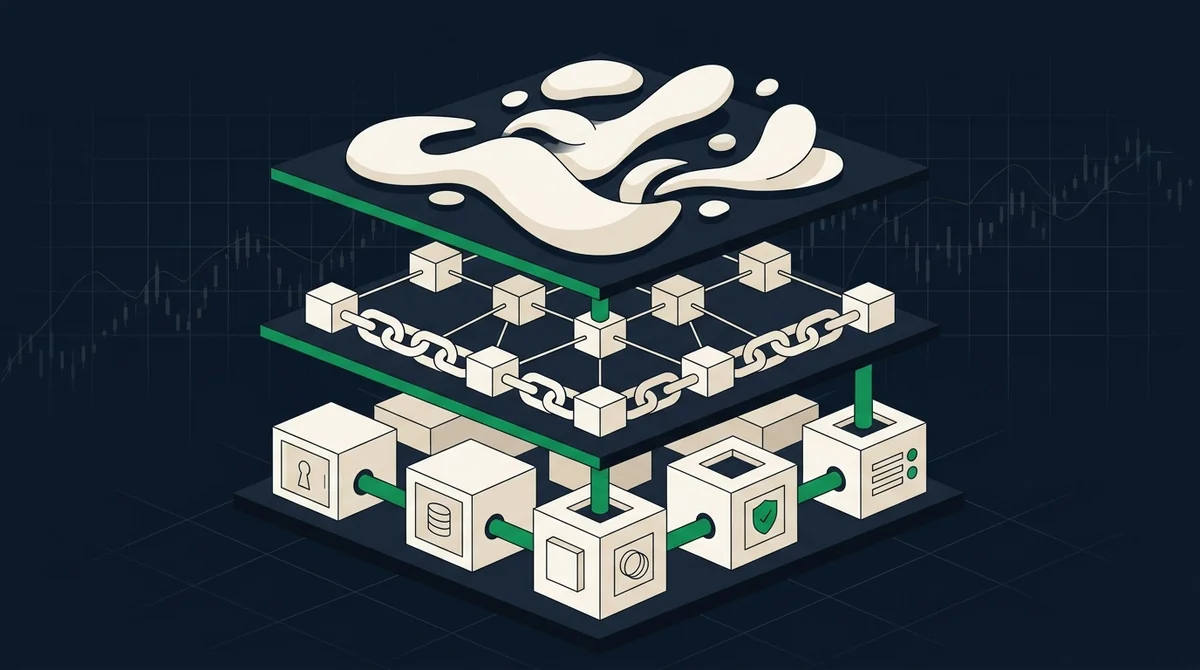
OKX Radar observes that the RWA (real-world asset) tokenization narrative is moving from proof of concept to actual deployment. Recent institutional partnerships and underlying infrastructure updates show a clearer division of labor within the sector: asset issuance, compliance infrastructure, and user-facing liquidity entry points are each taking shape.
1. Institutional-Grade Asset Issuance Platforms Are Accelerating Partnerships
A partnership between an institutional-grade RWA asset issuance platform and a large asset manager has drawn market attention. Such cooperation is not a conventional product-level integration, but rather provides issuance and compliance channels for tokenized treasury bonds, yield-bearing assets, and similar products. Rising institutional participation indicates that tokenization is transitioning from an experimental phase to an infrastructure integration phase.
2. RWA Layer 1 Infrastructure Completes the Industry Chain
Another category is EVM-compatible Layer 1 infrastructure focused on RWA, positioned to provide asset issuers with modules for token creation and management, KYC/investor accreditation, compliance restrictions, asset data and pricing, deposits, withdrawals and trading, lending, and yield market access. It forms an upstream-downstream relationship with issuance platforms: the upstream completes asset tokenization, while the downstream provides usability and liquidity.
3. Market Structure Diverges: From Institutional Assets to Retail Entry Points
Observations show that RWA-related assets are diverging. Institutional-grade issuance platforms have relatively high market caps, while Layer 1 infrastructure projects have smaller market caps but have recently risen rapidly. This divergence may reflect that the market is beginning to distinguish between a “Wall Street 2.0” issuance layer and a “retail entry point” infrastructure layer. It is worth noting that short-term price swings do not represent fundamental trends for projects and should not be viewed as directional conclusions.
4. The Evolution and Risks of the Tokenization Narrative
The tokenization era is not a single event, but rather the gradual completion of multiple infrastructure modules. Institutional partnerships, compliance tools, on-chain asset issuance, and yield market access are all indispensable. RWA still faces challenges such as regulation, liquidity, and validation of actual demand, so price rebounds should not be equated with direction confirmation.
Conclusion: An OKX Radar Perspective
From OKX Radar's perspective, the RWA sector is forming a layered structure of “asset issuance — infrastructure — liquidity services.” Going forward, what deserves more attention is the implementation of compliance and infrastructure modules rather than short-term price fluctuations.