Tokenized Real-World Assets Explained: How to Choose an RWA Data Source
Tokenized real-world assets doubled in four months; this article explains tokenization mechanics, real-time data needs, and three RWA data source criteria.
Article Citation Summary
Tokenized real-world assets doubled in four months; this article explains tokenization mechanics, real-time data needs, and three RWA data source criteria.
Tokenized stocks more than doubled in four months. But what deserves more attention is this: the same stock can appear at different prices in different places at the same time. Which one is the real price? This article focuses on tokenized real-world assets (RWAs), covering their definition, recent growth backdrop, tracking challenges, and criteria worth considering when choosing an RWA data source.
Why RWAs Matter Now
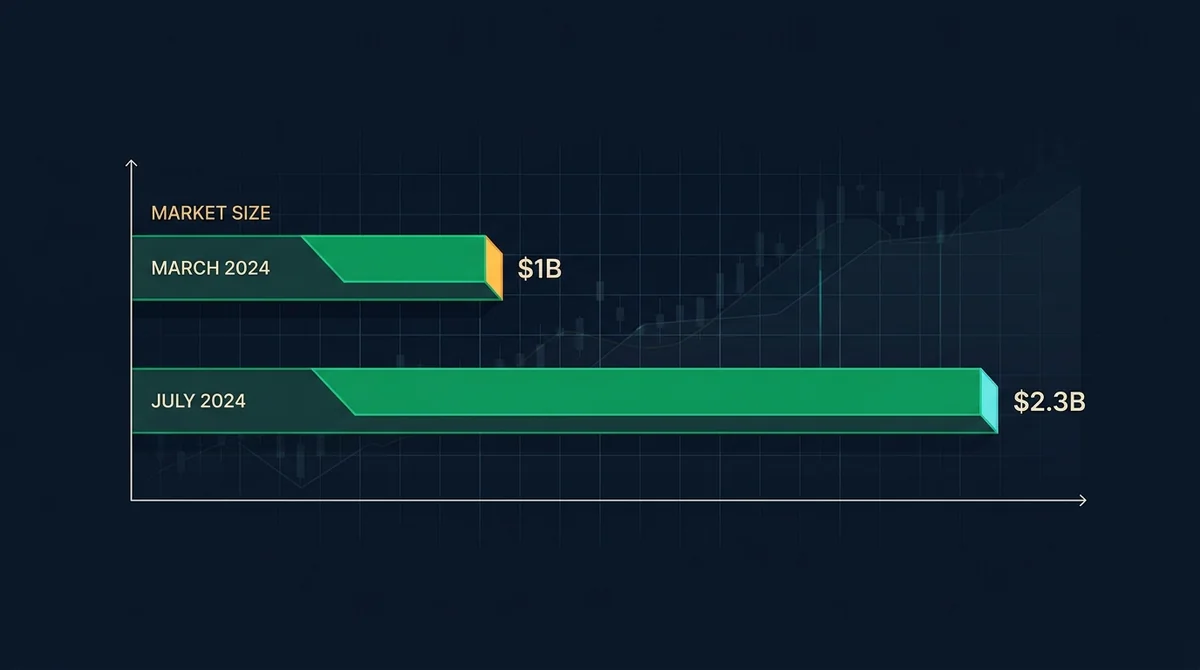
In March 2024, the total size of tokenized stocks was about $1 billion; by July, that figure had risen to about $2.3 billion. In other words, it more than doubled in four months. However, the numbers themselves are not the most noteworthy part; more important is who is entering the market. Institutions such as Nasdaq, DTCC, and Robinhood have begun to participate. When institutions of this scale start moving, it is worth watching closely.
Which Assets Can Be Tokenized
Almost any asset with real value can be tokenized, including stocks, ETFs, gold, real estate, and U.S. government bonds (Treasuries). A useful analogy is a coat check ticket: your coat is safely stored in the back, and you only need to hold the ticket. In a tokenized setting, the real asset is safely held by an institution, while you hold a token on the blockchain that proves it belongs to you. This sounds simple, but in practice it can become complicated.
Why Investors Need Real-Time RWA Data
Tokens are not perfectly equivalent to the underlying real assets. For example, tokens can trade on Sunday while the stock market is closed, so their price may diverge from the real price. This also explains the phenomenon mentioned at the beginning: the same stock can be tokenized separately by different companies on different blockchains, and each token may develop its own price. Beyond that, there is another key question to verify: are tokens actually backed by the underlying real assets, and can they be redeemed for the real assets at any time?
What to Look for in an RWA Data Source
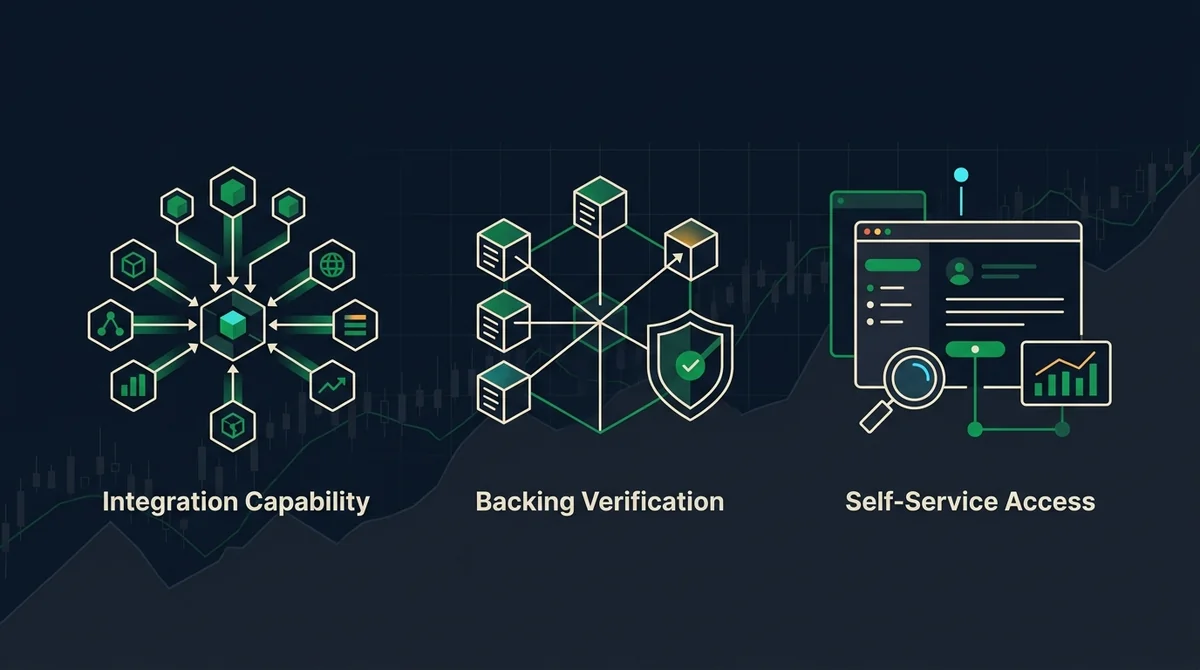
When choosing an RWA data source, there are three main things to look at. First, can it centrally display the full picture of each asset across every institution and every blockchain? Second, can it verify whether tokens are truly and fully backed? Third, can you sign up and use it yourself? The third point is actually harder to satisfy than it may seem, because much RWA data is still kept behind sales conversations, making it difficult for ordinary users to access directly.
How to Track RWAs with Industry Data APIs
If you need to track data on tokenized stocks, ETFs, Treasuries, and other RWAs, a mainstream industry data API can serve as a starting point. Its core value lies in consolidating information from different issuers, different blockchains, and individual assets into a single view, thereby solving the problem of determining which of multiple prices for the same asset is real.
It is worth noting that the methodology of such data sources typically includes a three-step verification process: first, confirm what the real underlying asset is; second, verify whether it is truly and fully backed; third, confirm whether it can be exchanged back for the real asset and whether it is genuinely redeemable. This kind of verification makes RWA data more useful for reference. In addition, mainstream industry data APIs usually also cover a large scale of crypto assets and on-chain tokens—for example, more than 18,000 coins and more than 43 million on-chain tokens—and some leading wallets, exchanges, and blockchain explorers use the market data they provide.
When making calls, you can use the RWA market endpoint to get a list of tokenized assets, along with each asset's price, market cap, and trading volume; use the asset quote endpoint to view quotes for that asset across all trading venues and further compare spreads, volume, and order book depth; and use the market chart endpoint to retrieve historical prices, market caps, and volume, making it easier to observe trends and test strategies.
Such data services usually offer a free tier of 10,000 calls per month, with each call counted as one quota regardless of the amount of data returned, so the free allowance can last a long time. When commercial use or more frequent updates are needed, paid plans start at about $29 per month, unlocking more endpoints and more timely data. For ordinary users, if there is no immediate need to integrate an API directly, they can also start by following OKX Radar and similar content platforms to stay informed about RWA-related market developments and project information, building a basic framework for judgment.
Conclusion
Tokenized assets are growing rapidly, and large institutions are entering this space. But to track these assets effectively, you need to see all versions of an asset at the same time and confirm that it is genuinely backed by real assets. Consolidation capability, backing verification, and self-serve access are the three core criteria for choosing an RWA data source.